Author: Site Editor Publish Time: 2026-10-25 Origin: Site
Managing a male dog’s marking behavior, incontinence, or excitable urination requires a reliable system. A temporary fix simply will not suffice. You need practical tools to protect your home and keep your pet comfortable. While disposable options dominate pet store shelves, they often fail over the long haul. Owners quickly realize they suffer from ongoing expenses, poor fit security, and negative environmental impacts. Paper products tend to slip off active dogs and create massive landfill waste. This guide breaks down how to evaluate, size, and implement male washable dog diapers. We will help you move from daily frustration to a predictable, sanitary routine. You will learn the exact materials to look for. We will also cover the right way to measure your dog for a perfect fit. By the end, you can confidently choose a wrap to keep your dog dry and your house clean.
Cost Efficiency: Washable options break even against disposables within 4 to 6 weeks of daily use.
Design Specificity: Male dogs typically require anatomical "belly bands" rather than full-coverage diapers for strictly urinary issues.
Crucial Features: Success depends entirely on three factors: a waterproof outer shell, high-capacity absorbent cores, and non-degrading Velcro fasteners.
Measurement Reality: Breed-based sizing charts are notoriously inaccurate; physical waist measurement is mandatory to prevent leaks and chafing.
Pet ownership comes with hidden expenses. Managing indoor accidents often becomes a major financial drain. Many owners instinctually reach for paper alternatives. However, the recurring cost of these products escalates quickly. You must replace them multiple times every single day. Over weeks and months, you lose a significant amount of money.
Let us look at the financial breakdown. A standard pack of disposable wraps costs around $15 to $20. This pack usually contains about 30 units. If your dog wears them continuously, you use at least two to three per day. You will buy a new pack every ten days. This equals roughly $45 to $60 every month. You can buy a high-quality three-pack of washable male dog diapers for $25 to $40. You pay this price exactly once. You hit the breakeven point in just four to six weeks.
Financial Breakdown: Disposables vs. Washables (Estimated Monthly Expense)
Timeframe | Disposable Expense | Washable Expense |
|---|---|---|
1 Month | $60.00 | $35.00 (Upfront) |
6 Months | $360.00 | $0.00 (Reused) |
1 Year | $720.00 | $0.00 (Reused) |
Beyond the financial relief, you must consider durability and waste. Millions of paper pet products enter landfills every year. They take centuries to decompose. Reusing materials offers immense environmental benefits. You simply toss the soiled band into your laundry cycle. They hold up for hundreds of washes. They maintain their shape and function perfectly.
Comfort and chafing present another massive difference. Paper products feature stiff edges and adhesive tabs. These materials rub aggressively against soft skin. Continuous wear often leads to severe friction burns. Cloth alternatives use fleece linings and soft fabrics. They reduce friction on the dog's skin entirely. Soft edges conform to the body. This is critical for dogs needing constant protection.
Many owners buy the wrong product shape entirely. They purchase traditional full-body suits. These suits wrap around the hind legs and tail. This design works well for female dogs. It fails completely for males.
The anatomy of male urination requires a different approach. A male dog's anatomy sits mid-belly. When a male dog urinates, the fluid travels forward and downward. Full-coverage suits secure around the hips. They leave large gaps exactly where male dogs need the most coverage. Urine escapes out the front edge easily. The suit becomes soaked on the outside. Your floors still get ruined.
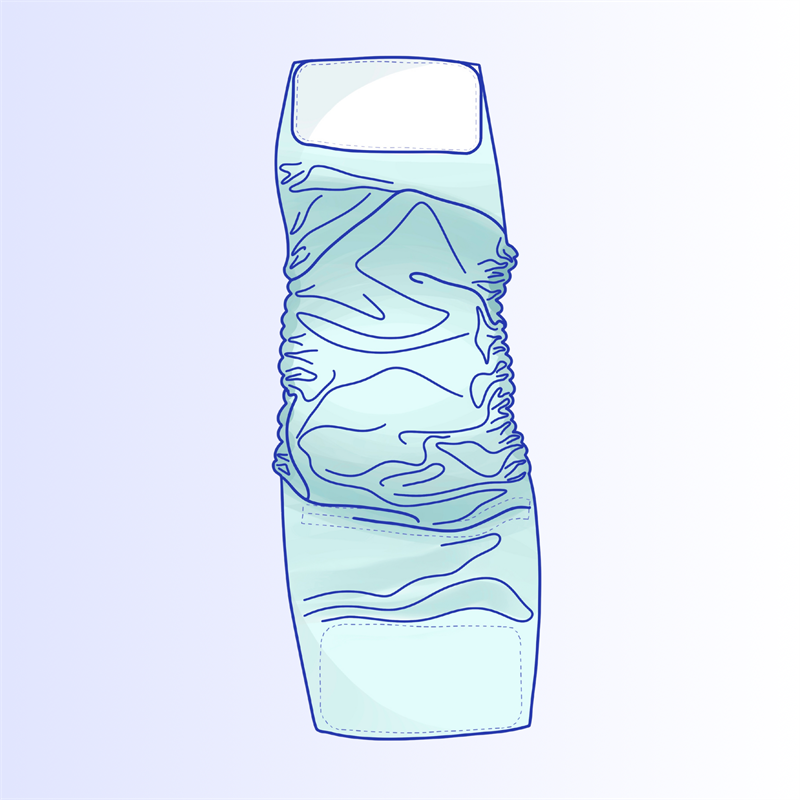
This makes reusable dog belly bands the optimal solution. These bands wrap firmly around the dog's waist. They cover the exact anatomical source. They work perfectly for marking behaviors. They handle excitable urination flawlessly. They also manage mild-to-moderate urinary incontinence effectively. The band provides targeted protection without unnecessary bulk.
You should only consider full-coverage designs in specific medical situations. Full-coverage washable suits remain necessary if the dog experiences fecal incontinence. They contain solid waste effectively. If the dog suffers solely from urinary issues, avoid full suits. Belly wraps offer better mobility. They keep the dog much cooler indoors. They are significantly easier to put on. They also reduce the stress of daily dressing routines.
Not all cloth wraps perform equally. The market is flooded with cheap imitations. Many decorative bands look cute but fail to hold moisture. Success depends on specific material choices and construction techniques. You must evaluate four specific features before purchasing.
Outer Layer Integrity: You must purchase truly waterproof dog diapers to protect furniture and carpets. Look for fabrics utilizing PUL (Polyurethane Laminate). This synthetic layer blocks liquid entirely. It stops moisture from seeping through to your couch. Regular cotton or nylon will not stop urine transfer.
Core Capacity: The inner layers must pull moisture away quickly. High-capacity cores utilize microfiber or terry cloth. These materials trap large volumes of liquid. We must warn you against thin, single-layer decorative bands. They look fashionable but require secondary disposable pads. Buying pads defeats the purpose of choosing reusable products. Seek out thick, built-in absorbent padding. You need reliable absorbent male dog wraps to handle heavy flows.
Fastening Systems: You will encounter Velcro and snap closures. Wide, industrial-strength Velcro always performs best. Thin Velcro strips roll down easily. Snaps leave gaps along the waistline. Strong Velcro prevents the band from rolling. It also stops the dog from chewing the band off. You get a customized, secure fit every time.
Edge Construction: The borders of the band dictate its reliability. Look for elasticized edges on both sides. Elastics gather the fabric to form a cup shape. This contains heavy volume effectively. It prevents urine from leaking out the sides. However, the elastic must remain gentle. It should never restrict blood flow or dig into the skin.
The best materials in the world fail if the fit is wrong. Sizing errors cause ninety percent of all leakage complaints. Owners often guess the size or rely on inaccurate breed charts. You must treat sizing as a precise science.
Follow this strict methodology for measuring your dog:
Use a soft fabric measuring tape. Never use a rigid metal tape.
Have your dog stand squarely on all four legs. Do not measure them while sitting or lying down.
Wrap the tape around the exact area of the male anatomy.
Bring the tape up and around the waist.
Pull the tape snug against the body. Do not pull it tight enough to compress the stomach.
Record the exact measurement in inches.
You must acknowledge the "small dog" challenge. Toy breeds present unique sizing difficulties. Chihuahuas, Dachshunds, and Yorkies have very short torsos. Standard band widths often cover their entire stomach area. This bulk impedes their leg movement. They may refuse to walk entirely. Look for brands offering narrow profiles specifically designed for toy breeds. The band should cover the anatomy without touching the front legs.
Finally, strongly advise yourself against buying based solely on the dog's weight. Weight tells you nothing about body shape. A deep-chested Greyhound and a barrel-chested Bulldog might both weigh forty pounds. Their waist circumferences differ drastically. They deviate heavily from standard weight-to-waist ratios. Relying on weight charts guarantees a poor fit. Physical waist measurement is absolutely mandatory to prevent leaks and chafing.
Purchasing the right product only solves half the problem. You must maintain the fabric properly to preserve its lifespan. Poor washing habits destroy waterproof layers quickly. They also allow deep-set odors to ruin the bands.
Follow a strict washing protocol for all machine washable dog diapers. You must secure the Velcro tabs closed before washing. Open Velcro hooks catch on other fabrics. They accumulate lint and hair quickly. This debris ruins the gripping power completely. Next, use enzyme-based detergents. Regular soap merely covers odors with perfume. Enzyme cleaners actively break down urine proteins. They eliminate the ammonia crystals entirely. This keeps the bands smelling fresh for years.
Drying rules are equally important. Never use high heat to dry these bands. High heat melts the waterproof PUL layers instantly. It causes the plastic to crack and peel. You must also strictly avoid fabric softeners. Softeners coat the absorbent fibers with a waxy residue. This residue repels water. Your absorbent core will stop absorbing entirely. Air drying is always the safest option. If you must use a machine, select a low or no-heat tumble setting.
The rollout phase requires patience. Dogs do not naturally accept wearing clothes. A sudden application often causes panic. You need a step-by-step behavioral adoption plan. Introduce the band slowly. Let the dog sniff it while you offer high-value treats. Drape it loosely over their back first. Fasten it gently and immediately reward them. Engage them in play or offer their food bowl. Distraction works wonders. If they try to remove it, redirect their attention immediately. Positive reinforcement ensures they associate the band with good things. They will quickly forget they are even wearing it.
Transitioning to washable belly bands solves the primary pain points of indoor urination. You eliminate the endless cycle of buying paper products. You stop filling your trash bins with ruined disposables. Most importantly, you keep your dog comfortable and your home clean. This success depends heavily on prioritizing correct materials and exact sizing. You need waterproof layers, thick cores, and strong Velcro. You also need a perfect, snug fit. Do not wait for another accident to ruin your rugs. Grab a soft tape measure today. Establish your dog's baseline size right now. Once you know their exact waist measurement, you can confidently evaluate brands and reclaim your clean house.
A: Minimum of 3–4 for a standard wash cycle—one on the dog, one in the wash, one ready to use.
A: Immediately after a full void, or check every 3-4 hours for marking to prevent urine scald.
A: Troubleshoot sizing first; if correct, suggest suspender harnesses designed for escape-artist dogs.
A: Address the necessity of enzyme cleaners and occasional white vinegar soaks to strip built-up ammonia.