Author: Site Editor Publish Time: 2026-10-25 Origin: Site
Dog diapers can help contain urine leaks and discharge from females in heat, provided the shape, fit, and absorbency match the dog’s needs. They are less reliable for containing stool and cannot treat incontinence, prevent mating, or replace toilet training. Their practical value also depends on the care routine: a garment that protects the floor but leaves the dog wet or uncomfortable is not working well. Before choosing a style, identify what needs to be contained, where coverage is required, and whether someone can check and change the diaper promptly.
For male urine leakage: A belly band may provide suitable coverage when its absorbent area stays over the urinary opening.
For female urine leakage or heat discharge: A correctly fitted full-coverage design may help contain liquid.
For repeated leaks: Check placement, gaps, movement, and saturation before assuming a smaller size will solve the problem.
For medical or skin problems: Establish an appropriate care plan rather than relying on a diaper alone.
Dog diapers help contain liquid through absorbent material supported by an outer barrier. Liquid must reach the absorbent area before it can be retained. Even a waterproof outer layer cannot prevent leakage through an uncovered urinary opening, a loose leg opening, or a displaced waistband.
Construction varies, but many products combine a skin-facing surface, an absorbent section, and an outer barrier. The inner surface allows liquid to reach the absorbent material; the absorbent section holds a limited quantity; and the outer layer helps reduce transfer to bedding or furniture.
These functions should not be confused with guaranteed dryness. A liner can remain damp, an absorbent section can become saturated, and liquid can escape around openings. Washable textile layers and disposable absorbent cores also behave differently, so performance should be assessed for the individual product.
A diaper needs to remain aligned while the dog stands, walks, lies down, and gets up. If the absorbent section shifts away from the urinary opening, extra padding may not help. Conversely, a well-positioned garment can still leak when its capacity is exceeded.
Fasten it securely without compressing the body or restricting movement. Persistent gaps, slipping, or rubbing suggest that the size or shape needs reassessment. Tightening every opening is not a reliable solution and can introduce discomfort.
Assess more than the absence of puddles. The garment should remain positioned, contain the expected leakage between prompt changes, and allow comfortable movement. Inspect the skin underneath rather than assuming a dry outer surface means the dog is dry.
Dog diapers manage the consequences of an accident. They do not explain why it happened, restore bladder control, or remove the need for suitable toileting opportunities.
Dog diapers may be useful for selected cases of urine leakage, heat-related discharge, or temporary mobility limitations. Their suitability depends on the underlying problem and whether the owner can provide the necessary monitoring. New or worsening accidents should not automatically be treated as a normal part of aging.
Involuntary urine leakage differs from a dog deliberately urinating indoors, producing more urine than usual, or being unable to reach an outdoor area. Those situations can look similar on the floor but require different responses.
A veterinarian can investigate changes in urinary habits and help establish a management plan. Dog diapers may protect bedding during that process, but they should not delay assessment. For dogs with neurological problems, urine in a diaper does not establish that the bladder is emptying normally.
Full-coverage dog diapers can help contain discharge during a heat cycle. The absorbent area must cover the relevant anatomy without rubbing, and the garment needs regular inspection and prompt replacement when soiled.
A diaper does not provide contraception. It must not be relied on to prevent mating or pregnancy, even when the fasteners appear secure. Appropriate separation and supervision remain necessary.
Some recovering dogs may benefit from temporary containment, but suitability depends on the procedure, wound location, and care instructions. Ask the treating veterinarian before placing a diaper near an incision or injured area.
The garment should not rub a wound, interfere with inspection, or retain moisture against it. Continue any prescribed assistance with movement and toileting; wearing a diaper does not replace those parts of recovery care.
For a dog with an established pattern of marking or excitement-related leakage, supervised use may reduce mess while the underlying issue is addressed. It does not teach the dog where to urinate or resolve anxiety.
Travel also requires appropriate toilet breaks and monitoring. A longer journey is not a reason to leave a wet diaper in place, and unfamiliar accidents should be assessed rather than assumed to be stress-related.
Start with the area that needs coverage, then compare reusable and disposable construction. Product names alone are insufficient: the position of the absorbent section and the way the garment stays aligned determine whether it suits the dog.
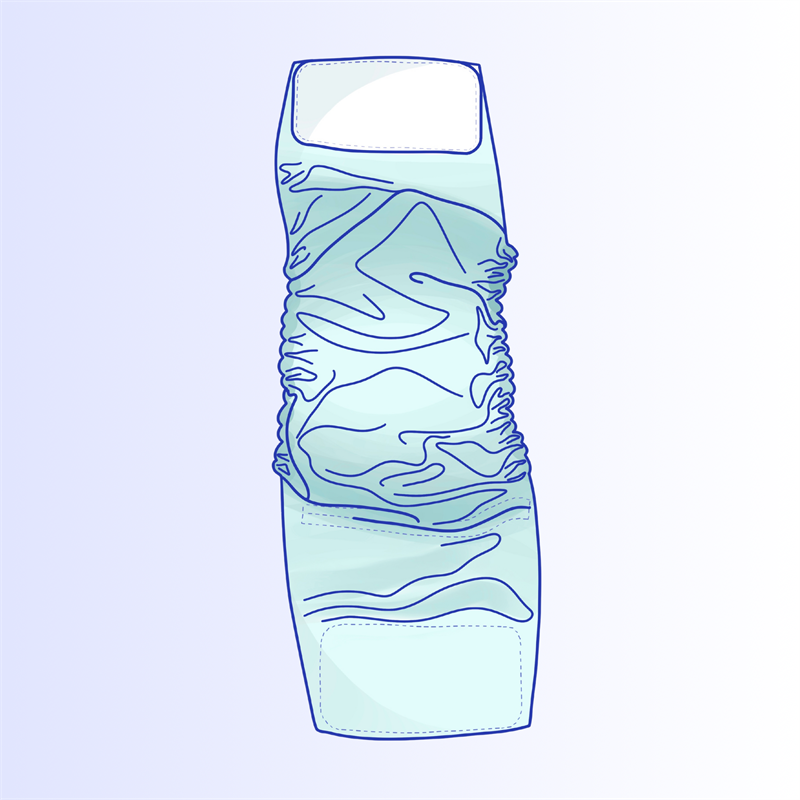
A male belly band wraps around the midsection and places absorbent material over the urinary opening. It can help contain urine when correctly positioned, but it does not cover the anus or catch stool.
Full-coverage designs extend around the hindquarters and commonly include a tail opening. They may suit female urinary leakage or heat-related discharge. Some can catch formed stool, but openings and movement limit containment; they should not be presented as a universal solution for fecal incontinence.
The practical male–female diaper differences involve coverage, absorbent placement, and measurement—not simply different product labels. Establish the required shape before comparing sizes.
Washable dog diapers require enough spare garments to cover washing and complete drying. Disposable options avoid laundering the garment but require ongoing replacement stock and disposal. Both need skin checks and prompt changes.
Compare actual costs using expected changes, purchase prices, laundry expenses, and replacement needs. Neither category is automatically more breathable or more absorbent. Overall environmental impact also depends on materials, washing, drying, disposal, and how many times a reusable garment is used.
Evaluation Criteria | Washable Options | Disposable Options |
|---|---|---|
Laundry access | Needs washing, drying, and clean replacements | No laundering of the garment |
Cost comparison | Include initial quantity, laundry, and replacements | Multiply unit cost by expected changes |
Travel arrangements | Needs separate storage for used garments | Needs replacement stock and suitable disposal |
Fit and absorbency | Assess the specific construction and size | Assess the specific construction and size |
Daily care | Prompt changes and skin inspection remain necessary | Prompt changes and skin inspection remain necessary |
Reconsider use if the garment causes rubbing, retains moisture against irritated skin, interferes with a wound, or triggers persistent chewing. Diarrhea and fecal incontinence also require individual assessment rather than simply choosing more coverage.
Prolonged contact with urine or feces can irritate skin. Check beneath dog diapers frequently, replace wet or soiled garments promptly, and clean gently using an appropriate method. Dry the area before fitting a fresh garment.
Do not apply an unspecified cream or stronger cleaning product simply because redness appears. Remove the source of friction or moisture and obtain veterinary advice for persistent redness, broken skin, discharge, or discomfort.
Provide appropriate diaper-free periods on clean, washable bedding or a protective mat. For a dog that cannot move independently, the care routine may also need assistance with positioning and keeping bedding dry.
Diarrhea is particularly difficult to contain without spreading contamination against the body. An appropriate cleanable area or protective bedding may be more manageable while veterinary advice is obtained.
Some dogs need a gradual introduction, but repeated biting, rubbing, or attempts to escape may indicate discomfort. Remove the garment and check fit and skin condition before trying again.
Supervision matters because a dog can tear off and swallow material. Additional clothing should not be used to conceal persistent chewing or prevent access to an uncomfortable diaper.
Correct placement first: Check the size and absorbent position before adding supports.
Compatible accessories only: Follow instructions and inspect for rubbing, loose parts, or restricted movement.
Gradual introduction: Begin with brief supervised sessions and reward relaxed behavior.
Stop when necessary: Persistent distress, chewing, or irritation calls for reassessment.
Use the specific product’s measurement guide, then check its position during normal movement. Weight can support the choice, but it cannot establish fit by itself. Different dogs of similar weight may need different shapes or adjustments.
Identify whether the dog needs a belly band or full-coverage design.
Measure at the location illustrated in the product’s size guide using a soft tape.
Compare the measurement with the stated size range without compressing the body.
Check absorbent placement, openings, and comfort while the dog stands, walks, and rests.
Once the coverage requirement is clear, compare the shapes and sizing information in the pet diaper range. Choose by the relevant measurements and construction rather than appearance alone.
The tail opening should not pull, pinch, or create an excessive gap. Inspect it in different resting positions as well as during walking. Do not cut or alter the opening unless the product instructions permit it, because modifications may damage the barrier or create loose material.
A mostly dry absorbent area with leakage at the edge suggests a coverage or positioning issue. A saturated absorbent area suggests the capacity or checking routine needs reassessment. Slipping after movement points toward fit or fastening problems.
Assess dog diapers during short supervised use before depending on them for longer periods. Do not restrict drinking water to reduce changes. Increasing leakage or changing urinary habits warrants veterinary assessment rather than repeatedly adding padding.
Dog diapers work best when they address a defined containment need and fit within a practical care routine. Correct coverage, stable positioning, suitable absorbency, and prompt changes matter more than broad promises of leak protection. When comparing KINGSOO products, assess the individual design and sizing information against those requirements. Keep normal toileting opportunities and any prescribed treatment in place. If the dog develops irritation, persistently chews the garment, or has new accidents, reassess the approach. Protecting furniture is useful, but the deciding measure is whether the dog remains comfortable and appropriately cared for.
Some full-coverage dog diapers may catch formed stool, but fit, movement, and tail openings limit containment. Belly bands cannot catch stool. Remove soiled garments promptly, and discuss fecal incontinence with a veterinarian rather than assuming a diaper is the best routine solution.
Overnight suitability depends on the dog’s condition and whether appropriate checks and changes are possible. Sleeping does not make a wet diaper suitable to leave in place. Establish a care plan for dogs with ongoing leakage or limited mobility.
Follow the care label for waste removal, detergent, temperature, and drying. Avoid additives the manufacturer prohibits and dry the garment completely before reuse. Persistent odor calls for reviewing the cleaning routine and garment condition rather than applying stronger chemicals without checking compatibility.
Some dogs may use them within an ongoing care plan, but daily use is not automatically suitable. It requires supervision, prompt changes, skin inspection, and appropriate breaks. Persistent irritation or distress is a reason to stop and seek advice.
No. A correctly positioned belly band may contain urine from marking, but it does not teach a different behavior. Continue appropriate toilet opportunities and address the cause through a suitable veterinary or behavior plan.