- All
- Product Name
- Product Keyword
- Product Model
- Product Summary
- Product Description
- Multi Field Search
English

Author: Site Editor Publish Time: 2026-06-10 Origin: Site
Pool season changes the way parents think about diapers. A regular diaper is made to absorb liquid, so it swells in water and becomes heavy. A swim diaper has a different job. It should help contain solids while allowing pool water to pass through. That single difference affects fit, fabric, comfort, pool rules, changing routines, and how parents prepare for a day near the water. A good Swimming Pant should feel secure, move with the baby, and support a calmer pool experience.
Parents often buy swim diapers right before a vacation, lesson, or family gathering. That rush can lead to the wrong size or the wrong style. It is better to understand the product before the first swim day arrives. Swim diapers are not meant to replace careful supervision or regular bathroom checks. They are one part of a water-readiness routine that also includes changing breaks, sun protection, towels, spare clothing, and awareness of pool rules.
The most important thing to know is that swim diapers are not designed to absorb pool water or urine. If they did, they would balloon quickly and restrict movement. Instead, they are designed to hold solids long enough for a caregiver to remove the child from the water and change the diaper. This is why fit is so important. The diaper must sit close at the waist and legs without pinching. Gaps can reduce containment, while tight edges can make the baby uncomfortable.
Parents who expect a swim diaper to work like a regular diaper may be disappointed. The product’s purpose is different. It supports pool hygiene, but it does not remove the need for frequent checks. Babies should be changed before swimming, checked during breaks, and changed again after leaving the pool. A fresh swim diaper and a planned routine make the day smoother for everyone.
Leg fit is the first detail to check. The diaper should rest in the natural crease of the thigh. If the opening is loose, it can gap when the baby kicks. If it is too tight, it can leave marks or make the baby resist wearing it. Swim diapers must handle frog kicks, being lifted in and out of the water, sitting on towels, and crawling near the pool edge. A diaper that only fits while the baby stands still is not ready for real pool use.
Waist fit matters too. The back should not slide down when wet. The front should not dig into the belly when the child sits. Adjustable sizing can help because babies grow quickly and swimwear may be worn over multiple outings. Always test fit at home before pool day. Put the diaper on, let the baby sit and kick, then check for gaps.
Check that the waist sits securely without rolling.
Run one finger along the leg opening to ensure gentle contact.
Let the baby sit and kick for a few minutes.
Check that the diaper stays centered after movement.
Confirm that swimwear worn over it does not pull it out of shape.
Swim diapers need fabric that handles water, movement, and repeated washing. A soft inner layer helps reduce rubbing when the child is wet. A stable outer layer helps the diaper keep its shape. Elastic should recover well after stretching. Stitching should be smooth because wet skin is more sensitive to friction. If a diaper feels scratchy when dry, it may feel worse in water.
The KINGSOO swim diaper category is relevant because it focuses on reusable swim products with waterproof technology, chlorine-resistant materials, and adjustable sizing systems. Those details matter during pool use. Chlorine, sun, and repeated washing can stress fabric. A swim diaper should remain comfortable after more than one outing, not only on the first day.
Every pool may have its own rules. Some require swim diapers for babies and toddlers. Some ask parents to use a reusable swim diaper with a snug fit. Some require an additional swimsuit over the diaper. Parents should check rules before arrival because policies can vary between public pools, hotels, swim schools, and water parks. Following the rule helps protect the child, other swimmers, and the facility.
A reusable swim diaper can be especially helpful when the child swims often. It can be washed, dried, and packed again for lessons or family outings. The care routine should be simple: rinse after swimming, wash gently, dry fully, and store clean. Chlorine and saltwater should not remain in the fabric longer than needed.
A smooth pool day starts before leaving home. Pack at least one clean backup diaper, a wet bag, wipes, a towel, and dry clothing. Dress the baby in the swim diaper close to swimming time, not hours earlier. Because a swim diaper is not designed to hold urine like a regular diaper, it should not be used as a long car-ride diaper. Change into it at the pool or shortly before entering the water.
After swimming, remove the wet diaper promptly. Rinse the baby’s skin and change into a dry diaper or clothing. Rinse the swim diaper with clean water to remove pool chemicals. Place it in a wet bag until washing. This simple sequence keeps the baby comfortable and protects the fabric.
Pool moment | What parents should do | Why it helps |
|---|---|---|
Before leaving home | Pack backup swim diaper, wet bag, towel, and dry clothes | Prevents stress during unexpected changes |
Before entering water | Check waist and leg fit | Supports containment during kicking |
During breaks | Do quick diaper checks | Keeps the routine hygienic |
After swimming | Change promptly and rinse the diaper | Protects skin and fabric |
At home | Wash and dry fully | Prepares the diaper for the next swim |
Swim lessons involve repeated lifting, kicking, and close contact with instructors. A swim diaper for lessons should stay centered and should not slide under a swimsuit. Parents should arrive early enough to change calmly and check the fit before class begins.
Vacations bring unfamiliar laundry conditions. Pack a wet bag and allow drying time between swims. If a child may swim more than once a day, bring more than one reusable swim diaper so each one can dry properly.
Backyard pools and splash mats may feel more relaxed, but the same fit rules apply. A swim diaper should still be worn only for water play and changed afterward. Rinsing after use protects fabric from sunscreen, grass, and pool additives.
Swim diapers are practical, but they are also visible. Parents often enjoy bright prints, ocean themes, animal patterns, fruit designs, or simple solid colors that match rash guards. For brands, custom prints can make a swim collection feel more complete. Matching swim diapers, wet bags, and reusable accessories can create a coordinated look for summer collections.
Small-batch and multi-print customization can help brands test seasonal styles without making every pattern permanent. A good custom swim diaper should not sacrifice fit for appearance. The print should be placed on fabric that handles washing and water exposure. Elastic quality, leg shape, and care instructions remain central to the product experience. Brands can review KINGSOO’s custom cloth diaper support when planning swim diaper designs.
After swimming, rinse the diaper with clean water to remove chlorine, salt, sunscreen, and sand. Wash according to care instructions with a mild detergent. Avoid fabric softener because it can affect fabric performance. Dry fully before storage. If the diaper has a waterproof layer, avoid harsh heat that may damage the structure. Store it clean and dry with swimwear or towels so it is easy to find before the next outing.
Odor usually means the diaper stayed damp too long or was not rinsed well after pool use. Rinse sooner, dry longer, and avoid sealing it in a wet bag after returning home. Stains should be treated gently. Strong scrubbing can damage fabric and elastic. A good routine is better than aggressive rescue cleaning.
Clear expectations prevent disappointment. Swim diapers cannot replace supervision. They cannot keep pool water out. They cannot absorb like regular diapers. They cannot remove the need for bathroom breaks. They are a containment garment designed for a specific water-use situation. When parents understand this, they use the product more effectively and feel more confident.
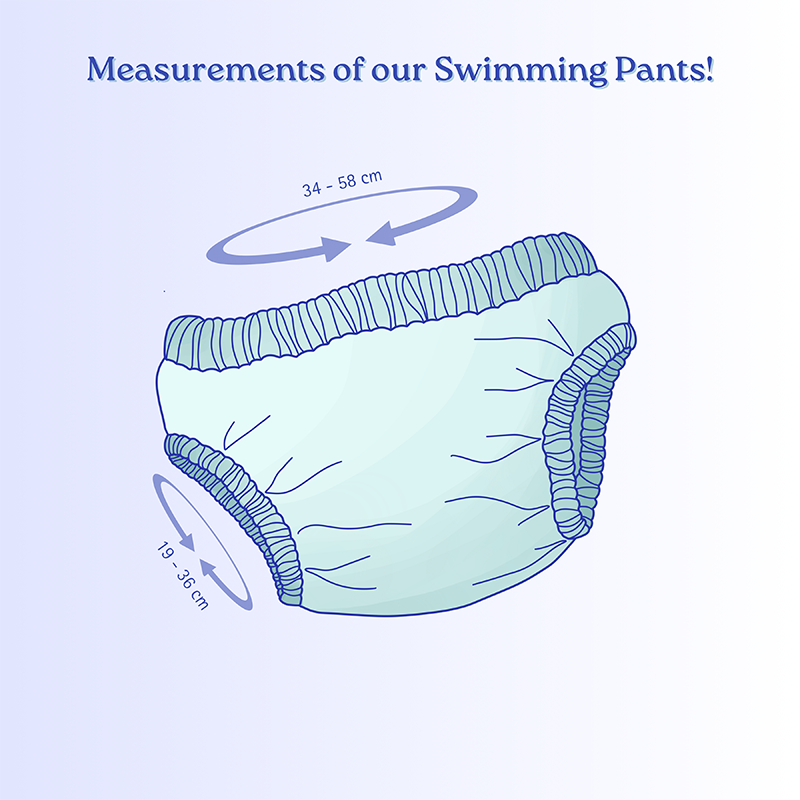
Size should be based on body fit, not age alone. Babies of the same age can have very different waist and thigh shapes. Measure if possible, then check the diaper on the child before swimming. If the diaper leaves deep marks, adjust or choose a different size. If the legs gap, the size may be too large or the elastic may not match the child’s shape.
For growing toddlers, adjustable snaps or flexible waist systems can help extend use across different body stages. Still, fit should be checked before each swim because growth can change the way the diaper sits.
Parents often focus on the swim itself, but the minutes after swimming matter too. Wet fabric can cool quickly when the child leaves the pool. A baby who was happy in the water may become uncomfortable if left in a wet swim diaper while sitting in the shade or wind. Change promptly, dry the skin gently, and move into a regular diaper or dry clothing. This keeps the baby more comfortable and reduces rubbing from damp fabric.
After changing, rinse the swim diaper before it dries with chlorine, sunscreen, or sand inside the fibers. A quick rinse protects the fabric and makes the later wash easier. If the family is at a beach, shake out sand gently rather than scraping it across the lining. Small habits like these help the swim diaper stay soft and ready for future outings.
For swim schools, fit and repeatable sizing are especially important. Instructors need children to move freely, and parents need clear guidance on how the diaper should sit. A swim diaper used in lessons should be easy to explain, easy to check, and stable during kicking. Simple care instructions also help families prepare the product correctly between classes.
For baby brands, the swim diaper often belongs to a wider summer collection. A coordinated line may include swim diapers, wet bags, training pants, reusable pads, and nursery essentials. The print can attract attention, but the structure creates trust. Elastic recovery, smooth lining, secure snaps, and clear size guidance should be confirmed before finalizing any seasonal design.
No. A regular diaper absorbs water, swells, and becomes uncomfortable. A swim diaper is designed for water use and solid containment.
They are not designed to absorb urine like regular diapers. Their main job is to help contain solids during water activity.
It should be snug at the waist and legs without pinching. Gaps reduce containment, while tight edges can irritate wet skin.
Rinse after swimming, wash with mild detergent, avoid fabric softener, and dry fully before storage.
Yes. Brands can discuss print, size, fabric, packaging, and coordinated accessories. KINGSOO’s contact page is the right place to begin a product discussion.
A swim diaper for babies should be chosen with clear expectations. It is made for water, movement, and solid containment, not for everyday absorption. The best results come from a secure leg fit, comfortable fabric, regular checks, and proper washing after pool use. Whether parents are preparing for swim lessons, vacation, or backyard water play, the right swim diaper can make pool season feel easier, cleaner, and more enjoyable.