- All
- Product Name
- Product Keyword
- Product Model
- Product Summary
- Product Description
- Multi Field Search
English

A Pet Diaper can make daily care easier when a dog experiences urine leakage, enters a heat cycle, marks indoors, or needs temporary hygiene support. However, owners often worry that covering the problem could delay treatment or create skin issues. Veterinarians may support Pet Diaper use in selected situations, but usually as a management tool rather than a cure. The safest approach combines the right diaper design with frequent changes, skin checks, normal toilet opportunities, and veterinary evaluation whenever accidents are new, painful, frequent, or otherwise unexplained.
Veterinarians may recommend a Pet Diaper when it helps manage an already identified problem or protects the home while diagnosis and treatment are underway. Common examples include established urinary incontinence, age-related mobility limitations, heat-cycle discharge, temporary marking management, and certain recovery situations. The diaper contains fluid and reduces cleanup, but it does not improve bladder control, remove an infection, correct an anatomical abnormality, or treat a neurological disorder. Veterinary guidance therefore focuses on the reason for the leakage as much as the product used to contain it.
The practical answer is not simply yes or no. A vet may consider a Pet Diaper appropriate when the dog has been examined, the owner understands the underlying condition, and the garment can be changed often enough to protect the skin. A veterinarian is less likely to support routine diapering when it replaces house training, prevents normal outdoor elimination, or hides symptoms that have not been investigated. Dogs that chew clothing or become distressed while wearing it may also require another management method because damaged or detached material can create an ingestion risk.
Situation | Role of the Pet Diaper | Veterinary Priority |
|---|---|---|
Diagnosed urinary incontinence | Contains involuntary leaks | Continue prescribed treatment and monitoring |
Female dog in heat | Manages discharge indoors | Maintain hygiene and remove it for toileting |
Male urine marking | Protects indoor surfaces temporarily | Combine with behavior management |
New accidents in a trained dog | Short-term containment only | Investigate medical or behavioral causes |
Diarrhea or frequent loose stool | Usually unsuitable | Address the digestive problem promptly |
Paralysis or limited mobility | May assist supervised care | Protect skin and confirm proper bladder emptying |
Urinary incontinence means involuntary urine leakage, often noticed as damp bedding, wet patches where a dog rested, or dribbling while the animal is relaxed. It has several possible causes, including reduced urethral closure, urinary tract disease, neurological problems, congenital abnormalities, and disorders affecting urine production. Some causes respond to medication or surgery, while others require long-term supportive care. A Pet Diaper can improve cleanliness during this process, but its use should follow rather than replace an accurate diagnosis.
Senior dogs may benefit when arthritis, weakness, cognitive changes, or reduced mobility make timely outdoor trips difficult. In these cases, the Pet Diaper protects bedding and flooring while allowing the dog to remain near the family. Owners should still provide regular toilet breaks because a dog that can urinate voluntarily should not be expected to use the diaper instead. For a dog with paralysis, visible leakage does not always prove that the bladder is emptying normally, so bladder-care instructions should come from a veterinarian.
A full-coverage Pet Diaper can contain discharge from an unspayed female during estrus and help protect upholstery, carpets, and vehicle interiors. It does not prevent mating, so physical separation from intact males remains necessary. Owners should also remove the garment for outdoor elimination and monitor the vulva and surrounding skin for moisture, rubbing, or unusual discharge. A sudden change in odor, color, volume, or the dog’s general condition warrants veterinary attention rather than simply changing to a more absorbent product.
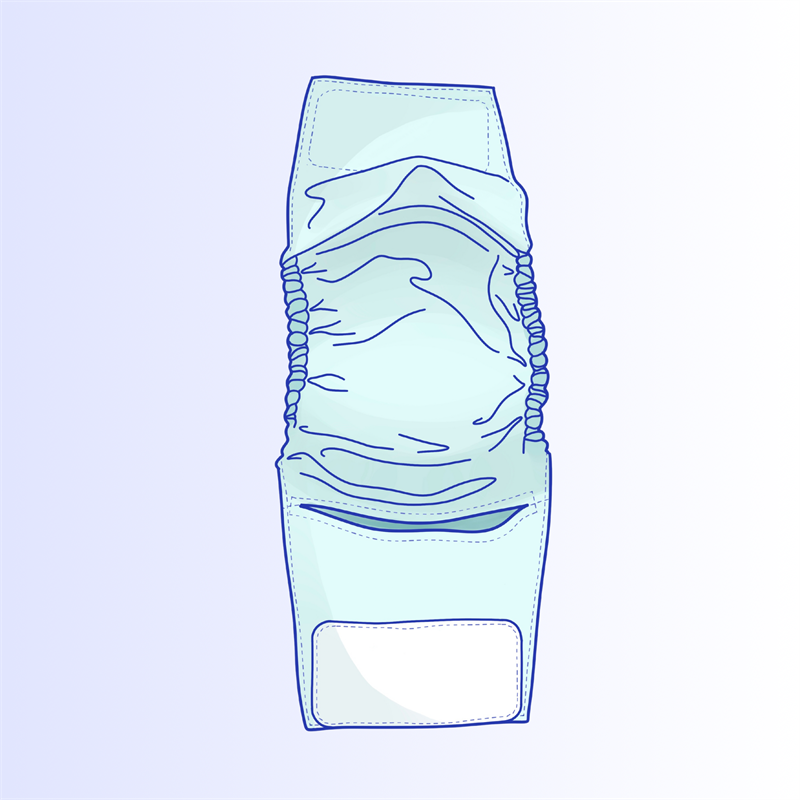
For male dogs that mark indoors, a waist wrap can provide temporary protection while the behavior is being addressed. The Male Dog Diaper uses a waterproof TPU-coated polyester outer layer, an absorbent middle layer, a moisture-managing polyester lining, adjustable hook-and-loop closures, and elasticized edges. These construction details matter because a male wrap must cover the urinary area, remain aligned during movement, and contain moisture without being tightened excessively.
A Pet Diaper may also be useful during travel, short-term recovery, or periods when a dog cannot follow its normal routine. It can reduce accidents in a vehicle or unfamiliar accommodation and help caregivers manage unexpected leakage while treatment begins. However, not every surgical patient should wear one. The diaper must not rub an incision, trap moisture around a healing area, interfere with prescribed wound protection, or prevent the owner from noticing blood, swelling, or discharge.
New loss of bladder control deserves evaluation, especially in a previously house-trained dog. Accidents may result from a urinary infection, bladder inflammation, stones, hormonal changes, diabetes, kidney disease, neurological dysfunction, medication effects, anxiety, or other conditions. Placing a Pet Diaper on the dog may protect the floor, but it can make a serious problem less visible if the owner stops checking urine frequency, color, odor, and volume.
Arrange veterinary care when a dog strains, cries, produces only small amounts, urinates much more often, drinks unusually large quantities, has blood or strong-smelling urine, repeatedly licks the genital area, or appears weak or painful. Inability to pass urine is an emergency and must never be managed with a Pet Diaper at home. A urinary blockage can become life-threatening and requires immediate veterinary treatment.
Diapers are also generally inappropriate for active diarrhea. Fecal material held against the coat and skin creates difficult cleanup and prolonged contamination, while the garment may conceal worsening stool quality or bleeding. Washable pads, an easily cleaned resting area, and prompt treatment of the digestive cause are usually more practical. A Pet Diaper should likewise be discontinued when it causes persistent redness, sores, swelling, hair loss, strong odor, or obvious discomfort.
A safe routine begins with frequent inspection rather than a fixed all-day schedule. Check the Pet Diaper regularly and replace it as soon as it becomes wet or soiled. Clean the surrounding coat and skin gently, dry the area completely, and allow diaper-free periods whenever practical. Prolonged contact with urine can contribute to irritation, urine scald, bacterial growth, yeast overgrowth, and pressure injuries, especially in dogs that cannot reposition themselves easily.
The diaper should be snug enough to remain aligned but loose enough to avoid restricting movement or pressing into the abdomen. Owners should check the waist, groin, leg openings, and tail opening for friction. Deep marks, limping, reluctance to sit, repeated turning toward the garment, or attempts to bite it indicate poor fit or intolerance. Dogs with prominent hips, broad chests, narrow waists, short tails, or unusual body proportions may need a different size or design rather than tighter fastening.
Introduce a Pet Diaper gradually. Let the dog sniff it, place it for a brief period, and reward calm behavior before increasing wear time. Supervision is particularly important during the first sessions because some dogs freeze, panic, chew the closures, or pull the garment off. A gradual introduction helps the owner evaluate comfort while reducing the chance that the diaper becomes associated with restraint or punishment.
Reusable products should be washed according to their care instructions and dried completely before reuse. Residual detergent, fabric softener, trapped moisture, or an absorbent core that has not dried thoroughly may irritate the skin or reduce performance. Keeping several clean diapers available makes timely changing easier. The Pet Diaper should always be removed before planned outdoor toileting, both to preserve house-training habits and to let the dog empty its bladder normally.
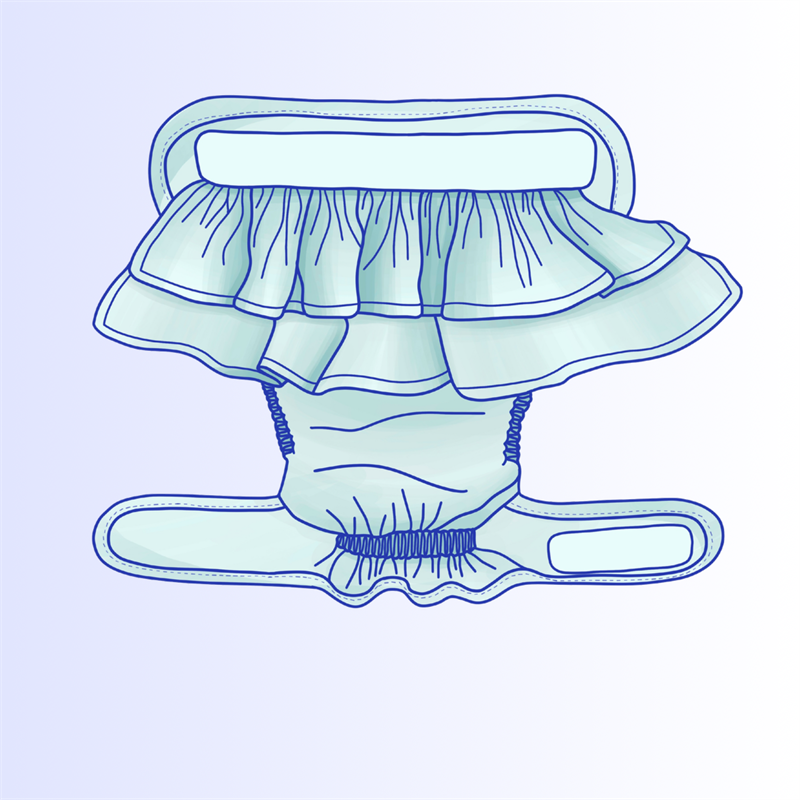
Start by matching the design to the dog’s anatomy and the type of fluid being managed. A belly band primarily wraps around a male dog’s waist and covers the urinary area, making it suitable for urine leakage or marking but not for female heat discharge. A full-coverage Pet Diaper extends around the hindquarters and normally includes a tail opening, making it more appropriate for female dogs. Kingsoo’s Female Dog Diapers are reusable garments with an absorbent inner area, waterproof exterior, adjustable waist closures, elasticized edges, and multiple size options.
Measure the waist at the location where the product will sit rather than selecting by breed name alone. Two dogs of the same weight can have very different abdominal depth, hindquarter shape, coat volume, and tail position. After fastening the Pet Diaper, confirm that the absorbent zone covers the intended anatomy and remains in place when the dog walks, lies down, and stands again. Leakage near the waist often indicates looseness, while leakage at a leg or tail opening may indicate poor alignment or an unsuitable shape.
Absorbency must match the actual use. Light marking requires less capacity than overnight incontinence, but increased thickness can add bulk, heat, and drying time. A waterproof outer barrier helps protect household surfaces, while a moisture-managing inner layer can reduce the amount of liquid left against the coat. The Pet Diaper Collection includes separate reusable designs for male and female dogs, allowing the garment structure to be matched more accurately to the intended application.
Reusable and disposable options can both be appropriate. Disposable products simplify travel and situations without laundry access, whereas washable products reduce repeated disposal and may be more economical for long-term use. The more important veterinary considerations are fit, timely changing, skin condition, supervision, and whether the underlying medical or behavioral cause is being addressed.
Veterinarians may support Pet Diaper use when it solves a specific hygiene problem without replacing diagnosis, treatment, toilet access, or skin care. Owners should investigate new accidents, select a design that covers the correct anatomy, change wet garments promptly, and discontinue use if irritation or distress develops. Kingsoo is a manufacturer with dedicated male and female dog diaper designs. Its Pet Diaper products can support practical incontinence, heat-cycle, and marking management when product selection is combined with responsible veterinary guidance.
A: Vets may recommend one to contain leaks after evaluation, but the diaper does not treat the infection, hormonal condition, anatomical problem, or neurological disorder causing incontinence.
A: Overnight use may be possible with veterinary guidance and frequent monitoring, but a wet diaper should not remain against the dog’s skin until morning.
A: Check them regularly and change them whenever wet or soiled. Dogs with heavy leakage, sensitive skin, limited mobility, or existing irritation need especially close monitoring.
A: No. It may limit temporary messes, but puppies still need scheduled toilet trips, rewards for correct elimination, supervision, and investigation of persistent training regression.
A: They can be safe when properly fitted, fully cleaned, changed promptly, and combined with veterinary care for the condition causing the senior dog’s accidents.