- All
- Product Name
- Product Keyword
- Product Model
- Product Summary
- Product Description
- Multi Field Search
English

Author: Site Editor Publish Time: 2026-07-24 Origin: Site
A Pet Diaper can make canine incontinence, heat cycles, marking, and temporary mobility problems easier to manage, but only when its design matches the dog’s anatomy and actual needs. The wrong style may slip, leak, restrict movement, or hold moisture against sensitive skin. A diaper also contains a mess rather than treating the medical or behavioral cause behind it. Understanding fit, absorbency, changing routines, and warning signs helps owners use dog diapers more safely while protecting floors, bedding, furniture, and the dog’s comfort.
A Pet Diaper is primarily a hygiene-management tool. It may help contain urine from a senior dog with reduced bladder control, discharge from an unspayed female in heat, small amounts of male marking, or temporary accidents associated with limited mobility. Some owners also use dog diapers during travel or while supporting a structured housetraining program. However, a healthy dog should still receive regular toilet breaks and appropriate training rather than learning to eliminate continuously inside a diaper.
Sudden or worsening accidents should be treated as a reason to investigate, not simply as a reason to buy a more absorbent product. Increased urination, straining, discomfort, blood in the urine, unusual odor, excessive thirst, or a rapid change in bladder control can indicate an underlying health problem. A veterinarian may need to evaluate the dog for urinary, metabolic, neurological, or age-related conditions. The Pet Diaper can protect the home while the cause is being assessed, but it cannot replace diagnosis or treatment.
Diapers are also unsuitable for some situations. A dog with diarrhea should not be left with fecal material pressed against its coat and skin, and a dog that chews or tears the diaper requires close supervision because swallowed pieces can create a serious hazard. Before using one over an incision, injury, or surgical area, owners should confirm that coverage will not trap moisture or interfere with healing. A diaper worn by a female in heat can contain discharge, but it does not prevent mating.
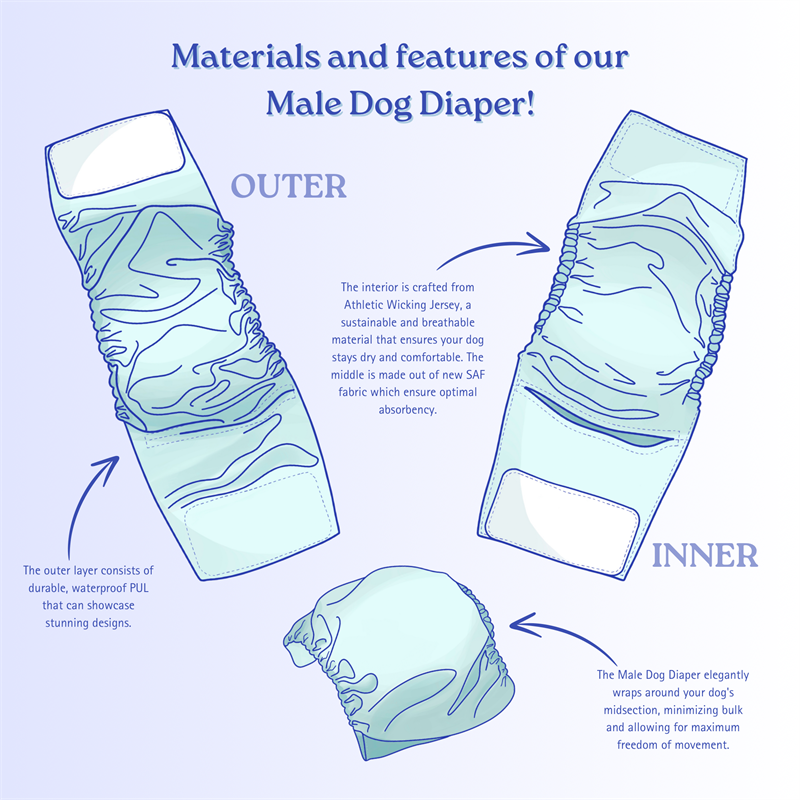
The first decision is whether the dog needs coverage around the abdomen or around the entire rear. A Male Dog Diaper generally works as a belly wrap that covers the urinary area without enclosing the hindquarters. This design is useful for urine dribbling and indoor marking because it is less bulky than a full diaper. The design includes a waterproof TPU-coated polyester outer layer, an absorbent middle layer, a moisture-wicking polyester lining, adjustable hook-and-loop fastening, and reusable construction.
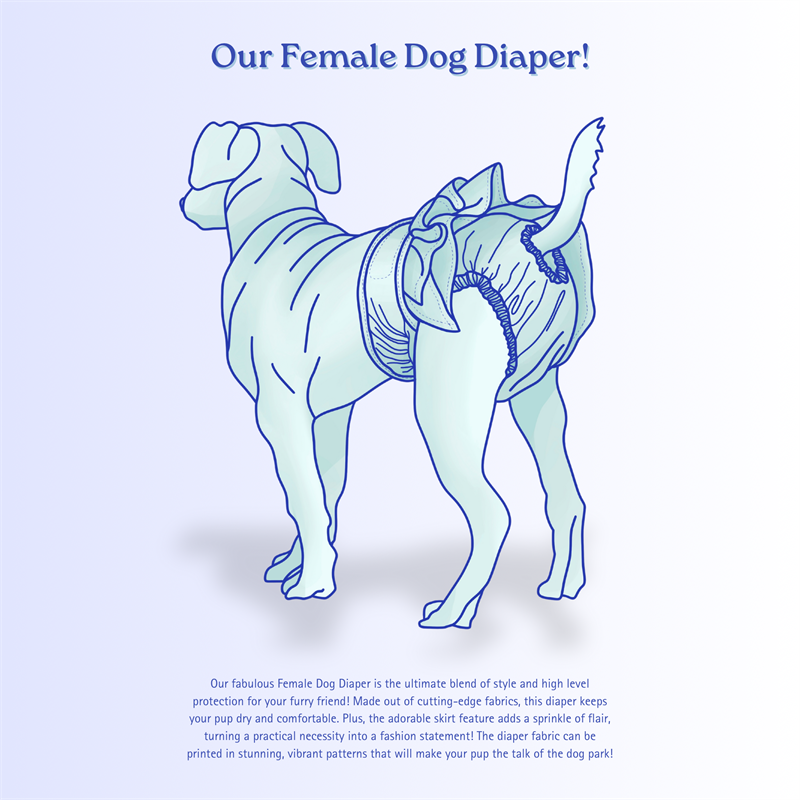
A full-coverage design is usually more appropriate for female anatomy, heat-cycle discharge, or situations requiring protection around the rear. Kingsoo Female Dog Diapers include a female-specific tail opening, an adjustable waist, an absorbent inner structure, and a waterproof exterior. Sizes are available from XXS through XL, although owners should always use the product measurements rather than assuming that breed or weight alone determines size. Correct anatomical coverage matters because a well-fitted waistband cannot prevent leaks when the absorbent area sits in the wrong position.
Owners must also choose between disposable and washable construction. Disposable products reduce laundry and can be convenient for travel, short-term recovery, or occasional use. Washable products require cleaning and rotation but may be more practical for recurring incontinence, repeated heat cycles, or daily marking management. Collections of Reusable Pet Diapers commonly emphasize waterproof outer materials, absorbent cores, adjustable closures, and machine-washable care.
Decision Factor | Washable Design | Disposable Design |
|---|---|---|
Frequency of use | Suitable for repeated or long-term use | Convenient for occasional or temporary use |
Daily maintenance | Requires washing, drying, and rotation | Requires regular replacement and disposal |
Fit adjustment | Often uses adjustable closures | Usually offers limited reuse after adjustment |
Travel convenience | Requires storage for soiled items | Easier to discard during travel |
Waste generation | Reused through multiple wear cycles | Creates waste after each change |
No material can compensate for poor fit or delayed changing. A waterproof outer layer helps prevent strike-through, while the absorbent layer holds liquid and the inner surface reduces direct wetness against the coat. Breathable, smooth edges and adjustable closures can improve comfort, but the skin still needs regular inspection. Owners should therefore evaluate the complete system—coverage, absorption, fastening, edge pressure, washability, and change frequency—rather than selecting a Pet Diaper based on absorbency claims alone.
Measure the dog while it is standing naturally. For a belly wrap, measure around the abdomen in the position where the wrap will sit, usually in front of the hind legs and over the urinary area. For a full Pet Diaper, measure the waist and check the required length from the waistline to the tail or lower abdomen. Long or dense coats can affect the reading, so the tape should sit against the coat without compressing the body or hanging loosely over the fur.
After fastening the diaper, check both security and pressure. The waistband should stay in place during walking, sitting, and lying down, but it should not leave deep marks or pinch the skin. Owners should be able to slide fingers comfortably under the band, and the tail opening should not pull upward or rub at its edges. Check that the absorbent panel covers the source of the urine or discharge rather than sitting too far forward or backward.
Leaks provide useful diagnostic information. Moisture near the waist usually indicates that the diaper is too loose, positioned incorrectly, or already saturated. Leakage around the legs can result from gaps, twisted elastic, compressed absorbent material, or a size that does not match the dog’s proportions. A diaper that slides backward may need a smaller waist setting, a different body shape, or supervised support from suitable pet clothing. Increasing absorbency without correcting placement often makes the Pet Diaper bulkier while leaving the original leak path unchanged.
Recheck sizing whenever the dog gains or loses weight, grows, receives a significant haircut, or changes posture because of age or illness. Fit can also vary between product designs even when the printed size label is identical. For that reason, owners managing long-term incontinence should test a new diaper during a supervised daytime period before relying on it overnight or during travel. A controlled trial reveals rubbing, slipping, chewing, restricted movement, and inadequate coverage before those problems create a larger hygiene issue.
Introduce the Pet Diaper gradually rather than fastening it for several hours on the first attempt. Let the dog investigate it, then reward calm behavior while briefly placing and removing it. During later sessions, increase wear time slowly and use praise, treats, toys, or familiar activities to redirect attention away from the new sensation. Forcing a frightened or resistant dog can create a lasting negative association and make every future change more difficult.
The diaper should be checked frequently and changed as soon as it becomes wet or soiled. Urine, discharge, and fecal material can irritate skin, encourage bacterial or yeast growth, mat the coat, and create odor when trapped in a warm enclosed area. Clean the affected coat and skin with a dog-appropriate method, dry the area completely, and inspect for redness before applying a fresh diaper. Dogs that leak continuously may require multiple changes throughout the day and additional changes overnight.
Regular diaper-free periods allow the skin to dry and give the dog an opportunity to move and toilet normally. Remove the Pet Diaper before outdoor bathroom breaks unless a veterinarian has provided different instructions for a dog with special mobility needs. Never assume that an unchanged outer surface means the inside is dry, because a waterproof shell is designed to hide moisture from furniture. Owners should check the lining directly and monitor areas around the waist, legs, tail, genitals, and anus for pressure or friction.
Human diaper-rash products should not be applied automatically. Some creams contain ingredients such as zinc oxide that can be harmful when a dog licks or ingests them. Redness, broken skin, swelling, odor, discharge, persistent licking, hair loss, pain, or open sores should prompt veterinary advice rather than repeated home treatment. A Pet Diaper routine is only successful when it protects the environment without sacrificing the dog’s skin health or delaying necessary care.
Washable diapers work best as a rotation rather than as a single garment used repeatedly. Owners need enough clean units to replace wet diapers immediately while allowing washed items to dry fully. Rinse or remove solid waste promptly, follow the product’s washing instructions, and make sure detergent residue does not remain against the dog’s skin. Inspect the waterproof layer, absorbent core, elastic, seams, and hook-and-loop panels after washing because damage in any of these areas can reduce performance. Kingsoo’s male and female designs are reusable and machine washable.
Persistent odor after washing may indicate incomplete rinsing, retained moisture, or buildup inside the absorbent layers. Repeated leakage after an initially successful period can signal worn waterproof material, compressed absorbency, stretched elastic, or a change in the dog’s body size. Fasteners should be kept free of hair and debris so they can close evenly without creating tight pressure points. Replacing a worn Pet Diaper is often safer than compensating with tighter fastening, extra layers, or longer wear.
A dog that repeatedly removes the diaper may be uncomfortable, improperly fitted, anxious, overheated, or irritated by an existing skin problem. First examine the skin and verify coverage, then repeat gradual positive introduction. Supervised suspenders or suitable pet clothing can sometimes help with slipping, but they must not create entanglement or restrict movement. When a secure and comfortable fit cannot be achieved, alternatives such as washable bedding, protected resting areas, toilet pads, mobility support, or veterinary treatment may be more appropriate.
A Pet Diaper should be selected according to anatomy, coverage, absorbency, fit, and the expected length of use—not appearance alone. Safe use depends on prompt changing, regular skin checks, diaper-free breaks, proper washing, and veterinary attention when accidents begin suddenly or irritation develops. As a manufacturer and supplier with documented production facilities and reusable pet-care products, Kingsoo offers washable male and female designs intended to support fit, leak management, and repeat-use maintenance. The right product and care routine can improve hygiene without overlooking the dog’s comfort or underlying health needs.
A: Change it immediately after soiling and check it frequently between changes. Dogs with continuous leakage may need several daytime changes and additional overnight care.
A: Overnight use requires frequent checks and prompt replacement when wet. Long exposure to moisture or pressure increases the risk of irritation, infection, and sores.
A: Male wraps cover the urinary area around the abdomen, while female designs usually provide fuller rear coverage with a tail opening for heat discharge or incontinence.
A: No. It may temporarily contain accidents, but healthy dogs still need consistent toilet routines, positive reinforcement, appropriate outdoor access, and investigation of training regression.
A: Common causes include incorrect size, poor anatomical coverage, loose leg openings, misaligned absorbent material, saturation, damaged waterproof layers, or delayed changing.