
A used cloth pad can go straight to the sink at home, but the same pad may need to spend several hours in a bag if you change at work or school. Both situations can fit a simple laundry routine. When you are ready to wash, follow the pad’s care label for detergent, water temperature, and drying. Give the absorbent core enough time to dry before putting the pad away. If a pad still smells after laundering or seems dry at the edges but damp in the center, a small change in the routine may be more useful than adding another laundry product.
What to Do With a Used Pad
If you can wash it now. Check the label and open the wings so the pad lies flat. A cool-water rinse can remove some blood before the main wash if the label allows it. Let the water run through the absorbent surface and gently press out the excess. Rinsing until the water is perfectly clear can take time and is rarely a useful way to judge when to start the wash. If the pad is going straight into an appropriate wash cycle, follow the product directions on whether a separate rinse is needed.
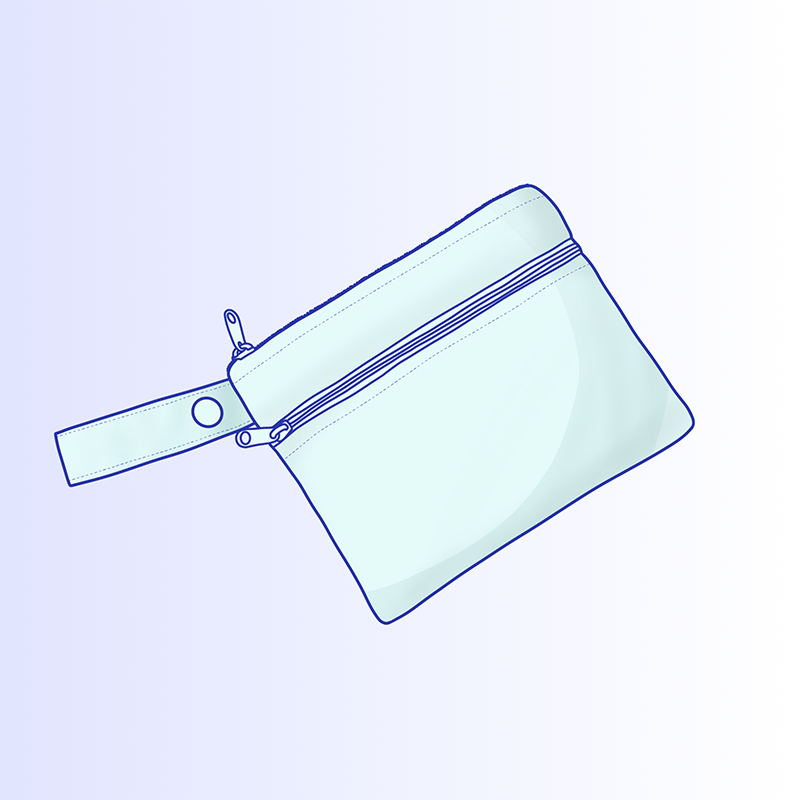
If you are away from home. Fold the used surface inward when the pad design allows, then place it in a separate compartment or a suitable Sanitary Pad Pouch. Check whether the pouch is intended to hold used pads and whether its lining can be cleaned. Carry clean pads separately. A used pad can wait until you have access to a suitable sink or washer. Skipping the public-sink rinse also avoids putting a dripping pad back into a bag. At home, empty the pouch, open the pad, and start the label-approved routine when practical. Wash and dry the pouch according to its own instructions.
If the blood has already dried. Start by moistening the spot with cool water if permitted. Let the water reach the absorbent fabric and gently work it through the marked area. If the label permits a stain treatment, apply it according to its directions and rinse before the main wash as required. Avoid aggressive scrubbing around seams or any laminated backing. Check the mark after washing before deciding whether another treatment is worth doing.
| Your situation | First step | What to do next |
|---|---|---|
| You have a sink and can wash now | Open the pad and pre-rinse if useful | Follow with the main wash |
| You are changing away from home | Separate the used pad from clean supplies | Empty the pouch when you return |
| Blood has dried on the surface | Rewet the marked area if the label allows | Wash before reassessing the stain |
| You have a pad with a removable insert | Check whether the insert comes out for washing | Launder the pieces as directed |
The storage decision also affects drying later. If you rinse a pad now but cannot wash it until much later, you need a suitable way to handle a wet item in the meantime. For some routines, containing the used pad and rinsing just before laundry is simpler than adding water early. Follow the maker’s directions if it specifies how long or under what conditions to hold used pads.
How to Wash Cloth Pads by Hand or in the Machine
Look for three instructions first: the permitted water temperature, the type of wash, and any restrictions on laundry products. A fabric that tolerates one treatment on its own may be sewn to a backing or held together by fasteners that require different care. Use the instructions for the complete pad. If a removable insert and its holder have separate labels, treat them as separate items during washing and drying.
Hand-washing a cloth pad
- Prepare the pad. Open the wings and remove any insert designed to come out. Pre-rinse if the pad is visibly soiled and the instructions allow it.
- Wash through the layers. Use clean water and the permitted detergent. Work the solution through the absorbent area with gentle pressing and movement. Pay attention to the center and edges, where several layers may meet.
- Rinse thoroughly. Replace the wash water with clean water and rinse as directed. If the pad still feels soapy, give it another rinse. A thick insert can hold more wash water than a thin liner.
- Remove excess water and dry. Press gently rather than twisting or pulling the layers against one another. Dry the pad according to the label.
For a few pads, hand washing can be practical if you have a suitable sink and enough time to rinse. If you regularly wash a larger batch, decide where the clean pieces will dry before starting. Damp pads stacked together while you look for space take longer to finish drying.
Machine-washing a cloth pad
Open the pads before loading the machine. Separate removable components as directed. Choose the care-label cycle and temperature, then dose detergent for the load and the detergent instructions. If you combine pads with other laundry, check that the items can share the same care settings and leave enough room for movement. A laundry bag can help keep small pieces together if allowed. Give the pieces space inside the bag so water can reach them.
Remove the pads promptly when the cycle ends. Open folded wings, separate anything that has bunched up, and check for soapiness or visible residue before drying. If the label advises against fabric softener or a particular stain product, follow that direction even when it would otherwise be part of your usual laundry routine.
Water for a pre-rinse and water for the main wash serve different purposes. A cool pre-rinse can help with visible blood, while the main wash should use the temperature specified for the pad. If you wash products from several brands together, use a compatible setting or separate them. The most useful routine is the one you can repeat consistently with your actual mix of pads.
How to Dry Cloth Pads Before Storing Them
Dry a pad unfolded, with the wings open and space around it. If an insert is removable, dry it separately where the instructions allow. Follow the care label for air drying or tumble drying. For air drying, allow air to reach as much of the pad as possible. Turn it if the underside is slow to dry. When laying pads flat, choose a surface that allows airflow and avoid overlapping them.
Use the thickest pad in the batch to judge when you can put everything away. Press lightly at the center and along the stitched edges. Compare the feel of the core with the thinner wings. If any part still feels damp, give it more time. A dry-feeling top layer can hide moisture deeper in a pad, particularly in a heavier overnight style. Check the insert and holder separately before reassembling a modular pad.
In humid weather, reserve more drying time. Spread the wash over two batches if drying space is tight, or move the rack to a location with better airflow. If you regularly need a pad before the previous one has dried, plan your rotation around the drying time of your thickest style. A spare day pad is useful only if it suits the flow and coverage you need at that time.
Once the pads are dry, store them in a clean, dry place. A drawer, fabric organizer, or clean pouch can work if it stays dry between periods. Keep the clean supply separate from the pouch or compartment holding used pads. If your storage spot is routinely damp, move the clean pads and check the drawer, pouch, or liner before using it again.
What to Do About Stains and Lingering Odors
Start with what you can see, smell, or feel. A faint color mark after a complete wash, an odor present as soon as the cycle ends, and a musty smell after storage point to different steps. Treating every problem with the same extra soak can make it harder to find the cause.
| What you notice | First check | Practical next step |
|---|---|---|
| A faint mark remains after washing | Check for visible residue and review the stain-care instructions | Repeat a permitted spot treatment if the mark matters to you |
| An odor remains right after washing | Check whether the pad was folded, packed tightly, or washed on an unsuitable cycle | Open all layers as directed and rewash on a compatible cycle |
| The pad feels soapy after rinsing | Check detergent dose and whether the load could move freely | Rinse again as permitted and adjust the next load |
| A musty smell develops in storage | Check the thickest part of the pad, seams, and storage pouch for dampness | Rewash as needed, dry everything completely, and change the storage setup |
| The whole load smells similar | Check whether the issue also affects other laundry | Review washer care and load handling before changing the pad routine |
A faint stain and loose residue call for different checks. Look at the fabric in good light and feel it after rinsing. If a wash was interrupted, the pad stayed folded, or the core remained soapy, correct that issue first. A visual stain check alone cannot tell you how thoroughly a pad was washed. Treat cosmetic marks with care-label-approved methods and judge the wash by the whole process.
If odor recurs, make one adjustment at a time. Change the load size, the rinse, or the drying location and see which step affects the result. A pad that smells when it leaves the machine points to a different part of the routine than one that smells only after a night in the drawer. Also check the used-pad pouch, which can retain moisture in folds or around the zipper.
A routine you can keep
Set up your routine around the slowest step. If you mostly change outside the home, separate clean and used pads so handling them later is easy. If a thick core takes longer to dry, leave enough time or keep enough suitable pads in rotation. Kingsoo manufactures reusable cloth pads in different constructions, and those differences make the individual care label useful. Once your routine reliably gets each pad washed, rinsed, and fully dry, troubleshoot a remaining stain or odor by checking the step where it first appears.
Frequently asked questions
- Should you wash new cloth pads before wearing them?
-
Check the first-use directions. If the product calls for a prewash, complete it and let the pad dry before wearing it. This also gives you a chance to see how long that design takes to dry.
- Can you wash cloth sanitary pads with underwear?
-
You can combine them when the care directions, detergent, and wash settings are compatible. Open the pads and leave room for the load to move. Wash separately if the instructions call for it or the other items need a different cycle.
- Can you put cloth pads in the dryer?
-
Use the dryer only if the label permits it, and follow the stated heat setting. Check both the removable insert and the outer holder if they have separate instructions.
- Can you use bleach on cloth pads?
-
Use bleach only when the product care instructions explicitly allow the type you plan to use. For a stain, check the approved spot-treatment options first. Follow the laundry product directions and avoid mixing cleaners.


