If you are buying nursing pads before the baby arrives, a yearly estimate can seem like a convenient way to decide what to order. Start by separating the two purchases. Disposable nursing pads are a running supply, so estimate how many individual pads you will use during the periods when you need them. Washable nursing pads are a rotation, so count how many can be in use, waiting to be washed, or drying at the same time. You can make a starting estimate for either type and update it after you have a few days of actual use.
How Many Nursing Pads Do You Use in a Day?
Start by counting every clean pad you put into use. If you start the morning wearing two pads, replace one at midday, and put on two fresh pads at bedtime, your total is five individual pads. The single replacement counts as one. Keeping a count of change occasions would give you three events, which would understate the number of pads used.
Record a few representative days once you have started using pads. Include at least one day that looks like your usual routine and, if relevant, a day away from home. You can keep a tally in your phone. Note any overnight use and record whether you changed one or both sides. If you pack a spare and bring it home clean, it belongs in your available stock rather than your consumption count.
| Example day | Clean pads put into use | Running total |
|---|---|---|
| Morning pair | 2 | 2 |
| Midday replacement on one side | 1 | 3 |
| Fresh pair at bedtime | 2 | 5 |
| Unused spare returned from your bag | 0 | 5 |
For the annual disposable estimate, use the average for a representative stage. For a washable rotation, also note the higher-use days. A household that averages four pads but sometimes uses six before the next batch dries may need more stock than the average suggests. Treat the higher number as a planning input and adjust it if that pattern becomes more or less frequent.
Use pad wetness and your own routine to guide when you change a pad. A planning figure such as four pads a day describes an example and can help you order a pack. It does not set a wear schedule. Leakage and use can change, so revise the count rather than trying to make actual use match the estimate.
Check the pack wording before you order. Six pairs means twelve individual pads. A pack labeled six pads means six pieces if the contents list confirms that wording. This distinction matters most when your estimate includes single-side changes or when you compare pack prices. For a price comparison, divide the pack price by the number of individual pieces.
How to Estimate a Year’s Supply of Disposable Pads
The simplest yearly calculation is to multiply average daily use by the number of days you expect to use pads, then repeat for each stage and add the totals. A stage might be a period of daily use, a stretch when you only use pads on workdays, or a later period when you no longer use them. Define the stages by your routine. The calendar provides the number of days, while your own notes provide the daily count.
Suppose you use four individual disposables per day for the first 30 days of your estimate. You then use two per day for 60 days and one on each of 40 days when you are away from home. You use none on the remaining days. The estimated total is 280 disposable pads. That is an example of the calculation, not a prediction of how leakage changes over a year.
| Example stage | Days with use | Pads per day with use | Total pads |
|---|---|---|---|
| Daily use at the higher count | 30 | 4 | 120 |
| Daily use at the lower count | 60 | 2 | 120 |
| Occasional use away from home | 40 | 1 | 40 |
| Remaining days without use | 235 | 0 | 0 |
| Illustrative year | 365 | 280 |
Keep the same counting method throughout. If you use pads only on workdays, multiply by workdays. If your average already includes days when you use none, multiply by all days in that stage. Mixing those methods can make the estimate too low or too high. Where you expect a change but do not know when it will happen, calculate a shorter period first and extend it once you see what you use.
If the goal is budgeting, you can convert 280 pieces into whole packages. A pack of 30 would mean nine full packs plus ten pieces, so buying in full packs would require ten packs at that size. If you are deciding how many to buy today, use the estimate until your next convenient purchase rather than buying the full theoretical year. A budget is easier to adjust than unopened stock.
For mixed use, count disposable and washable changes separately. If you wear washable pads at home and disposables while traveling, only the travel disposables go into the disposable total. If you carry an unopened backup pack but rarely use it, count that pack as stock on hand and subtract it from the amount you need to buy.
How Many Washable Pads Do You Need in Rotation?
A washable rotation needs to cover three groups at once. Some pads are ready or currently in use, some are waiting to be washed, and others may be drying. Start counting the turnaround when a used pad comes off. Stop when the pad is fully dry and available again. Wash day alone gives only part of that timing.
A practical estimate is pads used on a busy day × days until that batch is ready again + spare pads. For a fractional day, round the result up and check what happens at the busiest point in the schedule. If your pads return in the afternoon but you usually need a fresh pair in the morning, make sure that morning is covered. When use is uneven, a short day-by-day sketch can be more accurate than an average.
| Example routine | Days until pads are available again | Busy-day use | Spare pads | Starting estimate |
|---|---|---|---|---|
| Washed daily, available after about one day | 1 | 4 | 2 | 6 pads |
| Washed that day but only dry late the next day | 2 | 4 | 2 | 10 pads |
| Washed every other day and dry by the end of wash day | 2 | 4 | 2 | 10 pads |
| A delayed load or slow drying adds another day | 3 | 4 | 2 | 14 pads |
The middle rows can produce the same requirement even though the wash days are different. In both, the longest-waiting pads may be out of circulation for roughly two days. What matters is when the first group returns. If you routinely need more pads before laundry is ready, increase the estimate by the number you are missing at that point.
Allow for the spare pad that is already elsewhere. If two clean pieces are reserved in a work bag, decide whether they are part of your two-pad buffer or a separate supply. Count them only once. A larger buffer may be useful on days when you cannot return home, while a smaller one may work when laundry is easy to run and replace.
The time needed by Washable Nursing Pads can vary by construction and drying setup. Check the care instructions and test the actual turnaround with the products you choose. If a thicker design takes longer to dry, plan around that design if it accounts for a regular part of your use. If you reserve it for occasional use, you can track it separately from your daily rotation.
How Many Should You Buy Before the Baby Arrives?
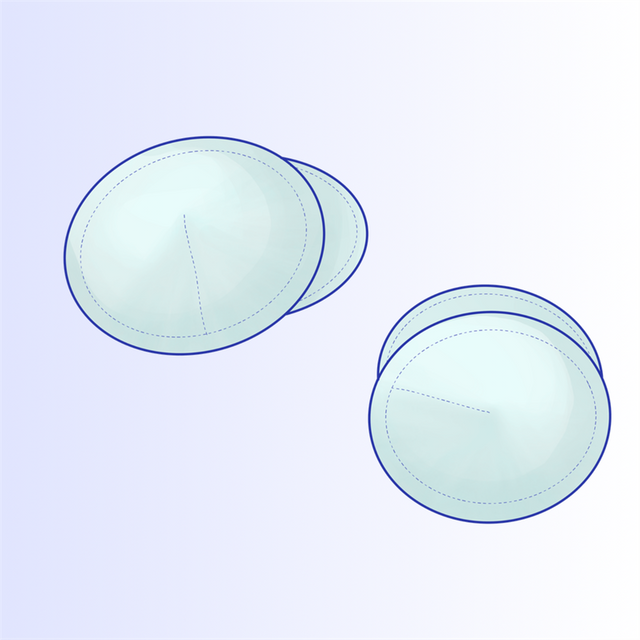
Buy for a short starting period and make a plan to adjust it. If you choose disposables, select a pack size you can use while you learn your needs. If you choose washables, buy enough to test how a few pieces fit, wash, and dry in your home. If you expect to use both, decide which will be your main supply and which will cover gaps.
A simple example shows why those purchases are different. At four pads a day, an illustrative seven-day disposable supply contains 28 pieces. At the same daily use, a washable rotation with a two-day turnaround and two spares contains ten pieces. A mixed plan might reserve four disposable pads for a particular day away while keeping the washable rotation for home. Subtract any pieces you already have before buying more.
Once you have a few days of use, update the calculation. Look at which pads you reach for, whether you replace one side more often, and when the clean supply runs low. If you return to work, have less access to laundry, or change how often you are away from home, measure again. These changes can affect the number you need more than the month printed on a calendar.
If you are buying a gift, clear pack quantities can be more useful than a large assortment. Label pieces and pairs clearly and include the care directions for washables. If you are building your own supply, keep a small reserve accessible and decide when to reorder before you run out. That turns a broad annual estimate into a useful purchase plan.
Buy for the next stage
Start with the number of individual pads you use, then apply the calculation that matches the type you buy. For disposables, estimate the days of actual use. For washables, cover the time until the pads are ready again. Kingsoo manufactures washable nursing pads, and different constructions can make the wash-to-dry turnaround a meaningful part of the purchase. Begin with a manageable supply and update it as your routine becomes clearer. You can budget for a year while making purchase decisions a stage at a time.
Frequently asked questions
- Do nursing pad packs count individual pads or pairs?
-
It depends on the label. A pack of six pairs contains twelve pieces. Check the contents list and do your calculations in pieces.
- What if I only leak on one side?
-
Count the individual pads you put into use, including single-side changes. Avoid multiplying every change by two unless both pads were actually replaced.
- Do I need nursing pads if I mostly pump?
-
Base the decision on whether leakage between sessions affects you and whether you want a pad to absorb it. Your pumping schedule alone does not determine how many pieces to buy.
- Can I use the same estimate for travel?
-
Recalculate for the time you will be away and the laundry or drying access you expect. Include clean spares in your packing total and count unused pieces as available stock when you return.