Cloth sanitary pads can be a good choice for the days when you have a place to change, somewhere to wash them, and enough time for them to dry. Disposable pads may be easier to manage on a long shift or while traveling, especially when you cannot carry a used pad comfortably. Fit, coverage, and comfort vary across individual products in both categories. If you are considering the switch, compare a cloth pad and a disposable pad that serve the same purpose. Then try the cloth option in one part of your routine before deciding how many to buy.
How Do Cloth Pads Compare for Comfort and Leaks?
Compare products designed for the same kind of use. A thin cloth liner and a long disposable night pad serve different jobs. To compare two night pads, check how far each extends at the front and back, how wide it is where the flow lands, and how it sits in the underwear you actually wear to bed. Once you match the intended use, the differences are easier to interpret.
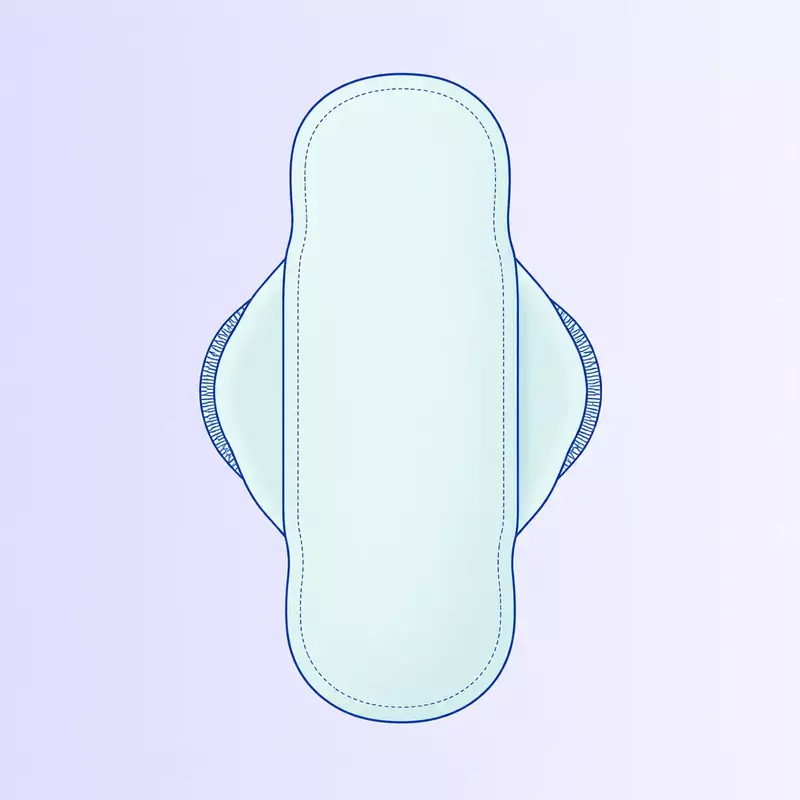
Cloth pads may attach with wings and snaps. Many disposables use an adhesive strip and may have adhesive wings. A secure fit depends on the pad and the underwear working together. A cloth pad that can rotate around a narrow gusset may shift when you walk or roll over. A disposable pad may bunch if it sits across a crease or if the adhesive does not hold on that fabric. Check position after ordinary movement before assuming you need more absorbency.
Comfort has several parts. Notice how the surface feels, whether the pad bunches when you sit, and how bulky it feels under your clothes. A soft top layer can still feel uncomfortable if a seam or wing presses in the wrong place. A slim pad can feel comfortable but offer too little coverage for a particular use. Compare the things you can actually observe instead of relying on fiber names or broad labels such as day and night.
| What you notice | What to check first | What to try next |
|---|---|---|
| The pad shifts before it is very wet | Fastening, gusset width, and bunching | Try different underwear or a pad that fastens more securely |
| A mark appears near the back at night | Placement and rear coverage | Compare a longer or wider-backed night style |
| Fluid goes over one edge | Whether that edge moved or the pad was already saturated | Adjust fit first if it shifted. Try a different capacity if it was full |
| The pad feels bulky while sitting | Thickness and the position of folds or seams | Compare another style intended for the same flow |
Look at the used pad when a leak happens. A pad that is wet through has a different problem from one that moved sideways while most of the center stayed dry. You may be able to solve the second problem through fit. For the first, reassess capacity and when you change. Reusable Cloth Pads come in different coverage and construction options, which makes matching the style to the intended use more useful than comparing categories as a whole.
Which Pads Are Easier to Use Away From Home?
A disposable pad generally leaves your routine at the point of disposal. A cloth pad stays with you until it can be washed and dried. For a short errand, that difference may barely matter. On a long commute, a school day, or a trip with shared bathrooms, it can shape what you want to carry and where you choose to change.
Walk through one day in order. How many clean pads do you need to leave home with? Is there a private place to change? Can you keep the used pad separate from clean items? Will you be able to wash it later, and do you have another pad available while it dries? If you use disposables, include access to a suitable bin in the comparison. Both options are easier when you know what facilities will be available.
For overnight travel, check your return time and laundry access. One night away with a private room is a different situation from several days moving between shared accommodations. If you choose cloth for part of the trip, plan around the longest time you expect to be away from a suitable wash and drying setup. Packing one or two disposables can help cover a change in plans if that is the option you prefer.
At home, consider where you can wash and dry the pads and how that fits with the rest of your laundry. The most useful test is whether there is a clean, dry pad available when you need it. If washing is easy but drying takes until the next day, the drying step determines how many you need on hand. In a hybrid routine you can choose cloth for the changes where that schedule works well.
Do Cloth Pads Save Money Over Time?
Cloth pads shift a portion of spending upfront. Disposables create a recurring cost as you replace them. For a fair comparison, calculate what you would otherwise spend on the specific disposable pads that cloth will replace. Then account for the initial cloth purchase, the laundry cost attributable to those pads, and any disposables you keep buying.
Here is a worked example with illustrative prices. Suppose a small cloth set costs $24. The disposable pads it replaces cost $0.30 each. You replace eight disposable pads per period, saving $2.40 in disposable purchases each time. If the extra wash cost attributable to the cloth pads is $0.40 per period, the net saving is $2.00 per period. Under those assumptions, it takes 12 periods to recover the $24 purchase price. Your actual result will depend on your prices, laundry routine, and how often you use the set.
| Input | Example | What to use for your estimate |
|---|---|---|
| Initial cloth pad purchase | $24 | Your total outlay for the pads you expect to use |
| Disposable pad cost | $0.30 per pad | The pack price divided by the number of pads |
| Disposable pads replaced | 8 per period | Your actual count from a trial |
| Additional laundering cost | $0.40 per period | Your best estimate for added wash and drying costs |
| Net amount saved | $2.00 per period | Avoided disposable spending minus added laundry cost |
This example counts only disposable pads actually replaced. You can also compare the total costs of two routines by adding the disposables you still use to the cloth routine. Choose one method and use it consistently. If some of the cloth pads sit unused or you replace them early, the payback calculation changes.
Some households can include pads in a compatible load they already run. Others need an extra wash or more drying time. Use a realistic estimate for your setup. If the estimate is hard to pin down, run two versions with a lower and higher wash cost. That shows whether the purchase still makes sense when the inputs vary.
How Much Waste Can Switching to Cloth Pads Prevent?
Start with a count. If you normally use 18 disposables per period and switch 6 changes to cloth, you avoid using 6 disposable pads that period. If the full 18 changes move to cloth, you avoid 18. A hybrid routine can still reduce the number of single-use pads discarded, and the result is easy to track.
Use the same comparison period on both sides. A month with travel or a change in flow may look different from a month spent mostly at home. If you want an annual estimate, record several periods and use a realistic average. Think of the count as a description of disposable pad waste. Reusable pads, packaging, and any accessories also have their own eventual disposal.
This count answers a practical question about the trash you produce. A full environmental comparison would also consider manufacturing, washing, drying, and useful life. You can compare your actual disposable use immediately, then decide whether you need a broader life-cycle estimate.
How to Try Cloth Pads for One Period
Pick one predictable part of the day
Start where you have a reliable place to change and an easy laundry routine. At home during the day is one option. If night coverage is the reason you are comparing pads, test an appropriately sized night pad on a night when you can check how it stayed in place. Keep your usual option available while you learn the fit.
Record the details that could change your choice
Write down the pad style, where you used it, and what happened. A useful note might read: the pad stayed centered while walking, felt bulky when sitting, and dried by the next morning. That is more useful for the next purchase than a single rating. If a pad leaked, record where the mark appeared and whether the pad had shifted or was saturated.
Decide what to keep for the next cycle
Count how many disposables the trial actually replaced. Then decide whether you want more cloth pads for the same situation, a different style for a recurring fit issue, or a combination of cloth and disposable pads for different days. If a style worked well but dried too slowly, your choice might be an extra spare or a change in the washing schedule.
Choose the pad that fits the day
Cloth pads are worth continuing with when they fit securely and you can wash and dry them in time for the next change. Disposable pads may still suit days when you have limited facilities or need a straightforward option away from home. Kingsoo manufactures reusable cloth pads in several styles, so match the coverage and fastening to the situation you want to test. One period of actual use can show which changes are easy to switch, how many disposables you replace, and whether buying more cloth pads would solve a problem you have.
Frequently asked questions
- Do cloth sanitary pads work with loose-fitting underwear?
-
Fit depends on how the pad fastens around the underwear and how firmly the fabric holds it against the body. Check for rotation or bunching during ordinary movement before wearing the combination for a long stretch.
- Is a thicker cloth pad always more absorbent?
-
Capacity also depends on the materials and construction of the absorbent core. Compare styles designed for similar use and consider fit and coverage alongside thickness.
- Can I use cloth pads just on light-flow days?
-
Yes. Using cloth for only some changes is a practical way to try the fit and laundry routine. Choose a style intended for the amount of coverage you need.
- How many cloth pads should I buy for a first trial?
-
Choose enough to cover one predictable part of your routine and allow time for washing and drying. You can work out the larger rotation after you know how quickly the first pads return to use.