Author: Site Editor Publish Time: 2026-10-28 Origin: Site
Raising a child means facing a mountain of laundry every single day. From unexpected newborn spit-up to the chaotic joy of baby-led weaning, daily messes escalate quickly and relentlessly. Choosing the wrong gear makes this dirty reality much worse. You often end up facing permanently stained clothes, painful neck rashes, or a frustrated toddler constantly ripping fabric off mid-meal. Parents need a better strategy to handle the chaos.
We built a stage-by-stage evaluation framework to help you navigate these messy milestones. You will learn how to buy the exact right style, material, and quantity of baby bibs for your current needs. This practical guide minimizes your daily cleanup, protects delicate skin, and prevents you from overspending on useless items.
Function Follows Stage: Newborns need soft absorbency for milk; teething babies need all-day moisture barriers; toddlers need heavy-duty coverage.
Material Matters Most: The choice between cotton, silicone, and modern synthetics dictates your daily laundry burden.
Buy Smart, Not Bulk: Exact quantities depend on your laundry cycle and the baby's current developmental stage, not arbitrary pack sizes.
Comfort dictates Compliance: Even the most protective bib is useless if the child refuses to wear it due to stiff materials or scratchy fasteners.
Babies grow rapidly. Their daily messes change even faster. During the first few months, parents deal strictly in liquids. Milk spit-up requires rapid, immediate absorption. Around month four, the teething phase begins. Continuous, acidic drool becomes your daily reality. By month six, introducing purees changes the game entirely. Food starts flying. Finally, self-feeding introduces heavy stains and massive food debris.
Parents often try buying one universal style. This strategy always fails. A heavy silicone catcher gapes loosely around a newborn. Milk simply bypasses the material entirely. It pools dangerously in their delicate neck folds. Conversely, using a thin cotton cloth for spaghetti night guarantees ruin. Tomato sauce quickly bleeds through thin fabrics onto expensive outfits. The hidden costs mount quickly. You ruin cute clothing. You spend extra money on stain removers. You waste precious time scrubbing collars.
A worthwhile investment meets highly specific success criteria. First, it offers proper absorption or waterproofing for the task. Second, it allows easy cleaning. You must decide between quick wipe-downs and machine washing. Third, it provides a secure fit. A loose neckline defeats the purpose entirely. Finally, material safety remains non-negotiable. Textiles must never irritate sensitive infant skin.
Ultra-soft fabrics dominate this category. They feature high absorbency to handle sudden liquid output. Smart designs use side-fastening snaps. This clever placement avoids disturbing a lying infant during outfit changes.
Best For: Catching milk dribbles and sudden reflux. They effectively protect delicate neck folds from painful milk rashes.
Best Practice: Fasten the closure gently. Always leave two fingers of space around the neck for comfort.
Common Mistake: Leaving soaked fabric against the skin too long. Dampness invites yeast infections in neck folds.
These feature a distinct triangle shape. They sit closely against the chin. Most use a soft cotton top layer. A fleece or terry cloth backing provides a reliable moisture barrier.
Best For: Teething stages spanning months four to twelve. They capture constant drool efficiently. Because they look like stylish scarves, they never look like bulky mealtime gear. We highly recommend stocking up on quality dribble bibs for early teething relief.
Best Practice: Rotate them frequently throughout the day to keep the chin completely dry.
Common Mistake: Buying single-layer bandanas. Without a backing layer, drool soaks straight onto the shirt underneath.
These utilize molded silicone or structured fabrics. They feature a wide, open bottom pocket. The sturdy scoop intercepts dropped food immediately.
Best For: Early solids and puree stages. It stops purees before they ruin laps or hit the floor. When shopping for reliable feeding bibs, prioritize food-grade materials.
Best Practice: Wash silicone immediately after meals using warm soapy water to prevent lingering food odors.
Common Mistake: Buying rigid silicone options. Stiff pockets hit the high chair tray and push uncomfortably into the baby's neck.
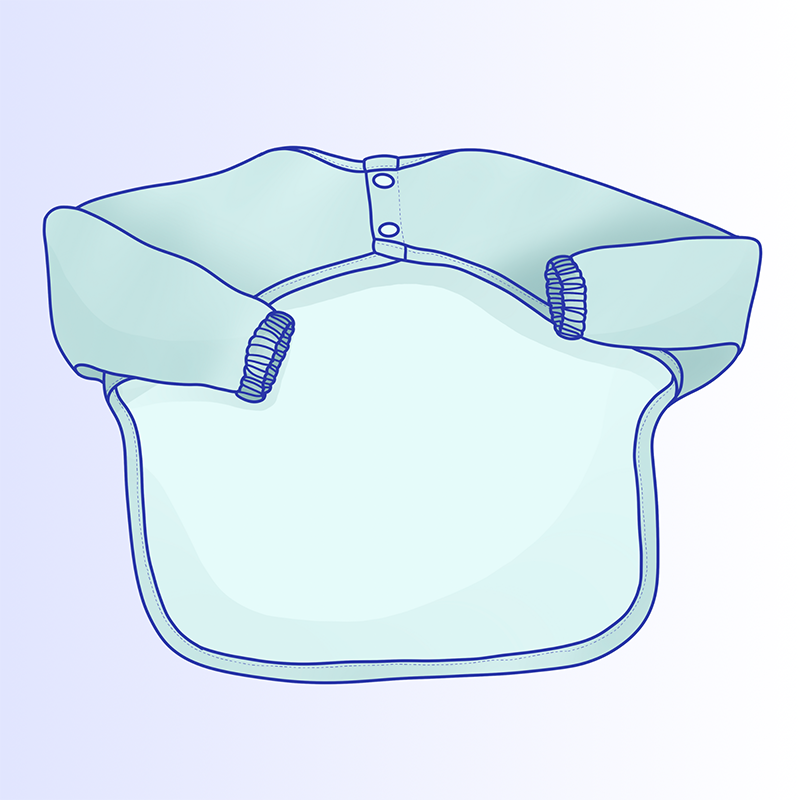
Think of these as wearable protective shirts. They provide full arm and torso coverage. Most designs tie securely at the back.
Best For: Baby-led weaning. Messy eaters and sensory craft projects require maximum coverage. These handle high-stain foods flawlessly. Modern smock bibs save entire outfits from total destruction.
Best Practice: Look for elastic cuffs. Tight cuffs stop juice from running up the baby's forearm.
Common Mistake: Drying them on high heat. Intense dryer heat melts the protective waterproof lining.
Manufacturers create these using paper and plastic hybrids. They attach using simple adhesive tabs.
Best For: Travel or dining out. They serve perfectly as emergency diaper bag backups.
Best Practice: Keep three packed flat in your travel bag alongside baby wipes.
Common Mistake: Relying on them for daily home use. The high recurring cost and negative environmental impact make them unsuitable for everyday routines.
Material selection dictates your daily laundry burden. Silicone offers unbeatable wipe-clean convenience. You simply rinse it under the kitchen sink. However, fabric provides superior lightweight comfort. Heavy silicone poses a distinct risk for younger babies. The stiff edges can chafe tiny necks. Fabric molds easily and softly to the body.
Liquids easily soak through plain cotton. You need a dedicated moisture barrier for mealtimes. TPU (Thermoplastic Polyurethane) or EVA (Ethylene Vinyl Acetate) layers solve this issue perfectly. A reliable barrier prevents liquids from soaking through to inner clothing. We strongly advise using waterproof baby bibs during any messy feeding session.
The textile industry continues improving sustainability. Recycled polyester baby bibs represent a brilliant modern solution. They balance the lightweight feel of fabric perfectly. They also deliver excellent water resistance. Parents get superior performance while actively reducing global plastic waste.
Babies inevitably chew on everything they wear. Material safety requires your strict attention. Always check manufacturer labels carefully. Look for BPA-free and phthalate-free designations. The OEKO-TEX Standard 100 certification provides excellent peace of mind. This global standard ensures textiles remain free from harmful chemical residues and toxic dyes.
Material Type | Primary Benefit | Best Developmental Stage | Care Requirement |
|---|---|---|---|
Soft Organic Cotton | High absorbency and skin safety | Newborns (0-3 months) | Machine wash; avoid fabric softeners |
Food-Grade Silicone | Instant wipe-clean convenience | Early Solids (6-12 months) | Hand wash or top-rack dishwasher |
Cotton + Fleece Backing | Moisture wicking away from skin | Teething (4-12 months) | Machine wash warm; tumble dry low |
Waterproof Synthetics | Full coverage against heavy stains | Baby-Led Weaning (9+ months) | Wipe clean or gentle machine wash |
The baseline number depends entirely on your household habits. Do you run the washing machine daily? Or do you tackle laundry twice a week? Daily washers need far less inventory. Parents washing less frequently require larger stockpiles to survive the week.
Assume you wash clothes two or three times weekly. Use this realistic numerical breakdown to guide your purchases:
Newborns: You need 5 to 10 soft options. Expect one to three outfit changes daily purely for spit-up.
Teething Phase: Stock 10 to 15 bandana styles. Heavy droolers easily soak through three or four units per day. Keeping the chin dry requires constant swapping.
Solids Phase: Keep 3 to 5 wipeable silicone catchers. Alternatively, maintain 4 to 6 machine-washable smocks. Since babies eat three meals daily, having backups ensures you never serve dinner wearing a dirty lunch smock.
Avoid buying massive bulk packs prematurely. This represents a major implementation risk. A 12-pack of a single style seems economical online. However, your baby might hate the fit. The neckline might gap. The fabric might trigger a mild rash. Buy two or three units first. Test the neck fit and your baby's tolerance. Only scale up your inventory after a successful trial.
Making a decision requires matching the tool to the mess. Use this simple logic matrix to decide quickly. If your baby is 0-3 months old, prioritize soft cotton featuring high absorbency. If you face constant teething and drooling, prioritize multi-layer bandanas. If you are starting purees, prioritize soft silicone catchers. If you practice baby-led weaning, prioritize full-coverage waterproof smocks.
Closures matter just as much as the fabric itself. Evaluate fasteners carefully before buying. Velcro fastens quickly. Sadly, exposed Velcro ruins other laundry. It grabs delicate knits in the wash and scratches sensitive neck skin. Snap buttons offer durable security. Toddlers find snaps incredibly hard to rip off. Tie-backs provide a custom fit. However, tying tight knots behind a squirming, hungry toddler takes frustratingly long.
Start your journey using a mixed starter pack. Buy one newborn style, two bandanas, and one silicone option. Test these preferences thoroughly. Observe how your child reacts to the fasteners. Notice how easily the fabrics wash. Once you identify the winning combination, scale up your inventory confidently.
Baby bibs function as highly specialized tools. Matching the exact tool to the developmental mess protects clothes best. You cannot fight spaghetti stains using newborn cotton. You cannot catch newborn milk using rigid silicone.
Finding the right style heavily reduces daily friction. It saves precious time spent scrubbing stains. It makes messy milestones enjoyable rather than deeply stressful. You can finally focus on watching your child explore new foods.
Evaluate your current laundry burdens today. Upgrade your toolset to match your baby's current developmental stage. View curated collections of stage-appropriate, safety-tested options online. Protect your baby's skin and save your sanity.
A: Yes. Newborns frequently spit up milk. Without protection, milk drips into their neck folds. This trapped moisture breeds bacteria and causes painful skin rashes. Soft, highly absorbent fabrics catch this liquid before it damages their delicate skin or ruins their outfits.
A: No. Babies must never sleep wearing them. They pose a severe strangulation risk. You must remove all neckwear before placing an infant in a crib or bassinet. Always prioritize safe sleep guidelines over keeping pajamas clean.
A: Treat stains immediately using an enzyme-based spray. Wash them in warm water. Sun-bleaching works wonders for organic stains like carrots or tomatoes. To prevent mold, ensure waterproof layers dry completely before storing them in dark drawers.
A: Quality varies significantly between brands. Thick, cheap silicone feels heavy and uncomfortable. We highly recommend seeking ultra-soft, food-grade silicone for early eaters. It drapes naturally over the chest without digging into a 6-month-old's fragile neck.