
How many cloth diapers do you need? It sounds like a simple shopping question, but the answer changes with your baby’s age, your laundry rhythm, the diaper style you choose, and how much backup you want on busy days. A small stash can work if you wash daily. A larger stash gives you breathing room, protects elastic and fabric from overuse, and makes cloth diapering feel less like a chore.
For parents, the real goal is not to buy the biggest pile of diapers. It is to build a balanced routine. You need enough clean diapers ready for normal changes, enough extras for naps and night use, and enough drying time so your cloth diapers do not stay damp in a laundry basket. This guide explains practical stash sizes by age, diaper type, and washing schedule, then shows how KINGSOO reusable baby diaper options can support a more comfortable daily routine.
A well-planned diaper stash does more than prevent emergency laundry. It also affects odor control, washing efficiency, caregiver confidence, and product life. When families own too few diapers, the same pieces get washed again and again. Elastic, snaps, inserts, and waterproof layers see heavier wear. That does not mean a minimalist stash is wrong, but it needs a very reliable laundry routine.
Owning too many diapers can create a different issue. Some parents buy a huge collection before they know what fits their baby best. They may later realize that a pocket system suits daycare, while an AI2 setup works better at home. The better plan is usually to begin with a practical starter stash, test fit and absorbency, then add more diapers once the family knows its daily pattern.
From what we often see in cloth diaper planning, three questions matter more than any fixed number:
How many diaper changes does the baby need each day?
How often will the family wash and dry diapers?
Which diaper style will be used most often?
Once those answers are clear, the count becomes much easier. A newborn may need a larger stash than a toddler because newborns wet and soil diapers more often. A family that washes every day can own fewer diapers than one that washes every two or three days. Pocket diapers, all-in-one diapers, prefolds, flats, and AI2 systems also change the math because some parts can be reused while others must be replaced at each change.
Baby age is the best starting point. Newborns usually go through the highest number of diaper changes. As babies grow, they often need fewer daily changes, although overnight absorbency becomes more important. Toddlers may use fewer diapers during the day, but they can need stronger inserts for naps, car rides, and long outings.
| Baby Stage | Typical Daily Changes | Comfortable Stash for Daily Washing | Comfortable Stash for Washing Every Two Days |
|---|---|---|---|
| Newborn | 10-12 diapers | 16-20 diapers | 24-30 diapers |
| Infant | 8-10 diapers | 14-18 diapers | 20-24 diapers |
| Older baby | 6-8 diapers | 12-16 diapers | 18-22 diapers |
| Toddler | 5-7 diapers | 10-14 diapers | 16-20 diapers |
These numbers are not strict rules. They are planning ranges. A newborn who feeds often may use more diapers. A toddler who is close to potty learning may use fewer. A baby who attends daycare may need a separate packed set each day. A heavy wetter may need additional inserts, even if the number of shells stays the same.
Newborns are the most unpredictable group. Some parents change a diaper every two hours. Others change even more often because newborn bowel movements can happen after many feeds. A full-time newborn cloth diaper routine usually feels easier with at least 24 diapers if washing every other day. Families who want extra margin may prefer 30 or more.
Fit also matters. Newborn legs can be thin, and gaps around the thigh can lead to leaks. If a one-size diaper is too bulky at the start, a temporary newborn system may help. Some families mix newborn covers, small prefolds, and a few easy all-in-one diapers for nighttime or grandparents.
Once babies grow into a steadier routine, the daily count often drops. Many families do well with 20 to 24 diapers if they wash every two days. This is also when parents learn which style they like. A pocket diaper may feel practical for daycare because it is pre-stuffed and easy for caregivers. An AI2 diaper may work well at home because the shell and insert system gives more flexibility.
The Eco-Friendly AI2 Baby Diaper can be a useful reference for parents comparing systems because AI2 diapers allow the absorbent part and the cover structure to work together without feeling as complicated as older cloth routines. The best choice depends on fit, drying time, absorbency needs, and who will change the baby during the day.
Toddlers often need fewer daily diapers, but the diapers may need to work harder. They move more, sit in car seats, nap longer, and may hold urine for longer stretches. This is where absorbent inserts, strong leg fit, and a comfortable rise become important. A toddler stash can be smaller than a newborn stash, but it should include several high-absorbency options for naps and outings.
Some parents reduce the daytime stash during potty learning but keep a stronger nighttime diaper. That balance prevents waste. It also keeps cloth diapering realistic during the transition from full diaper use to underwear.
Laundry rhythm is the second major factor. A diaper count that works for daily washing may fail quickly if laundry slips to every third day. Cloth diaper planning should include washing, drying, folding, and putting diapers back where caregivers can find them. A diaper is not truly available until it is clean and dry.
A simple formula helps:
Daily diaper use × days between washes + 4 to 6 backup diapers = practical stash size.
For example, if your infant uses 8 diapers per day and you wash every two days, you need 16 diapers for normal use. Add 4 to 6 extras for drying time, unexpected changes, and busy mornings. That gives a comfortable range of 20 to 22 diapers.
Tip: If you line dry diapers, add more backup pieces because drying time can vary with season and humidity.
Daily washing works for families with limited space or a smaller budget. It also prevents odor from building up. The downside is commitment. If one evening gets busy, the family may wake up without enough clean diapers. A daily-wash stash should still include several extras so the routine does not collapse after one missed load.
Washing every two days is a practical middle ground. It keeps odor under control while reducing laundry pressure. Most families find this rhythm easier than daily washing. It also gives diapers more time to dry fully before storage. For many homes, a standard stash of about 20 to 24 diapers works well after the newborn period.
Washing every three days requires a larger stash and better storage. Soiled diapers should not sit too long in a sealed, damp environment. Parents need a breathable pail liner, good airflow, and a consistent wash routine. This schedule can work, but it is not always ideal for hot climates or homes with hard water and odor issues.
Different diaper styles create different counting rules. Some systems require a fresh complete diaper at every change. Others allow parents to reuse covers if they are not soiled. That one detail can change both the budget and the laundry load.
| Diaper Style | How It Affects Count | Best Fit For |
|---|---|---|
| All-in-one | One full diaper per change | Daycare, grandparents, simple routines |
| Pocket diaper | One shell plus insert per change | Custom absorbency and faster drying |
| AI2 diaper | Insert changes may reduce shell count | Flexible home use and travel |
| Prefold or flat | More absorbent pieces, fewer covers | Budget-focused families |
| Fitted diaper | Full absorbent diaper plus cover | Overnight and heavy wetters |
The easiest systems often need more complete diapers. The most economical systems may need more folding, pairing, or preparation. There is no universal winner. The right diaper style is the one that your household will use consistently.
All-in-one diapers feel close to disposables because the absorbent part is sewn into the diaper. They are simple, quick, and caregiver-friendly. The trade-off is drying time. Because everything is attached, an all-in-one diaper may take longer to dry. Parents who use only AIO diapers often need a slightly larger stash to cover laundry rotation.
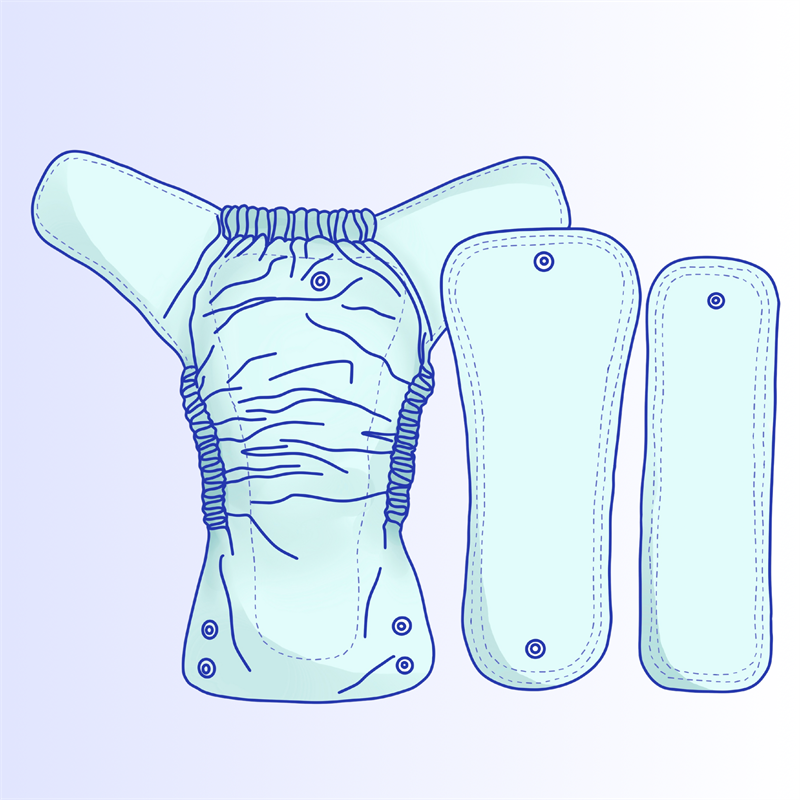
Pocket diapers have a shell and removable insert. Parents can adjust absorbency by changing inserts. That makes them useful for babies who need different protection during the day and night. Since inserts dry separately, the laundry process can be quicker. The small drawback is that pockets usually need stuffing after washing, which adds a few minutes of prep time.
AI2 systems give parents a flexible middle path. The insert can be changed while the cover may sometimes be reused if it stays clean. This can reduce the number of shells needed. For families building a long-term stash, AI2 diapers can make the collection feel more adaptable as the baby grows.
Parents who want a reusable diaper with flexible daily use can review KINGSOO’s AI2 cloth diaper solution as part of their planning. The page helps buyers see how reusable diaper construction, comfort, and practical use can come together in one product category.
Not every family cloth diapers full-time. Some use cloth at home and disposables at night. Others send cloth diapers to daycare but use a different system during travel. That is fine. The diaper count should match the real routine, not an ideal routine that no one can maintain.
Full-time cloth diapering means every change, including naps and outings, uses cloth. For a single infant, 20 to 24 diapers is often a reasonable working stash when washing every two days. Newborns usually need more. Toddlers may need fewer.
Families who want fewer laundry emergencies may prefer 28 to 36 diapers. That larger stash reduces stress, especially when both parents work, the baby attends daycare, or drying takes longer in winter.
Part-time users can start smaller. If cloth is used only during the day at home, 10 to 14 diapers may be enough. If cloth is used only on weekends, even fewer may work. Starting part-time is not a failure. It can be a realistic way to learn fit, washing, and absorbency before buying a full collection.
Daycare needs should be counted separately. Many care providers prefer diapers that go on like disposables. Pocket diapers and all-in-one diapers often work well because they arrive ready to use. Parents should pack enough for the day plus one or two backups. A wet bag for used diapers is also essential.
If a baby uses six diapers at daycare, pack seven or eight. Then keep enough clean diapers at home for evening, overnight, and morning. Families often underestimate this split and run short after pickup.
Travel changes the routine. Washing access may be limited. Drying space may be poor. A small travel stash should include extra diapers, a wet bag, and a backup plan. Parents do not need to cloth diaper perfectly while traveling; they need a system that keeps the baby comfortable and reduces stress.
Diaper count is only half the story. Absorbency decides whether the count works. A family may own 24 diapers and still struggle if inserts cannot handle naps or overnight. Heavy wetters often need hemp, bamboo, cotton, or layered inserts. Some babies need a stay-dry liner to reduce skin wetness.
KINGSOO’s premium reusable baby diaper page highlights practical product ideas such as waterproof TPU, wicking fabric, soft leg fit, and absorbency-focused construction. Those features matter because cloth diaper success depends on both quantity and performance.
Daytime diapers should be trim enough for movement but absorbent enough for two to three hours. If a diaper leaks after one hour, the problem may be insert capacity, fit, or compression from tight clothing. Adding more diapers to the stash will not fix a poor absorbency setup.
Nap and night diapers need extra planning. Babies sleep in one position for longer periods, which increases pressure on the diaper. A booster insert or fitted diaper may help. Parents should keep a few nighttime-ready options separate so caregivers do not accidentally use them during short daytime changes.
Parents also need wet bags or pail liners. These are not diapers, but they affect the whole routine. A home pail liner holds used diapers before wash day. A small wet bag supports daycare and outings. A clean storage space keeps ready-to-use diapers easy to find.
Buying everything at once can feel expensive. It also creates risk. The baby may not fit one brand well. A caregiver may prefer a simpler closure. The family may discover that drying time matters more than they expected. A staged approach is smarter.
Start with a small mixed set if you are new to cloth diapering.
Test fit around the waist and legs before buying a full stash.
Track how many diapers you use on normal days and busy days.
Add inserts before adding more shells if leaks are absorbency-related.
Keep several easy diapers for grandparents, daycare, or travel.
Wholesale buyers and baby care brands may plan differently. They need to think about size range, fabric choice, print design, private label packaging, and repeat purchasing. For that audience, KINGSOO’s reusable diaper line can support product planning through category options, material choices, and custom development.
One common mistake is counting diapers but ignoring inserts. Another is buying too many newborn diapers when the baby will grow quickly. Some families also forget drying time. A diaper sitting damp on a rack is not available, even if it is technically washed.
Another issue is using one diaper style for every situation. It may sound simple, but mixed routines often work better. AIO diapers can serve daycare. Pockets can handle adjustable daytime use. AI2 systems can reduce shell count at home. Fitted diapers or stronger inserts can cover overnight needs.
Note: A good stash should reduce daily friction. If the system requires constant emergency washing, it is too small for your current routine.
Most newborn routines work better with 24 to 30 cloth diapers if washing every other day. Daily washing can work with fewer, but it leaves less backup for drying and unexpected changes.
For daily washing, many families use 16 to 20 newborn diapers, 14 to 18 infant diapers, or 10 to 14 toddler diapers. Add extras if you line dry.
They can reduce the number of shells needed because some covers may be reused if clean. You still need enough absorbent inserts for each change.
Twelve diapers can work for part-time use or daily washing with an older baby. It is usually too small for full-time newborn cloth diapering.
Not always. A mixed stash can serve different needs. Some diapers work better for daycare, while others handle nights or home use more effectively.
You need more if you wash before the pail is full because you are out of clean diapers, or if drying time often leaves you short.
Parents often understand numbers faster when they see sample plans. These examples are not strict purchasing rules. They are practical starting points that can be adjusted after the family learns the baby’s real rhythm.
| Family Situation | Suggested Starting Point | Why It Works |
|---|---|---|
| Newborn, full-time cloth, washing every two days | 24-30 diapers plus 2 wet bags | Covers frequent changes and drying time |
| Infant, full-time cloth, washing every two days | 20-24 diapers plus extra inserts | Balances cost, laundry, and daily backup |
| Part-time cloth at home | 10-14 diapers | Works for daytime use without overbuying |
| Daycare plus home use | 24-28 diapers | Allows packed daycare diapers and home rotation |
| Twins or two children in diapers | 40-50 diapers | Reduces constant laundry pressure |
If the budget is tight, start with the minimum plan and add pieces later. If laundry time is limited, add more diapers at the beginning. The useful thing about cloth diapering is that the stash can grow with the household. Parents do not need to solve every future problem before the baby arrives.
A working stash feels boring in the best way. Clean diapers are available when needed. Laundry happens before odor becomes unpleasant. Caregivers understand which diaper to use. The baby has fewer leaks because the right insert is matched to the right time of day.
If you always run out of clean diapers before wash day, the stash is too small or drying time is too long. If many diapers sit unused for weeks, the stash may be larger than necessary. If leaks happen even with many clean diapers available, the problem is probably fit or absorbency, not quantity.
Add more diapers if laundry delays create stress.
Add more inserts if leaks happen before normal change time.
Change diaper style if caregivers avoid using the current system.
Improve storage if clean diapers are hard to find.
Review wash habits if diapers smell clean at first but develop odor quickly.
For brands and retailers, this same thinking helps with customer education. A product page should not only sell a diaper. It should explain how many pieces parents may need, which accessories support the routine, and what kind of absorbency fits each stage. Clear guidance reduces confusion and builds confidence.
How many cloth diapers you need depends on age, washing schedule, diaper style, and your family’s tolerance for laundry pressure. A newborn may need 24 to 30 diapers for a comfortable every-other-day routine. An infant may do well with 20 to 24. A toddler can often manage with 16 to 20, especially if potty learning has started.
The best stash is not the biggest one. It is the one that fits your home, caregivers, budget, and washing habits. By combining a practical count with the right absorbency and fit, parents can make reusable diapering easier from the first week through potty training. KINGSOO’s cloth diaper products, including AI2 and premium reusable baby diaper options, give families and brands flexible choices for building a dependable cloth diaper routine.


