- All
- Product Name
- Product Keyword
- Product Model
- Product Summary
- Product Description
- Multi Field Search
English

Author: Site Editor Publish Time: 2025-08-07 Origin: Site
Washable diapers can look confusing at first. Parents see all-in-one diapers, pocket diapers, fitted diapers, prefolds, flats, AI2 diapers, hybrid diapers, and different fabric names. The choices are useful, but only when the buyer understands what each style does well. A diaper that feels perfect for daycare may not be the best choice for overnight. A low-cost diaper system may need more folding, covers, and practice.
This guide explains the main types of washable diapers in a practical way. It also connects each diaper style to real daily needs, such as drying time, absorbency, caregiver ease, travel use, and long-term cost. For brands, retailers, and parents comparing washable diapers, the goal is simple: choose a system that people will actually keep using.
The diaper type affects almost everything. It changes how fast the diaper goes on, how much laundry you do, how quickly it dries, how well it fits under clothes, and how easy it is for another caregiver to use. The wrong style can make cloth diapering feel harder than it needs to be. The right style makes the routine feel normal after a few days.
There is also a product development angle. For baby care brands, diaper type affects production cost, packaging, customer education, and return risk. A simple all-in-one diaper may be easier to sell to beginners, while a prefold and cover system may appeal to budget-conscious or experienced cloth users. A pocket diaper gives a strong balance because it feels modern, adjusts absorbency, and dries faster than many sewn-in systems.
KINGSOO’s website shows a wide reusable product catalog, including cloth diaper, baby diaper, pet diaper, swim diaper, training pant, menstrual products, bags, and nursery essentials categories. That range matters because reusable care products often share fabric, waterproofing, sewing, and customization knowledge across categories.
All-in-one diapers, often called AIO diapers, combine the absorbent layer and waterproof outer layer in one finished diaper. The user puts it on, removes it after use, and washes the whole diaper. There is no stuffing, folding, or pairing of covers and inserts. That simplicity makes AIO diapers popular with new parents, grandparents, babysitters, and daycare staff.
AIO diapers are useful when convenience matters most. They are easy to pack in a diaper bag. They are simple for caregivers who do not want to learn cloth diaper folding. They also help families who are switching from disposables because the handling feels familiar.
For brands, AIO diapers can be easier to explain on product pages. The benefit is clear: one diaper, one change, one wash. That direct message reduces buyer hesitation.
The main trade-off is drying time. Because the absorbent material is attached, an AIO diaper can take longer to dry than a pocket insert or flat diaper. Some AIO designs add snap-in or fold-out absorbent layers to improve drying. Buyers should check how thick the absorbent core is and whether the design allows air to move through the layers.
AIO diapers may also cost more per piece because they combine more material and sewing work. For full-time cloth diapering, that can raise the initial budget.
Pocket diapers include a waterproof outer shell and an inner lining with an opening. Parents place one or more inserts inside the pocket. After use, the insert is removed for washing. This design gives families control over absorbency without making the outer diaper too bulky.
Pocket diapers are one of the most popular reusable diaper styles because they balance convenience and customization. Once stuffed, they go on like a disposable. Yet parents can add a hemp, cotton, bamboo, or microfiber insert depending on the baby’s needs.
Pocket diapers work well for daytime use, daycare, and babies whose absorbency needs change through the day. A light insert may be enough for morning play. A stronger insert can be used for naps. Parents can prepare several stuffed diapers in advance, then store them ready to use.
If a parent wants a low-stress system but still wants control, pockets often feel like the middle ground. They are not as simple as AIO diapers right after laundry, but they are easy during the actual diaper change.
Because inserts dry separately, pocket diapers can reduce drying time. The shell is thinner than many AIO diapers, while the insert can be dried flat or in a dryer if the material allows. This matters for families without much indoor drying space.
One small drawback is the need to stuff and unstuff diapers. Some parents dislike that task. Others make it part of the folding routine and do not mind it.
Fitted diapers are fully absorbent diapers shaped with elastic around the legs and waist. They do not have a waterproof outer layer, so they need a separate cover. That extra piece may sound inconvenient, but the absorbency can be excellent.
Fitted diapers are often used for overnight, naps, heavy wetters, and babies who need strong containment. Because the whole diaper body absorbs liquid, not only the middle pad, fitted diapers can hold more moisture than a trim daytime diaper.
They also give a snug fit. Elastic around the legs and waist helps contain messes. For babies who leak through simpler systems at night, a fitted diaper with a good waterproof cover can be a practical fix.
Fitted diapers need covers. That means buyers must plan both pieces. They can also be bulkier under clothing. Drying time may be longer than flats or prefolds. Still, for nighttime use, many families accept those trade-offs because sleep matters more than trimness.
Prefolds and flats are older diaper styles, but they are still useful. They are simple, washable, durable, and often more affordable than fully shaped diapers. They do need folding and a separate cover. Some families love the flexibility. Others prefer a faster system.
Prefolds are rectangular pieces of absorbent fabric divided into thicker and thinner sections. They can be folded around the baby or laid inside a cover. They are cost-effective and easy to wash. Many parents also use them as burp cloths or backup absorbency pads.
Prefolds are a smart option for families who want a larger stash at a lower cost. They can also support newborn diapering, when babies need many daily changes.
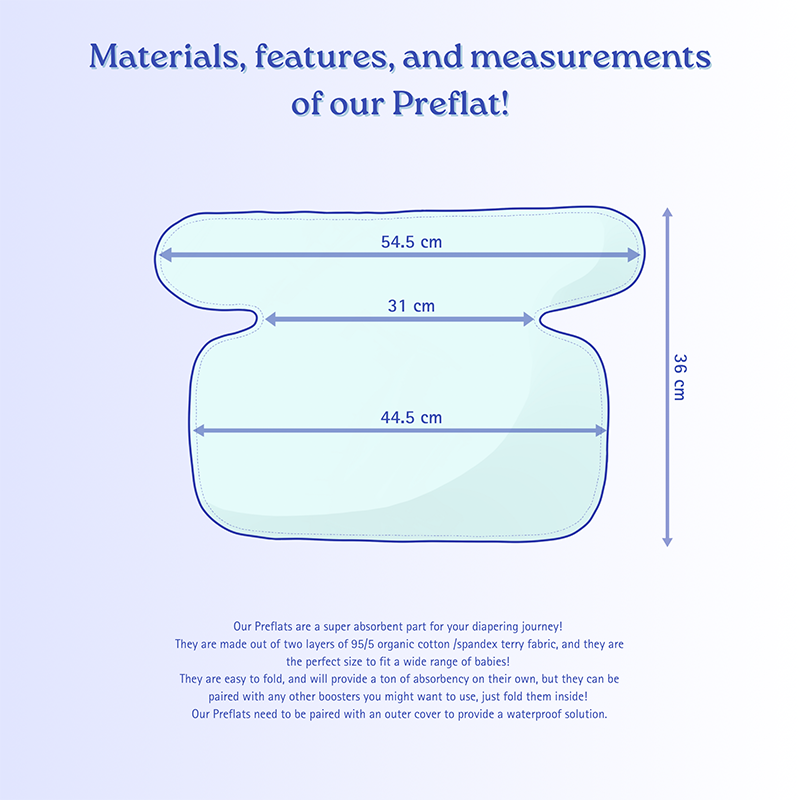
Preflats are shaped more naturally than traditional flats but still fold around the baby. They often combine good fit with faster drying. KINGSOO’s Organic Preflat Diapers product page is a useful internal reference for buyers who want to compare reusable absorbent systems beyond standard pocket or AIO styles.
Flat diapers are single-layer fabric squares or rectangles. They dry very fast, wash easily, and work well in simple laundry setups. They are also highly flexible. Parents can fold them in different ways for newborns, older babies, boys, girls, or heavy wetters.
The challenge is learning the folds. Some families enjoy this. Others want something faster. That is why flats are often loved by experienced cloth users, travelers, and minimalists.
AI2 means all-in-two. These diapers usually include a reusable outer shell and a separate absorbent insert. If the shell stays clean, the parent may replace only the insert. Hybrid diapers are similar, but they may allow washable or disposable inserts depending on the situation.
AI2 diapers help reduce the number of shells in a stash. A family might need more inserts than covers. This can lower cost and reduce laundry bulk. The system also allows parents to adjust absorbency without replacing the full diaper every time.
The Eco-Friendly AI2 Baby Diaper is a relevant KINGSOO product page for readers who want to understand how a reusable shell and absorbent part can support a practical cloth diaper routine.
Hybrid diapers can work for travel, daycare, or busy days when washing is difficult. Some parents use washable inserts at home and disposable inserts on the road. This mixed routine may not be perfect from a zero-waste perspective, but it helps more families stay with reusable products most of the time.
Fabric choice affects skin feel, absorbency, drying time, bulk, and durability. The same diaper style can perform differently depending on its material. A cotton insert feels different from microfiber. Hemp absorbs differently from bamboo. A waterproof TPU layer must balance leak protection with softness and movement.
| Material | Typical Strength | Buyer Consideration |
|---|---|---|
| Cotton | Natural feel and reliable absorbency | May dry slower than synthetic layers |
| Bamboo | Soft hand feel and good moisture handling | Quality varies by blend and construction |
| Hemp | Strong absorbency for boosters | Often works best paired with faster layers |
| Microfiber | Fast absorption | Should usually sit inside a pocket, not directly on skin |
| TPU laminate | Waterproof barrier | Needs proper washing and drying care |
For parents, the best fabric is the one that solves a real problem. For brand buyers, fabric choice also affects positioning. Organic cotton may support premium branding. Recycled polyester and TPU may support waterproof performance. Bamboo or hemp blends may appeal to eco-focused parents.
Choosing a washable diaper is easier when buyers think about the user, not only the product name. A parent with twins may need speed and a large stash. A daycare provider needs simple changes. A baby with sensitive skin may need a softer lining and more frequent changes. A family without a dryer needs fast-drying styles.
Choose AIO diapers if simplicity is the top priority.
Choose pocket diapers if adjustable absorbency matters.
Choose AI2 diapers if you want flexible insert changes.
Choose prefolds or flats if budget and fast washing matter.
Choose fitted diapers for overnight or heavy wetters.
Tip: A mixed stash is often more realistic than one perfect diaper type. Different parts of the day need different performance.
Washable diapers are not only a parent purchase. They are also a product category for baby care brands, eco stores, online retailers, subscription businesses, and private-label companies. Those buyers must think beyond daily use. They need stable sizing, attractive prints, reliable fabric sourcing, packaging, testing, and clear product instructions.
KINGSOO’s baby diaper category describes wholesale cloth diaper solutions for brands, retailers, and distributors, and notes product options such as all-in-one systems, prefold cloth diapers, fitted cloth diapers, and cloth diaper covers. The category page also refers to OEM/ODM customization, material options, and international safety-related certifications. For a buyer building a reusable diaper line, those details matter because product quality must be repeatable, not just attractive in one sample.
Reusable diaper buyers should ask about:
Fabric composition and waterproof layer construction.
Available sizing and snap adjustment options.
Insert material, insert layers, and absorbency targets.
Print method, colorfastness, and private-label packaging.
Sample lead time and production scalability.
Care label requirements for target markets.
Every washable diaper needs a stable care routine. Still, not all styles wash and dry the same way. Flats dry quickly. AIO diapers may need more time. Pocket inserts should be removed. Hook-and-loop closures should be fastened before washing. TPU covers should not be damaged by excessive heat.
Parents should rinse or store soiled diapers according to their home routine, then wash with enough agitation and detergent to clean absorbent layers fully. For product brands, care instructions must be simple. Confusing washing instructions create customer complaints, even when the diaper itself is well made.
The main types are all-in-one, pocket, fitted, prefold, flat, AI2, and hybrid diapers. Each style has different strengths in convenience, drying time, absorbency, and cost.
All-in-one diapers are usually easiest because they go on like disposables. Pocket diapers are also beginner-friendly once they are stuffed after washing.
Flat diapers usually dry fastest because they use a single fabric layer. Pocket inserts also dry faster than many sewn-in all-in-one diapers.
Not always. AI2 diapers may reduce shell count, while pocket diapers allow easy absorbency adjustment. The better choice depends on routine and caregiver preference.
Fitted diapers, strong pocket setups, or boosted AI2 systems can work well overnight. The key is enough absorbency and a secure waterproof cover.
Yes. Many reusable diaper suppliers, including KINGSOO, support custom prints, fabrics, packaging, sizing, and product development for wholesale and private-label buyers.
Two diapers may look similar but perform very differently because of their absorbent layers. A thin microfiber insert absorbs quickly but can release moisture under pressure. Hemp may hold a lot, but it absorbs more slowly. Cotton is dependable and familiar. Bamboo blends can feel soft and hold moisture well when made with the right fabric structure.
This is where product design becomes practical rather than decorative. A daytime diaper needs quick absorption and a trim fit. A nighttime diaper needs more capacity. A diaper for daycare must be easy to put on correctly, even when the caregiver is busy. For brands, the absorbent system should match the promise on the product page. If the product is marketed for overnight use, the construction must support that claim.
| Use Situation | Preferred Feature | Useful Diaper Direction |
|---|---|---|
| Newborn changes | Soft fit and frequent changing | Newborn AIO, prefold, or fitted option |
| Daycare | Easy handling | AIO or prepared pocket diaper |
| Heavy wetter | Higher absorbent capacity | Boosted pocket, fitted, or AI2 setup |
| Travel | Fast packing and odor control | Prepared pockets plus wet bags |
| Budget starter stash | Low cost per change | Prefolds, flats, and covers |
Snaps and hook-and-loop closures create different user experiences. Snaps are durable, clean-looking, and harder for babies to open. Hook-and-loop closures feel closer to disposable diaper tabs and can be easier for grandparents or daycare staff. The drawback is that hook-and-loop can collect lint and needs proper fastening before washing.
There is no single better closure. A brand selling to daycare-focused parents may choose easy fasteners. A brand selling to experienced cloth users may prefer snaps because they hold up well over many washes. For private-label projects, closure choice should match the target buyer and the washing guidance.
Reusable diapering often leads families to other reusable products. Once parents have a diaper pail and washing routine, they may also use washable wipes, wet bags, changing mats, swim diapers, training pants, or reusable snack bags. This is why suppliers with a broader reusable product catalog can support brands that want a complete eco-parenting line rather than one isolated item.
KINGSOO’s navigation and product categories show how cloth diapers sit beside swimming pants, training pants, menstrual products, bags, and nursery essentials. For retailers, that product family matters. Customers who like reusable diapers may also want wet bags, washable wipes, and travel storage items. A stronger assortment can increase repeat orders while keeping the brand message consistent.
A common mistake is judging only by the product photo. A diaper may look neat, but the real value is in the fabric, leg fit, insert system, drying time, and wash durability. Another mistake is buying only the cheapest option. Low price can work if the construction is honest, but poor elastic or weak waterproof layers can create leaks and customer complaints.
Parents should avoid building a full stash before testing fit. Retail buyers should avoid launching a product without clear care instructions. Brands should not describe every diaper as “best” without explaining who it is best for. Clear use-case language is more persuasive than generic claims.
Do not choose a diaper style only because it is popular.
Do not ignore drying time if you have limited space.
Do not use microfiber directly against baby skin unless the supplier confirms safe design.
Do not forget wet bags, inserts, and covers when calculating full cost.
Do not copy another brand’s diaper mix without knowing your own buyers.
Put simply, washable diapers work best when product design, care routine, and user habits line up. That alignment is what turns a reusable product from a good idea into a daily habit.
A washable diaper product page should not assume the buyer already understands cloth diapering. Many visitors arrive with basic questions. They want to know how the diaper fits, how it absorbs, how it washes, whether it is suitable for daycare, and how many pieces they may need. If those answers are missing, even a good diaper can feel risky.
Clear product pages usually include a short use-case summary, fabric details, size guidance, absorbency explanation, washing advice, and realistic photos. For wholesale buyers, it also helps to show customization options such as prints, labels, packaging, insert layers, and closure choices. The more clearly a supplier explains the product, the easier it is for a retailer to train customer service teams and reduce after-sale questions.
Parents do not need every technical detail at once. They need the right detail at the right moment. A comparison chart can explain diaper styles. A care section can explain washing. A sizing table can reduce returns. A short FAQ can answer the doubts that stop people from ordering.
Washable diapers are not one single product. They are a family of systems, each with its own rhythm. All-in-one diapers win on simplicity. Pocket diapers offer adjustable absorbency. Fitted diapers help heavy wetters. Prefolds and flats keep costs lower. AI2 and hybrid diapers add flexibility for real life.
The smartest choice depends on who will use the diaper, how often laundry happens, how much absorbency the baby needs, and whether the buyer is a parent, retailer, or brand. By comparing the main washable diaper types before purchasing, families and businesses can build a reusable diaper routine that feels practical, comfortable, and easier to maintain over time.


