- All
- Product Name
- Product Keyword
- Product Model
- Product Summary
- Product Description
- Multi Field Search
English

Author: Site Editor Publish Time: 2025-06-16 Origin: Site
Many parents ask the same practical question before they build a diapering routine: is a cloth diaper good for babies? The simple answer is yes, a cloth diaper can be a comfortable, reusable, and baby-friendly choice when it is selected carefully, fitted correctly, changed on time, and washed with a suitable routine. It is not a magic product that solves every diapering concern, but it can be a dependable option for families who want softness, adjustability, and less single-use waste.
A modern cloth diaper is very different from the old image of folded fabric and safety pins. Today’s designs may include waterproof TPU or PUL outer layers, soft inner linings, snap closures, elastic legs, removable boosters, and absorbent inserts made from cotton, bamboo blends, hemp blends, or microfiber. These details matter because a baby’s skin is delicate, and a good diaper must balance dryness, comfort, movement, and leak protection.
This guide explains the real benefits and limitations of cloth diapers for babies. It also shows what parents and baby care buyers should look for when comparing reusable diaper styles, absorbent materials, and fit features.
A cloth diaper is good for babies when it supports four basic needs: it feels soft against the skin, absorbs moisture well, fits without tight pressure marks, and allows regular changing. The best result comes from matching the diaper to the baby’s age, body shape, wetting pattern, and daily routine.
For some families, cloth diapers work all day. For others, a mixed routine works better, such as cloth diapers at home and disposable diapers during long travel. The goal is not to follow one rigid rule. The goal is to keep the baby dry, comfortable, and protected while choosing a system the caregiver can manage consistently.
Parents should also remember that diaper comfort depends on care habits. Even the softest diaper can irritate skin if it stays wet too long, is washed with too much detergent, or fits too tightly around the waist and thighs. A well-made product helps, but daily use matters just as much.
One of the main reasons families consider cloth diapers is the feel of the fabric. Many cloth diaper systems use cotton, bamboo blend, hemp blend, or stay-dry fleece layers. These materials can feel gentle and flexible during daily movement. Soft inner fabrics also reduce friction when a baby kicks, crawls, rolls, or sits.
However, it is better to avoid absolute claims such as “cloth diapers prevent all rashes.” Diaper rash can have many causes, including moisture, stool contact, friction, yeast, food changes, detergents, and infrequent changes. Cloth diapers may help some babies by giving parents more control over fabric choice, but they still need proper washing and timely changing.
Cloth diapers are reusable, which makes them attractive to families who want a lower-waste diapering routine. A washable diaper can be used many times when cared for properly. This reduces the number of single-use diapers thrown away each week.
The environmental benefit depends on washing habits, water use, drying method, and product durability. Line drying when possible, washing full loads, and avoiding unnecessary high heat can improve the overall sustainability of cloth diapering. A durable diaper that withstands repeated washing is especially important because a product only becomes truly practical if it stays functional over time.
Another benefit is absorbency control. Many cloth diapers allow caregivers to add or remove inserts. A light daytime routine may need one insert, while naps, outings, or heavier wetting may require a booster. This flexibility is useful because babies do not all wet the same way.
For example, an AI2 baby diaper system can use a reusable outer shell with snap-in boosters. This design gives caregivers a way to adjust absorbency without making every diaper change feel complicated. It can also help reduce drying time compared with some thick all-in-one designs.
Cloth diapers can work for newborns, but the fit must be carefully checked. Newborns have small waists, narrow legs, and frequent diaper changes. A newborn diaper should sit snugly without pressing into the belly. It should also leave space around the umbilical area when needed.
A newborn cloth diaper or small baby diaper system should offer soft edges, gentle elastics, and enough absorbency for frequent wetting. Parents may prefer prefolds, fitted diapers, preflats, or small adjustable covers during the first weeks because these styles can wrap closely around a tiny body.
At the same time, newborn cloth diapering requires more laundry. Newborns may need many diaper changes in one day, so families should prepare enough diapers and inserts before the baby arrives. Without enough pieces in rotation, caregivers may feel rushed or may reuse diapers before they are fully clean and dry.
Different cloth diaper styles suit different families. The “best” diaper is usually the one that fits the baby and matches the caregiver’s routine.
| Cloth diaper style | How it works | Best fit for |
|---|---|---|
| All-in-one | Absorbent layers and waterproof layer are sewn together. | Caregivers who want a simple one-piece diaper. |
| All-in-two | Insert or booster snaps into a reusable shell. | Families who want adjustable absorbency and easier drying. |
| Pocket diaper | Absorbent insert is placed inside a pocket opening. | Parents who want to customize absorbency by insert type. |
| Fitted diaper | Absorbent diaper shaped like a disposable; usually needs a cover. | Heavy wetters, naps, and nighttime routines. |
| Prefold or preflat | Flat or folded fabric used with a waterproof cover. | Newborns, budget-conscious routines, and quick washing. |
A practical choice is often a mixed diaper stash. Some families use all-in-two diapers for daytime, fitted diapers for naps, and prefolds as backup inserts. This flexible approach helps solve real daily problems instead of forcing one style to do everything.
Material choice affects softness, absorbency, drying speed, bulk, and durability. Cotton is familiar, breathable, and easy to wash. Bamboo blends are often chosen for softness against delicate skin. Hemp blends can absorb well and are useful for boosters, but they may absorb more slowly than some fabrics. Microfiber absorbs quickly but should usually be kept behind a lining rather than placed directly against sensitive skin.
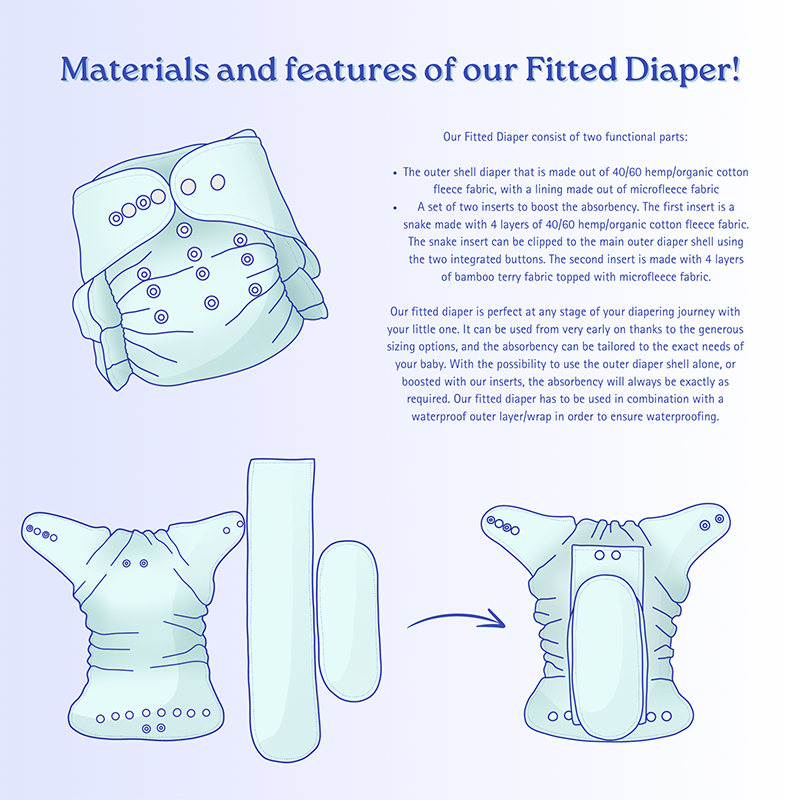
KINGSOO’s product pages show how these materials can be combined in real diaper construction. The Eco-Friendly AI2 Baby Diaper uses a TPU-laminated recycled polyester outer shell, bamboo and organic cotton fleece lining, hemp and organic cotton wicking layer, and organic cotton booster layers. Its design also includes hidden snaps and removable boosters for a more adjustable fit.
For families who want a more absorbent feel, hemp cotton fleece diapers may be useful because hemp and cotton blends are often selected for absorbency and durability. For families who want a waterproof shell with replaceable absorbency, a cloth diaper cover and insert can be easier to adjust as the baby grows.
Cloth diapers are helpful, but they also require routine. The first challenge is laundry. Diapers must be rinsed or stored correctly, washed with enough agitation, rinsed well, and dried completely. Too little detergent may leave waste residue. Too much detergent may build up in fabric and cause odor or irritation. A simple wash routine is often better than a complicated one.
The second challenge is leaks. Leaks can happen when the diaper is too loose, too tight, not absorbent enough, or not changed soon enough. Sometimes a diaper leaks because the insert is fully saturated. Other times, the leg elastic is not sitting in the right crease. Parents should check fit before assuming the product itself is poor.
The third challenge is bulk. Some cloth diapers look thicker than disposable diapers because they use fabric absorbency instead of a thin disposable core. A little bulk is normal, but the diaper should not restrict hip movement or make clothing uncomfortable. If a diaper looks too large, a slimmer insert or a different style may work better.
A good cloth diaper fit should feel secure but not tight. The waist should allow comfortable movement. The leg openings should sit close enough to prevent gaps, but they should not leave deep red marks. The back should cover enough to prevent leaks when the baby is sitting or lying down.
After fastening the diaper, parents can check three areas:
Waist: The diaper should not press into the belly.
Legs: Elastic should sit in the natural underwear line, not down on the thigh.
Rise: The diaper should cover the bottom without sagging too low.
Fit changes as babies grow. A diaper that worked well last month may need a snap adjustment today. Growth spurts, crawling, and starting solid foods can all change how the diaper performs.
Most babies should be changed regularly throughout the day. A cloth diaper does not usually hide wetness as strongly as a disposable diaper with a superabsorbent gel core. That can be a benefit because caregivers notice wetness sooner, but it also means a consistent changing routine is important.
During the day, many families change cloth diapers every two to three hours, or sooner after stool. Overnight diapering needs more absorbency and a careful fit. If the baby wakes with leaks or red skin, the system may need an extra booster, a different insert material, or a shorter wear time.
Parents should always respond to the baby’s skin. If redness appears often, review detergent, rinse quality, change frequency, fit, and material choice. For persistent rash, medical advice from a qualified professional is the safer path.
A good wash routine keeps diapers hygienic and comfortable. While every household machine is different, the basic steps are usually simple. Remove solid waste, store used diapers in a breathable wet bag or pail liner, run a short prewash, then use a main wash with enough detergent and water movement. Dry the diapers fully before storage.
Avoid fabric softeners because they can coat fibers and reduce absorbency. Avoid harsh bleach as a daily habit because it can weaken elastics and waterproof layers. High heat may also shorten the life of TPU or PUL. Always follow the care instructions provided with the diaper.
Clean diapers should smell neutral after washing. If they smell strongly of ammonia, detergent, or mildew, the routine may need adjustment. Odor is often a sign that urine residue, detergent buildup, or poor drying is affecting the fabric.
Cloth diapers are not ideal for every situation. Families with limited laundry access may find them stressful. Some daycares may not accept cloth diapers. Travel can also be harder if caregivers do not have a clean way to store used diapers until washing.
That does not mean cloth diapering has failed. Many families use a flexible routine. They may use cloth diapers during daytime at home and disposable diapers for travel or emergencies. A practical diapering plan should support the baby and the caregiver at the same time.
KINGSOO focuses on reusable cloth diapers and baby care textile products, including cloth diaper systems, inserts, covers, swim diapers, training pants, wet bags, wipes, and related nursery items. Its cloth diaper category describes materials such as organic cotton, bamboo blends, hemp fibers, and TPU lamination for waterproof protection.
For buyers comparing products, the main point is not only whether a cloth diaper looks attractive. The construction should make sense: soft lining, absorbent core, waterproof outer layer, secure snaps, comfortable elastics, and a size range that fits the intended baby age group. A well-designed diaper should help caregivers manage daily changes with less guesswork.
Yes, a cloth diaper can be good for babies when the design, material, fit, absorbency, and washing routine are all handled properly. Cloth diapers can feel soft, reduce single-use waste, and give caregivers more control over fabric and absorbency. They are especially useful for families who want a reusable diapering routine and are willing to follow regular washing habits.
The best approach is to choose a diaper system based on the baby’s skin, size, wetting pattern, and daily schedule. A comfortable cloth diaper should not leak often, restrict movement, or leave deep marks. It should make daily care easier, not harder.
Yes, cloth diapers can be suitable for newborns when they fit well, feel soft, and are changed often. Newborns usually need more frequent changes, so families should prepare enough diapers and inserts before starting.
Cloth diapers do not automatically cause diaper rash. Rash may come from moisture, friction, detergent residue, stool contact, yeast, or infrequent changes. Proper washing and timely changing are important.
Cotton, bamboo blends, and hemp blends are commonly used. Cotton is breathable and easy to wash, bamboo blends are soft, and hemp blends are often chosen for absorbency. The best choice depends on the baby’s skin and the diapering routine.
The number depends on age and washing frequency. Newborns need more changes per day than older babies. Families who wash every two days usually need a larger rotation than families who wash daily.
They can work overnight if absorbency is strong enough and the fit is secure. Many families use extra boosters, fitted diapers, or absorbent inserts for longer sleep periods.
They can leak if the fit is wrong, the insert is saturated, or absorbency is too low for the baby’s needs. With the right insert and proper fit, cloth diapers can perform reliably for daily use.


