- All
- Product Name
- Product Keyword
- Product Model
- Product Summary
- Product Description
- Multi Field Search
English

Author: Site Editor Publish Time: 2026-04-10 Origin: Site
Parents are rethinking the usual Baby Diaper routine for a reason. Cloth can save money, cut waste, and give you more control from day one. In this guide, you will learn what to buy, how many diapers you need, and how to make cloth diapering work from birth to potty training.
The newborn stage is where many parents either gain confidence with cloth diapering or give up too early. In the first weeks, babies usually need far more diaper changes than they will later, and their smaller body shape makes fit less forgiving. A diaper that works well on an older baby may gape at the legs, sit too high on the waist, or feel bulky on a newborn, which is why leaks and frustration are more common at the beginning. Sensitive skin and umbilical cord care also make this stage less about convenience alone and more about choosing a setup that is gentle, trim, and easy to change often.
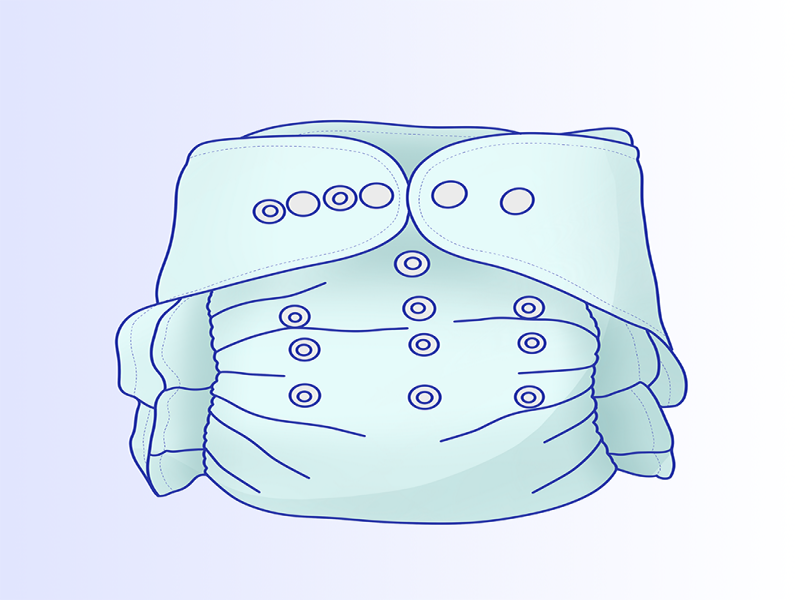
If you are starting from scratch, the best choice is usually the system you can use consistently when tired. Some styles are easier at change time, while others save money or dry faster after washing.
Style | Best for | Main advantage | Main trade-off |
All-in-ones | Parents who want the simplest routine | Works most like a disposable | Slower drying time |
Pocket diapers | Families wanting flexibility | Easy to customize absorbency | Requires stuffing |
Prefolds + covers | Budget-conscious beginners | Lower cost and reusable covers | Folding takes practice |
Flats + covers | Minimalist, fast-drying setup | Quick wash and dry time | Highest learning curve |
Covers + inserts | Parents wanting fewer shells | Cover can sometimes be reused | Slightly more assembly |
For most beginners, all-in-ones and pocket diapers feel easiest because they reduce the learning curve during stressful early weeks. Prefolds, flats, and covers become more appealing when parents want lower upfront cost, quicker drying, or a system that can adapt more easily as the baby grows.
Newborn-size diapers usually make the early stage easier because they fit smaller legs and waists better and create less bulk. That better fit often means fewer leaks and less adjusting during each change. One-size diapers can still work from birth for some babies, but they often require more patience and more skill to get a secure fit on a very small newborn. If you want the smoothest start, newborn sizing is usually the easier path; if you want longer-term value and do not mind a short learning curve, one-size can make sense.
A few support items can make cloth diapering feel much more manageable without turning it into a complicated system. The goal is not to buy everything, but to remove daily friction where it actually matters.
● Wet bags: useful for storing dirty diapers when you are away from home
● Pail liners: simplify laundry day because the liner can go straight into the wash
● Cloth wipes: easy to wash with diapers and convenient for an all-in-one routine
● Diaper sprayer: especially helpful once solids begin and waste needs to be removed before washing
● Cloth-safe cream: protects skin without affecting absorbency or fabric performance
The easiest way to plan a cloth diaper stash is to start with your real routine, not an ideal one. A practical formula is: daily diaper changes × number of days between washes + 4 to 6 extra diapers. That extra buffer matters more than many first-time parents expect, because cloth diapers are not always ready the moment a wash cycle ends. Drying time, delayed laundry, and surprise high-output days can all leave a stash feeling smaller than it looked on paper.
For example, if your baby uses 10 diapers a day and you wash every other day, you would begin with 20 diapers, then add a few extras so you are not forced into emergency laundry. Families using all-in-ones may want a slightly larger stash because they generally take longer to dry, while families using flats, prefolds, or systems with reusable covers may be able to work with fewer total pieces. The goal is not to find one magic number, but to build enough margin that cloth diapering stays manageable on ordinary busy days.
Diaper use changes gradually rather than all at once. Newborns go through the most changes because they feed often, soil diapers frequently, and need to be kept especially dry and comfortable. As babies move into infancy, the number of daily changes usually drops, but fit and absorbency still matter. By the toddler stage, most children need fewer daytime changes, though parents often start relying more on heavier absorbency for naps, nights, or longer outings.
Stage | Typical daily diaper use | Full-time stash when washing every other day |
Newborn (0–3 months) | 10–12 | 24–36 |
Infant (3–12 months) | 8–10 | 20–24 |
Toddler (12+ months) | 6–8 | 16–20 |
This pattern is why stash planning should match both age and routine. A newborn stash needs more total changes, while an older baby may need fewer diapers overall but stronger inserts or more absorbent nighttime options.
Parents usually fall into one of three stash strategies:
● Minimalist stash: about 12–18 diapers, best for families willing to wash daily and stay very consistent with laundry
● Standard stash: about 20–24 diapers, the most balanced option for full-time cloth diapering with washing every other day
● Flexible stash: about 30 or more diapers, better for households that want extra breathing room, slower wash cycles, or fewer laundry-related disruptions
A smaller stash can save money upfront, but it also puts more pressure on your routine. A larger stash costs more at the beginning, yet often feels easier to live with because it gives you room for drying time, missed wash days, and the natural unpredictability of life with a baby.
Daily cloth diapering usually feels simpler before solids begin. In the milk-only stage, many parents can place wet diapers and milk-only poop diapers straight into a pail liner or wet bag and deal with everything on wash day. Once solids enter the picture, that changes because stool needs to be removed before washing. In practice, this means shaking, spraying, or rinsing waste into the toilet before the diaper goes into storage. That extra step sounds intimidating at first, but it becomes much easier once you set up a routine and keep the right tools nearby, especially a sprayer or a simple rinse method that works in your bathroom.
A realistic setup matters more than a perfect one. Cloth wipes can go straight into the wash with the diapers, which simplifies changes, and a pail liner or hanging wet bag keeps used diapers contained until laundry day. The biggest adjustment after solids is not that cloth diapering becomes unmanageable, but that parents need a repeatable “deal with poop first, then store” habit. That single shift prevents mess from building up and makes the wash routine far more predictable.
The most sustainable wash routine is the one you can repeat consistently. For most families, that means washing every two to three days rather than letting diapers sit too long. A practical rhythm is a short pre-wash to loosen urine and leftover waste, followed by a hot main wash with enough detergent and agitation to actually clean the load. Some households add an extra rinse, while others skip it if hard water is part of the problem. Covers usually last longer when air-dried, while inserts and absorbent layers can often handle machine drying. Sun-drying can also help lift lingering stains naturally.
The key is to avoid treating cloth diaper laundry like a mystery formula. Detergent strength, load size, water hardness, and wash frequency all affect results, so a routine that works well for one household may not work as well in another. Parents usually do better when they focus on a solid baseline—pre-wash, hot main wash, correct detergent, reasonable wash frequency—rather than endlessly tweaking products and cycles every week.
Problem | Most likely cause |
Leaks | Poor fit, not enough absorbency, or overstuffing that affects seal |
Lingering smells | Incomplete cleaning or waiting too long between washes |
Buildup or repelling | Product residue, too much detergent, or unsuitable laundry products |
Rashes | Wetness left too long, residue, irritation from products, or skin sensitivity |
Dingy diapers | Inadequate wash strength or inconsistent drying and stain care |
These issues usually point back to routine, not failure. Most problems improve when parents check fit, absorbency, wash frequency, and whether they are using products that leave residue behind.
Some of the most frustrating cloth diaper problems come from small decisions that add pressure over time:
● Owning too few diapers, which forces constant laundry and speeds up wear
● Waiting too many days between washes, which makes smells and staining harder to manage
● Switching detergents or routines too often instead of giving one solid process time to work
● Using products that are not cloth-friendly, such as conventional diaper creams or dryer sheets
● Assuming every family needs the exact same wash routine, even though water and machines vary
When cloth diapering feels harder than expected, the fix is often not buying more products but simplifying the system: store consistently, wash on time, use the right detergent, and keep only the accessories that genuinely save effort.
Cloth diapering usually gets easier as children grow, but it does not stay exactly the same. Infants still need regular daytime changes, yet toddlers often need fewer changes overall because they can stay dry longer between bathroom needs. At the same time, older babies and toddlers usually need more absorbency per diaper, especially during naps, overnight sleep, and longer trips outside the house. That is why many families who were fine with a lighter daytime setup in infancy start adding boosters, prefolds, or other absorbent layers later on. The routine becomes less about how many diapers you change and more about how well each diaper handles longer wear times.
Stage | What usually changes | Best routine adjustment |
Infant | More frequent daytime changes | Focus on fit and easy daytime changes |
Toddler | Fewer changes, heavier wetting | Add absorbency for naps, nights, and outings |
Potty-learning stage | More awareness and more independence | Shift from full diapers to easier pull-up options |
Parents also tend to notice that mobility changes the routine. Once a child is crawling, walking, or resisting diaper changes, speed matters more. A setup that felt perfectly manageable during the infant stage may start to feel too bulky or slow, which is why some families simplify daytime diapering while keeping higher-absorbency options only for sleep or travel.
Potty readiness is easier to spot when you look for patterns instead of age alone. Common signs include:
● staying dry for longer stretches
● noticing when the diaper is wet or soiled
● asking for a change
● showing curiosity about the toilet or copying bathroom routines
● becoming uncomfortable with the feeling of wetness
Cloth can make these cues easier to notice because children are often more aware of when they are wet. That awareness does not automatically mean instant potty training, but it can create a smoother bridge between diapering and toilet learning.
Training pants make more sense once a child is trying to participate in the process rather than simply being changed. Unlike a standard diaper, they are designed to be pulled up and down more independently while still offering light protection for small accidents. That balance matters during potty learning, because children need to feel the transition toward underwear without losing all backup at once. A starter stash is often modest, since how many training pants you need depends on how ready the child actually is and how often accidents are happening.
Successful cloth diapering is not about finding one perfect system. It is about choosing a routine that fits your family, adjusting it as your child grows, and keeping washing simple and realistic. With the right setup, a practical stash, and flexible habits, the process gets easier over time. KINGSOO adds value with reliable cloth diaper products designed to support comfort, convenience, and long-term savings for growing families.
A: A Baby Diaper plan usually needs 24–36 units for two-day wash cycles.
A: Switch the Baby Diaper setup when fit improves, leaks drop, and rise snaps seal correctly.
A: Replace the Baby Diaper routine when dryness windows lengthen and toilet awareness becomes consistent.


