- All
- Product Name
- Product Keyword
- Product Model
- Product Summary
- Product Description
- Multi Field Search
English

Author: Site Editor Publish Time: 2026-04-15 Origin: Site
Cloth diapering can save money and reduce waste, but it is not always simple at first. When a Baby Diaper leaks, smells, or stops absorbing well, small mistakes can feel overwhelming. In this guide, you will learn how to identify common problems quickly and choose the right fix for each one.
When a cloth baby diaper leaks, fit should be the first thing you inspect because even good absorbency cannot compensate for gaps. Leaks often begin with rise snaps set too high or too low, leg openings sitting on the thigh instead of in the natural crease, or a waistband that looks flat at first glance but lifts away when baby moves. A secure fit should look close to the body without leaving deep marks: the waist should rest snugly below the belly, the leg elastics should follow the underwear line, and no absorbent fabric should stick out beyond the cover. If the diaper looks bulky but still has open spaces around the legs, that is usually a fit issue rather than an absorbency problem.
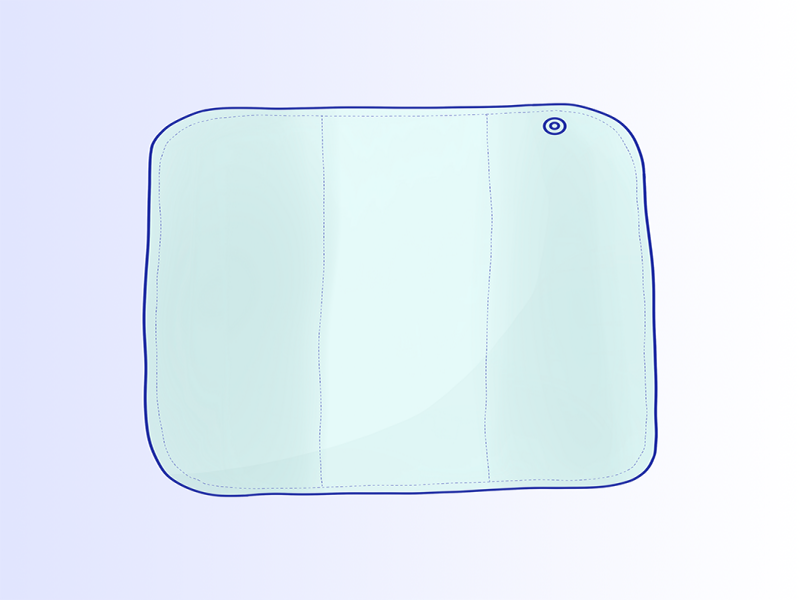
If the entire diaper is soaked at change time, the problem is usually capacity, not fit. This becomes more common as babies grow, sleep longer, urinate more heavily during naps, or begin holding urine and releasing more at once. Some babies also outgrow a daytime setup that used to work perfectly, which is why leaks can suddenly appear even though nothing seems wrong. In those cases, the better fix is to increase absorbency strategically instead of tightening the diaper further, because over-tightening can create pressure leaks rather than solving the real problem.
A few patterns usually point to low absorbency:
● the insert is fully saturated when you remove the diaper
● leaks happen during naps or longer stretches between changes
● the same setup works for short daytime windows but fails later in the day
● leaks increase as baby gets older or begins wetting more heavily at once
Not every leak means the diaper failed in the same way. Compression leaks happen when a wet diaper is pressed by a car seat, tight clothing, or a sleeping position, forcing moisture out. Flooding happens when urine hits the diaper faster than the top layers can absorb it, so liquid escapes before it can move into the rest of the insert. Wicking is different again: the diaper may be absorbing correctly, but moisture transfers to clothing because absorbent fabric is peeking out or touching the baby’s outfit. These three problems often look similar from the outside, but the timing and location of the wetness usually reveal the difference.
Leak Type | What It Looks Like | Most Likely Cause | First Fix to Try |
Compression leak | Dampness appears after sitting, buckling, or sleeping | Pressure on a saturated insert | Use less compressible absorbency and avoid overstuffing |
Flooding | Leak happens quickly, sometimes while diaper still has some dry areas | Output comes faster than the diaper can absorb | Add a faster-absorbing top layer |
Wicking | Clothes are wet where fabric touches the diaper edge | Insert or inner fabric is exposed outside the cover | Tuck all absorbent material fully inside |
Sometimes the routine is fine and the diaper itself is the weak point. Older cloth diapers may stop performing well because elastics relax, seams loosen, or the waterproof outer layer begins to fail, allowing moisture to pass through even when the absorbent layers are working normally. This is especially common with heavily used, secondhand, or frequently machine-dried diapers. If you have already checked fit, confirmed the diaper is not over capacity, and ruled out leak patterns like flooding or wicking, physical wear becomes much more likely.
Watch for these signs when deciding whether to troubleshoot or replace:
● leg or waist elastics no longer spring back
● the waterproof layer looks cracked, bubbled, or separated
● leaks happen randomly across multiple wash cycles with the same diaper
● one or two older diapers fail repeatedly while the rest of the stash performs normally
The smell coming from a cloth baby diaper is often more useful than parents realize, because odor gives clues about what is happening inside the fibers. A sharp ammonia smell usually appears when urine has been sitting too long or when repeated wash cycles are not fully clearing residue from the diaper. A dirty or barnyard smell points more toward leftover soil trapped in the fabric, which often means the diaper is not coming fully clean. Sour, fishy, or unusual chemical-like odors can suggest a reaction between detergent residue, hard water minerals, and whatever has built up over time. Instead of treating every bad smell the same way, it is more effective to read the odor as a symptom and work backward from there.
Smell Type | What It Usually Signals | Likely Underlying Issue |
Sharp ammonia smell | Urine breaks down quickly after use | Residue, infrequent washing, or diapers sitting too long |
Dirty or barnyard smell | Fabric still smells unclean after washing | Leftover waste, weak cleaning, or poor agitation |
Sour, fishy, or unusual smell | Odor seems off even when diaper looks clean | Mineral buildup, detergent residue, or product interaction |
Repelling means the diaper is no longer absorbing normally. Instead of soaking in, liquid beads up, rolls across the surface, or sits briefly before finding an escape route. This usually happens when something has coated the fibers and blocked them from doing their job. Common culprits include diaper creams with heavy oils or waxes, fabric softeners, dryer sheets, or buildup that has gradually formed over repeated washes. Parents often notice repelling first during a quick test at the sink or during a change when the diaper leaks unusually fast even though the insert is not fully saturated. That early sign matters because repelling can look like a fit problem at first, even when the real issue is an absorbency barrier.
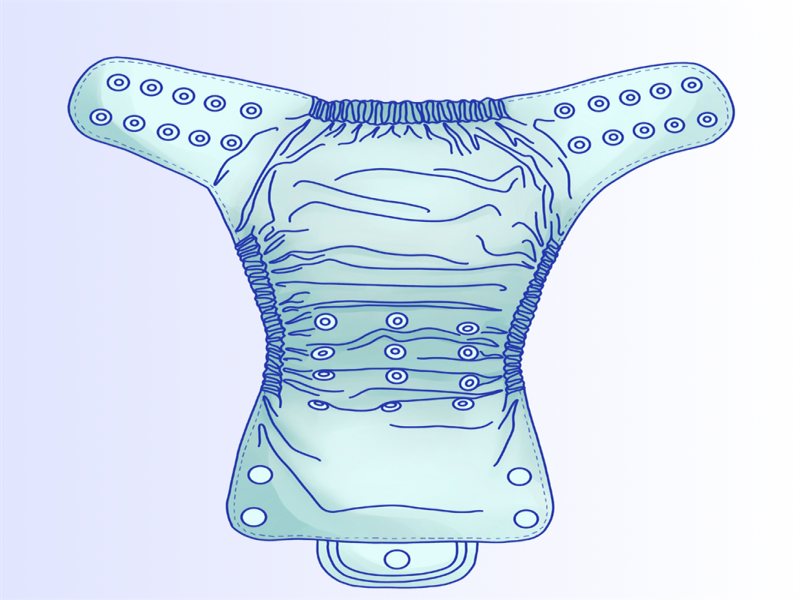
When smell or repelling keeps coming back, the issue is rarely just one bad diaper day. Repeated odor, sudden absorbency failure, or diapers that seem clean but perform poorly usually point to a care routine that is not fully matching the baby’s output, water conditions, or product choices. The goal is not to panic and deep-clean everything immediately, but to recognize that recurring symptoms usually signal a pattern rather than an isolated mistake.
Look more closely at the routine if you notice:
● odors returning shortly after the diaper gets wet
● liquid beading on fabric during use or testing
● leaks paired with inserts that are not fully soaked
● smell issues affecting multiple diapers instead of one problem piece
One of the most common cloth diaper mistakes is letting dirty diapers sit too long before laundry day. Once urine and waste remain in the fibers for too many days, odors become harder to remove and the chance of ammonia buildup rises quickly. In a warm, damp storage environment, that delay can also encourage mildew or mold growth, especially if diapers are packed too tightly or stored with poor airflow. Parents often assume they can fix the problem later with a stronger wash or occasional deep cleaning, but that approach is far less effective than simply keeping a steady wash rhythm from the start. A consistent schedule prevents residue from becoming a recurring problem and keeps the whole stash performing more predictably.
Cloth diapers are heavily soiled laundry, so they need enough cleaning power to remove urine, stool residue, and trapped oils from the fibers. Using too little detergent can leave diapers looking fine but still holding onto waste, which often shows up later as smell, irritation, or absorbency problems. At the same time, water quality can change how well the detergent works. Hard water may leave mineral deposits behind, while buildup from repeated incomplete rinsing can reduce the diaper’s ability to absorb properly. That is why gentle is not always the best choice for diaper laundry: a product that sounds mild may not be strong enough to clean this kind of load well. The goal is not harsh washing for its own sake, but effective cleaning that matches the actual soil level of baby diaper laundry.
Wash Routine Mistake | What Happens Over Time | Why It Causes Bigger Problems |
Waiting too many days to wash | Odor becomes stronger and harder to remove | Waste and urine sit in fibers longer, increasing ammonia and mildew risk |
Using too little detergent | Diapers seem washed but do not perform well | Residue and leftover soil remain trapped in the fabric |
Ignoring hard water | Absorbency and freshness slowly decline | Mineral deposits interfere with proper cleaning and soaking |
Choosing gentle over effective cleaning | Routine looks safe but results stay inconsistent | Diapers need enough cleaning power for heavy, repeated soiling |
When leaks or smells appear, many parents jump straight to stripping, soaking, or repeated reset methods. The problem is that these steps are meant for specific situations, not for everyday diaper care. If the real issue is delayed washing, weak cleaning, or poor product choices, repeated deep-fix methods may waste time without changing the cause. In some cases, overcorrecting can also add extra wear to elastics, waterproof layers, or natural fibers. A better approach is to treat stripping as a targeted troubleshooting tool and ask first whether the routine itself is creating the same problem over and over again.
The right cloth diaper stash depends less on a universal number and more on how often you plan to wash, how old your baby is, and whether your child tends to wet heavily. Newborns usually need the largest rotation because they go through more changes each day, while older babies may need fewer total diapers but more absorbency per change. Parents who wash every two days can usually manage with a moderate stash, but families washing less often or relying on overnight cloth setups often need more. The most practical way to think about stash size is to match it to your routine: enough diapers to cover daily use, backup changes, and the time your laundry needs to be fully washed and dried.
Baby Stage or Routine | Practical Stash Range | Why the Number Changes |
Newborn stage | 24–36 diapers | Frequent changes and shorter wear times |
Older infant | 18–24 diapers | Fewer changes but still steady daily use |
Toddler stage | 12–18 diapers | Lower daily volume, though output may be heavier |
Washing less often or using cloth overnight | Add several extra | More buffer is needed for laundry timing and absorbency demands |
Cloth diapers are often blamed first when a rash appears, but the diaper type is not always the real cause. In many cases, skin irritation is linked to prolonged moisture against the skin, detergent or mineral residue left in the fabric, or simply not changing quickly enough after a bowel movement. Some babies are also more sensitive during teething, illness, or hot weather, when skin becomes easier to irritate regardless of whether they wear cloth or disposables. That means the better question is not “Are cloth diapers causing the rash?” but “What changed in the baby’s skin environment?” A stay-dry layer, cleaner rinse-out, or more frequent changes often matters more than switching systems entirely.
Nighttime is different because the diaper has to handle a longer stretch with fewer changes and, often, a larger single output. A daytime setup that works perfectly for two or three hours may not hold through six, eight, or more overnight hours. That is why nighttime leaks are so common once babies start sleeping longer. The usual fix is not to fasten the diaper tighter, but to build a setup with more absorbency and better capacity for longer wear. Some families add a booster, while others move to a more absorbent nighttime combination. The key is to treat overnight diapering as its own routine rather than assuming daytime absorbency will automatically scale up.
Once solids enter the picture, cloth diaper care becomes less about simple storage and more about removing waste effectively before washing. Stool is no longer as easy to rinse away in the wash, and smell can become stronger if diapers sit too long with leftover solids attached. This stage also changes daily handling: parents usually need a more intentional cleanup step before diapers go into storage. The biggest routine shifts are practical rather than complicated:
● remove as much solid waste as possible before laundry
● avoid letting soiled diapers sit too long in a tightly packed container
● expect odor control to depend more on good pre-wash habits than before
● reevaluate your wash routine if diapers suddenly seem harder to get fully clean
Most cloth baby diaper problems can be fixed once you identify the real cause. Leaks, smells, and poor absorbency usually come from fit, absorbency, or wash routine mistakes. With a routine that matches your baby’s needs, cloth diapering becomes much easier. KINGSOO supports families with practical baby diaper solutions designed for comfort, reliable performance, and everyday convenience.
A: A Baby Diaper usually leaks from poor fit, low absorbency, or pressure.
A: A Baby Diaper odor often signals residue, weak cleaning, or hard water.
A: Strip a Baby Diaper only for repelling or persistent odor, not routine care.
A: Baby Diaper handling needs better waste removal and faster wash turnaround.


