- All
- Product Name
- Product Keyword
- Product Model
- Product Summary
- Product Description
- Multi Field Search
English

Author: Site Editor Publish Time: 2025-09-15 Origin: Site
Training pants exist because potty training is not the same as being fully toilet trained. That gap can last days, weeks, or months. A toddler may understand the toilet, yet still forget during play. They may ask for the potty at home, then freeze at daycare. They may stay dry in the morning but still need backup during naps. Training pants help families manage that middle stage without going back completely to diapers.
For parents comparing options, training pants give toddlers a garment that feels closer to underwear while still offering protection against small accidents. That is the point: they let children practice independence, notice body signals, and build routines while giving adults a practical safety layer.
The point of training pants is not to hide accidents. It is to make accidents manageable while the child learns. A regular diaper is designed around maximum absorbency and caregiver-led changing. Regular underwear gives immediate feedback but little protection. Training pants sit between the two.
This middle position matters. If a toddler wears a full diaper during toilet learning, they may keep treating it like a diaper. They can pee while playing, feel little change, and continue without noticing. If the toddler switches straight to underwear, every mistake can become a major clean-up. Training pants reduce that pressure.
They also help children practice the physical movement of toileting. Pulling pants down, sitting, standing, and pulling pants up again are real skills for a two- or three-year-old. A pull-up training pant supports that movement better than many taped diaper styles.
Recognizing the feeling of needing to use the toilet.
Managing clothing before and after sitting on the potty.
Recovering from accidents without shame or panic.
That last skill is easy to overlook. Potty training is emotional. A child who feels embarrassed after every accident may resist trying again. A calm, practical product helps adults respond with less stress. The child learns that mistakes can be cleaned up and the routine continues.
Parents sometimes ask why they should buy training pants when diapers already absorb more. The answer depends on the goal. If the goal is long sleep protection or full diapering, a diaper may be better. If the goal is toilet learning, training pants offer a different type of support.
Training pants should allow more independence. They usually pull up and down like underwear. They may have softer waistbands, less bulk, and a fit that moves with a walking or running toddler. Some reusable styles provide enough absorbency for small leaks while still allowing the child to feel wetness more clearly than in a disposable diaper.
That learning feedback is useful. It helps the child connect action and result. They feel something happened. Adults can guide them to the toilet next time. The garment protects the home, but it does not erase the lesson.
| Garment | Main Purpose | Best Use | Limitation |
|---|---|---|---|
| Diaper | High absorbency and caregiver-led changing | Babies, naps, overnight, early toddler stage | May reduce toilet learning feedback |
| Training pant | Practice independence with accident backup | Daytime potty training and daycare | Not always enough for heavy wetting |
| Underwear | Full toilet-trained routine | Children with strong bladder awareness | No real leak protection |
Each option has a place. Problems happen when parents expect one product to do every job. Training pants work best when used for daytime learning and supported by routine, reminders, and calm adult response.
Independence is one of the biggest reasons training pants matter. Toddlers often want control over small daily tasks. They may insist on choosing socks, washing hands, carrying a cup, or opening a drawer. Potty learning works better when it connects with that desire for independence.
Training pants let the child participate. They can pull them down before sitting. They can help pull them up after washing hands. They can choose a color or print. These small actions make potty training feel less like something adults are doing to them and more like a routine they are learning.
For caregivers, this also changes the rhythm of the day. Instead of laying the child down for every change, adults can guide the child to stand, pull down, sit, and try. That practice is closer to real toilet use.
A pull-up design may look like a basic feature, but for toddlers it is central. The child needs to remove the garment quickly when they feel urgency. A stiff waistband or tight leg opening can slow them down and cause frustration. A loose waistband may sag and leak. A good training pant balances easy movement with a secure fit.
Private-label buyers should test this with real-size toddlers where possible. A sample can look correct on a flat table but behave differently when a child squats, climbs, sits, or runs. Fit testing should include movement, not just measurement.
Training pants are most useful when the child has started showing some readiness but still needs help. That may include daytime toilet practice, daycare transitions, short outings, car rides, and moments when parents want more protection than underwear but more learning value than diapers.
They are less useful when adults are not offering toilet opportunities. If the child wears training pants all day without reminders or routine, the garment can become just another diaper. The point is practice. The product supports the routine, but the routine still has to happen.
Many families use a mixed approach. A child may wear training pants at home during the day, a diaper for overnight sleep, and underwear for short practice periods near the bathroom. That is not a failure. It is a practical way to match the product to the situation.
Early daytime potty practice.
Daycare or preschool transition periods.
Short errands when bathrooms may not be nearby.
Car rides during the learning stage.
Naps for children who are almost dry but still inconsistent.
Children who want underwear but still need light backup.
Parents should watch whether the child treats the training pant like a diaper. If that happens, caregivers can add scheduled potty times, use more specific language, or switch to underwear during short home practice windows.
A good training pant needs more than cute prints. It should feel soft, absorb small accidents, wash well, stay in place, and give the child enough mobility. It also needs clear sizing. Parents often struggle when a product is too loose at the legs or too tight at the waist.
Absorbency should match the product promise. Daytime training pants are usually for small accidents, not full overnight wetting. If a product description promises too much, customers may feel misled. Better product pages explain the intended use honestly.
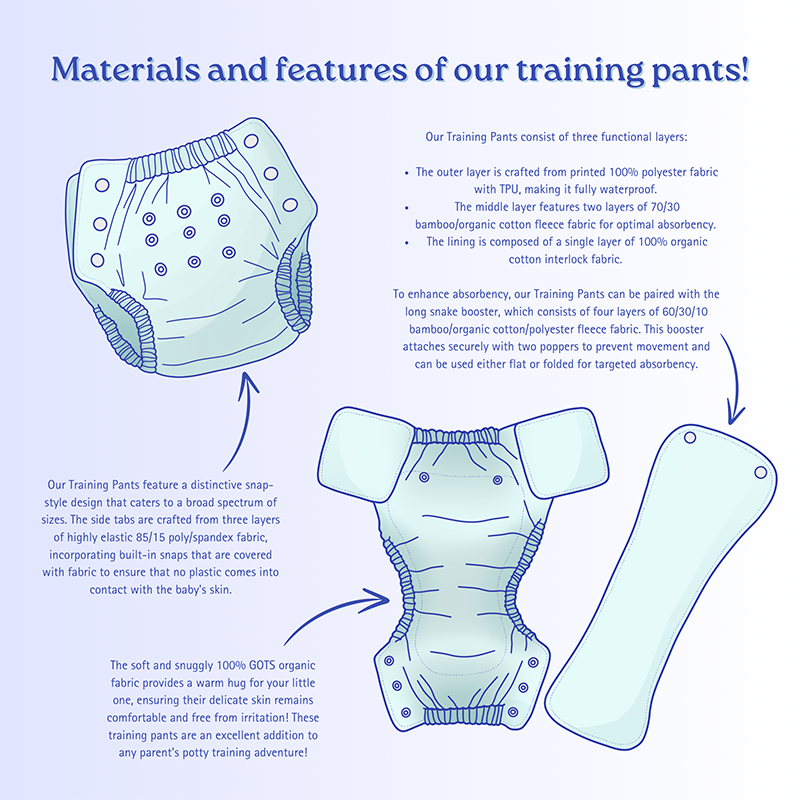
The inner layer should be comfortable against sensitive skin. The absorbent layer should handle small leaks. The outer or hidden waterproof layer should help protect clothing. Elastic and stitching should survive repeated washing. For brands, these details decide customer reviews more than a print catalog does.
| Feature | Why It Matters | What to Test |
|---|---|---|
| Waist elasticity | Supports easy pulling and secure fit | Stretch recovery after washing |
| Leg opening | Controls leaks and prevents red marks | Movement fit during squatting |
| Absorbent core | Catches small daytime accidents | Absorbency speed and capacity |
| Waterproof layer | Protects clothing from minor leaks | Seam and fabric performance |
| Wash durability | Reduces returns and complaints | Shrinkage, fading, stitching |
For anyone exploring product options, KINGSOO’s soft waterproof training pant page provides a practical reference. You can view the training pants option here and compare design, positioning, and use cases before building a retail or private-label range.
Products shape routines. A parent using regular diapers may wait until the diaper feels full before changing. A parent using training pants may start asking, “Do you need to try?” more often. That shift matters. Potty training is built through repetition.
Training pants also reduce fear of leaving the house. Parents sometimes delay toilet learning because they worry about car seats, shopping trips, or daycare accidents. A reusable training pant gives enough backup to keep life moving. That does not remove the need for spare clothes, but it lowers the risk.
For retailers, this emotional value is important. Parents are not only buying fabric. They are buying a less stressful transition. Product descriptions should speak to that reality with practical guidance, not just claims about absorbency.
Use training pants during active daytime practice.
Offer toilet opportunities at predictable times.
Keep spare clothing and a wet bag nearby.
Respond to accidents with calm, short language.
Do not shame a child for learning slowly.
Switch back to higher protection for sleep if needed.
This kind of guidance helps customers use the product correctly. It can also reduce negative reviews caused by unrealistic expectations.
One common mistake is starting too early. If a child has no interest, no body awareness, and strong fear of the toilet, training pants may simply become expensive diapers. Another mistake is expecting the product to handle all accidents with no leaks. Training pants are for practice, not for replacing every diaper use immediately.
A third mistake is changing products without changing the routine. If adults do not offer potty chances, the child has little reason to learn. A fourth mistake is using shame after accidents. Potty training depends on trust. Children learn better when adults stay calm.
For brands, the matching mistake is overclaiming. If a training pant is described as completely leak-proof in every situation, customers will likely be disappointed. Clear wording protects the brand and helps families choose the right use case.
Training pants sit in a strong product category because they connect emotional need, daily use, and repeat purchase. Parents often buy multiple pieces once potty training begins. They may want enough for home, daycare, travel, and laundry rotation.
Retailers can position them as part of a potty-training kit. A useful kit may include several training pants, a wet bag, a simple changing mat, and a short routine card. That is more helpful than selling one garment alone. It shows the customer how to start.
KINGSOO’s training pant category and related baby care catalog give buyers room to develop product bundles for different markets. Some customers may prefer organic cotton. Others may focus on waterproof protection, bright prints, or value packs. The key is to match the product story to the actual user stage.
Product education matters because training pants are easy to misunderstand. Some parents think they are simply diapers with a different name. Others expect them to work exactly like underwear. A good article or product page should explain the middle role clearly. Training pants are for practice, protection, and confidence during the transition.
Brands should show real-life routines. A parent may use training pants after breakfast, before daycare, during short errands, and in the afternoon. The same child may still need a diaper at night. This does not confuse the child if adults explain it simply. “These are for daytime potty practice” is clear enough for many families.
The product page should also tell parents what to do after an accident. Remove the soiled pant, clean the child, talk calmly, and try again later. This turns the product into part of a learning plan rather than a stand-alone absorbent item.
Explain that training pants are for daytime practice.
Clarify that absorbency is lighter than many diapers.
Show how the child can pull them up and down.
Recommend spare pairs for daycare and travel.
Suggest pairing them with a wet bag.
Give washing instructions and drying cautions.
Not all training pants serve the same customer. A value product may focus on basic daytime protection. A premium product may use organic cotton, stronger waterproof layers, or upgraded prints. A daycare-oriented product may focus on simple changing and bulk packs. A boutique product may focus on color, softness, and giftable packaging.
Clear segmentation helps buyers avoid mixed messages. If a product is made for light daytime learning, it should not be marketed as overnight protection. If it uses organic materials, the certification and fabric story should be accurate. If it is designed for fast-moving toddlers, fit and stretch should be tested carefully.
For private-label development, buyers can start with a basic question: who is the main shopper? A parent buying first training pants needs reassurance. A daycare buyer needs efficiency. A retailer needs attractive packaging and low return rates. A premium baby brand needs materials and storytelling that match its market position.
| Positioning | Main Customer | Product Focus |
|---|---|---|
| Starter potty training | Parents of first-time learners | Comfort, simple use, clear guidance |
| Daycare support | Caregivers and busy families | Easy changing, multiple packs, labeling |
| Eco reusable | Sustainability-focused families | Washability, reusable value, lower waste |
| Premium comfort | Boutique baby product buyers | Soft fabric, organic options, refined prints |
Success is not only the first dry day. A more realistic sign is progress over time. The child may tell an adult sooner. They may stay dry for longer. They may help pull training pants down. They may recover from accidents more calmly. These are real wins.
Parents should avoid comparing one child with another. Toilet learning depends on development, temperament, routine, health, and family schedule. Some children learn quickly. Others need a slower pace. Training pants help because they make slow progress less messy and less stressful.
For brands, this means the product story should focus on support, not pressure. Parents do not need another reason to feel behind. They need tools that make the learning stage manageable.
Many buyers do not know the correct product terms when they begin searching. They may type a question, compare several blogs, and only later decide which product category fits their need. Content that explains use cases, limitations, materials, care routines, and buying criteria helps them move from confusion to confidence.
For a manufacturer or private-label supplier, this kind of article also supports sales teams. Instead of repeating the same basic answers, the website can educate visitors before the first inquiry. That makes the conversation more specific. Buyers can ask about sizes, packaging, minimum order quantity, samples, and customization instead of asking what the product does.
Good educational content also reduces returns. When customers understand what a product is designed to do, they use it correctly. When expectations match real performance, reviews tend to be fairer and repeat orders are more likely.
Parents trust content more when it admits limits. Training pants are useful, but they cannot make a child ready before the child has body awareness. They cannot prevent every leak during heavy wetting. They also cannot replace calm adult guidance. Saying this clearly does not weaken the product. It makes the recommendation more believable.
Realistic content helps brands avoid returns and complaints. If customers understand that training pants are best for daytime practice, they are less likely to use them as overnight diapers and feel disappointed. If they understand that fit matters, they will measure before ordering. If they understand that accidents are normal, they may continue using the product instead of giving up after one messy day.
This kind of honest guidance is especially important for private-label baby products. A strong product page should explain what the garment does, what it does not do, and how parents can use it as part of a larger potty-training routine.
Training pants are rarely a one-piece purchase. Families need enough pieces for morning practice, daycare, laundry, and backup clothing. Once parents find a fit that works, they often buy more. This is why stable sizing and repeat-batch consistency matter so much for brands.
A useful product range can include basic packs, premium fabric options, and coordinated wet bags. That gives retailers room to serve different budgets while keeping the same product story: easier potty practice, less mess, and more confidence for toddlers and caregivers.
The point of training pants is to help toddlers practice toilet independence while giving light accident protection during the learning stage.
They can be better for daytime practice because they pull up and down more like underwear. Diapers may still be better for overnight or heavy wetting.
Training pants can hold small accidents, but they are not always designed for full diaper-level absorbency. The exact protection depends on the product.
Accidents can happen, but training pants are meant to support toilet learning, not encourage children to use them like diapers.
Many families need several pairs per day during early training. Laundry frequency, daycare use, and accident patterns decide the right number.
Wholesalers should check absorbency, sizing, waistband stretch, leg fit, wash durability, stitching quality, packaging, and product-use claims.
Training pants are useful because potty training is a transition, not a switch. They help children practice toilet routines while giving parents and caregivers enough protection to keep daily life moving. Used well, they support independence, reduce stress, and make accidents easier to handle.
For brands and retailers, the product works best when it is positioned honestly. It is not a full diaper replacement for every moment. It is a practical learning garment for toddlers who are ready to move forward. KINGSOO’s training pant options give buyers a useful starting point for developing reusable potty-training products with comfort, washability, and real-life family routines in mind.


