- All
- Product Name
- Product Keyword
- Product Model
- Product Summary
- Product Description
- Multi Field Search
English

Author: Site Editor Publish Time: 2026-07-16 Origin: Site
A baby diaper can sometimes be adapted for a dog, but there is no universal conversion such as “a 20-pound dog always wears size 3.” Baby diaper sizing is based on infant weight and proportions, while dogs vary widely in waist shape, back length, tail position, and hind-leg structure. The safest approach is to measure your dog, compare the measurement with the diaper package, and test the fit carefully. This guide explains how to estimate a starting size, modify a baby diaper, recognize poor fit, and decide when a purpose-built Pet Diaper is the more practical option.
Owners often begin with body weight because baby diaper packages organize sizes by weight range. However, two dogs of equal weight can have completely different builds. A compact dog may have a broad waist and short back, while a slender dog may have a narrow waist and long torso. Their tails may also sit at different heights, changing where the diaper must rest.
This means that weight should be treated only as a rough shopping reference. The dog’s waist circumference is more useful, and the distance from the lower abdomen to the tail base helps determine whether the diaper provides enough front-to-back coverage. A baby diaper that closes around the waist but does not reach the correct elimination area is not a functional fit.
Baby diaper sizing also varies among product lines. A size number from one package may not have the same dimensions, stretch, rise, or absorbent-panel placement as the same number from another. For that reason, copying another dog owner’s size recommendation can produce inconsistent results. Their dog may have a different build, and the diaper itself may be cut differently.
A well-fitting Pet Diaper accounts for canine anatomy rather than relying on infant proportions. Dog-specific designs may include adjustable closures, elastic edges, a suitable tail opening, and absorbency positioned for male or female anatomy. These structural differences become especially important when the diaper will be worn repeatedly rather than used as a temporary emergency measure.
Measure your dog while it is standing naturally on a level surface. Do not measure while the dog is sitting, stretching, or lying down because the waist and back length may change with posture. Use a flexible measuring tape and keep it flat against the coat without pulling it tightly into the skin.
Start with the waist circumference. Wrap the tape around the body near the area where the diaper waistband will sit, generally in front of the hind legs. You should be able to slide a finger beneath the tape. If the dog has a thick or long coat, gently compress the fur so the result reflects the body rather than excess coat volume.
Next, measure the rise. Place the tape at the lower abdomen, pass it between the hind legs, and continue toward the lower back near the tail base. This measurement helps reveal whether a baby diaper will be long enough to cover the necessary area without riding too high, bunching between the legs, or pulling forward during movement.
Also note the tail’s width, angle, and position. A curled tail, low-set tail, docked tail, or very fluffy tail can affect both the opening and the stability of the diaper. A hole that is cut too low can pull the diaper backward, while an oversized opening may allow moisture to escape around the tail.
Record these measurements before reviewing package dimensions. If the baby diaper brand lists only infant weight, select a small trial pack rather than assuming that the printed weight range applies directly to a dog. The final choice should be based on physical fit, not the size number alone.
There is no reliable dog-to-baby sizing chart that works across all breeds and diaper brands. Nevertheless, you can narrow the search by comparing the dog’s waist measurement with the maximum stretched width of the baby diaper. The side tabs should reach the fastening area without being pulled to their limit.
Use the following process as a fitting method rather than a fixed conversion chart:
Measure the dog’s waist and rise.
Check the diaper package for weight guidance and available dimensions.
Choose the smallest size likely to close without tight stretching.
Hold the unused diaper against the dog before cutting it.
Confirm that the absorbent section covers the required area.
Mark the tail position while the diaper is centered.
Cut a small opening and enlarge it gradually.
Test the fit during standing, walking, sitting, and lying down.
Begin with a small tail opening. A large circular cut can weaken the diaper, expose absorbent material, and create a leakage path. A short cross-shaped slit is often easier to enlarge carefully. Keep the opening away from the absorbent core whenever possible, and stop if cutting releases loose filling or damages the internal layers.
Once fitted, observe your dog for several minutes. The waistband should remain level instead of sliding toward the hips. The diaper should not twist, sag beneath the abdomen, or restrict the hind legs. If the tabs barely connect, move to a larger size. If the diaper droops, overlaps excessively, or gathers into thick folds, try a smaller size or a different shape.
A trial fit is more informative than any general size recommendation. Even when one baby diaper appears acceptable, compare it with a canine-specific option from a collection of Reusable Pet Diapers. The comparison can reveal whether the improvised diaper provides sufficient coverage, stability, and freedom of movement.
A correct fit is secure but not tight. You should be able to slide one or two fingers beneath the waistband without forcing them. Elastic edges should touch the body gently, but they should not leave deep marks, press into the groin, or pull the coat. The dog should be able to walk, sit, turn, and lie down normally.
Check the following areas after fastening the diaper:
Fit Area | Acceptable Fit | Warning Sign |
|---|---|---|
Waist | Secure and level | Sliding, rolling, or deep pressure marks |
Hind legs | Free movement | Stiff gait, rubbing, or restricted steps |
Tail opening | Close around the tail base | Gaping, pulling, or exposed absorbent filling |
Absorbent panel | Covers the target area | Positioned too far forward or backward |
Lower abdomen | Lies close without sagging | Hanging, twisting, or heavy bunching |
Movement is the most useful test. A diaper may look correct while the dog stands still but shift after several steps. Let the dog walk around the room, turn, sit, and stand again. Recheck the waistband and tail opening. If the diaper has moved noticeably, the size, shape, or fastening direction is unsuitable.
You should also inspect the skin during every change. Redness, damp fur, chafing, swelling, or persistent licking suggests that the Pet Diaper is rubbing, trapping moisture, or remaining in place too long. A soiled diaper should be removed promptly, and the coat and skin should be cleaned and dried before another one is applied. Human diaper creams should not be used without veterinary guidance because some ingredients can be harmful when dogs lick them.
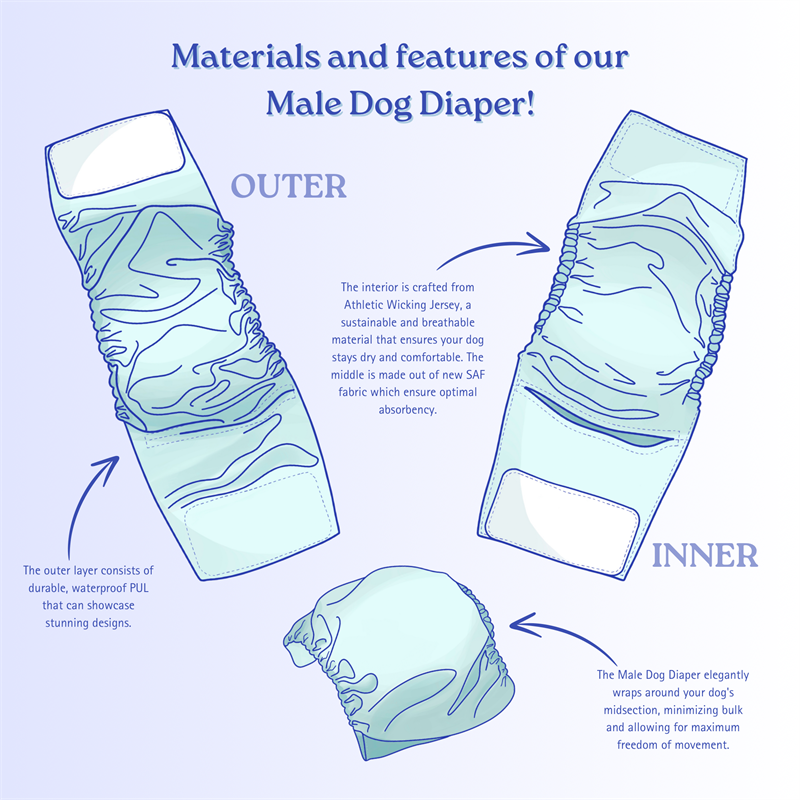
For male dogs with urinary leakage or marking, a wrap-style design may position absorbency more effectively around the lower abdomen. Kingsoo’s Male Dog Diaper Wrap uses a waterproof TPU-laminated outer layer, an athletic wicking jersey lining, an absorbent middle layer, and adjustable hook-and-loop fastening.
A modified baby diaper may be useful when a dog-specific product is temporarily unavailable, when you are testing whether diapering helps with a short-term problem, or when a very unusual body shape requires experimentation. Baby diapers are widely available, and small trial packages make it possible to test several sizes without purchasing a large quantity.
However, the design limitations become clearer during regular use. Baby diapers are shaped for an infant’s hips, legs, and posture. They do not include a tail opening, and their absorbent material may not align with a dog’s anatomy. The fastening tabs may also be difficult to reach beneath the abdomen, particularly on a nervous, long-haired, or mobility-impaired dog.
A purpose-built Pet Diaper is generally easier to position because its shape is intended for canine movement. Adjustable closures can help accommodate differences in waist shape, while elastic edges can improve contact around the legs and tail. Reusable designs can also be washed and rotated, although owners need enough pieces to allow for changing, washing, and complete drying.
Sex-specific construction matters as well. A male dog that only needs urine management may benefit from a belly wrap, while a female dog in heat or a dog requiring rear coverage needs a full diaper shape. Selecting by purpose is more reliable than choosing solely by body weight.
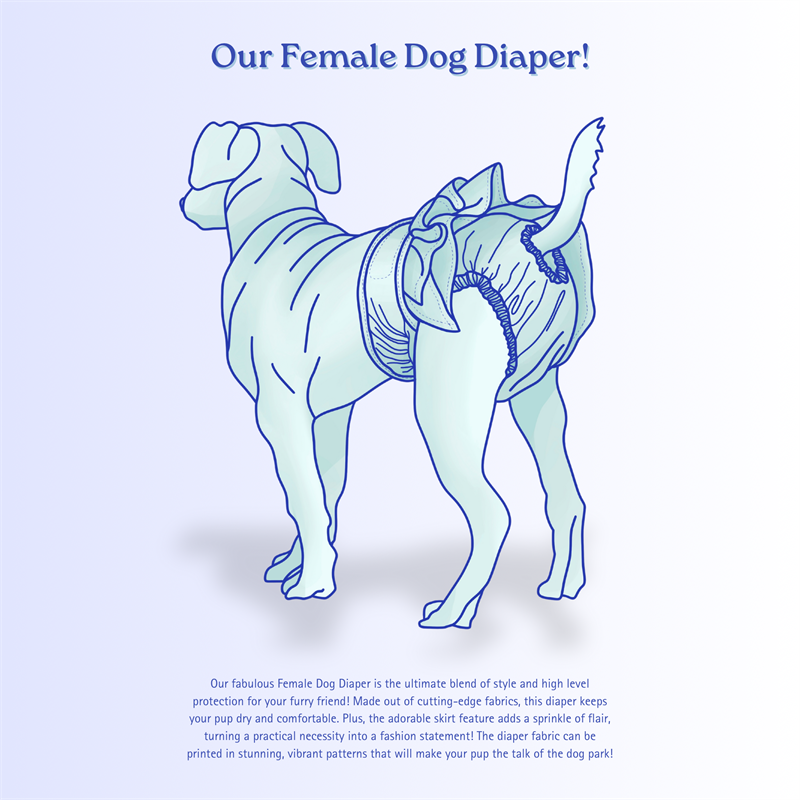
For female dogs, Kingsoo’s Female Dog Diapers are washable and designed for incontinence, estrus, and potty-training support. The product design includes adjustable closures, a waterproof outer structure, an absorbent inner layer, and female-specific rear coverage.
Leaks are not always caused by insufficient absorbency. They frequently result from poor alignment, oversized tail openings, loose waistbands, or an absorbent panel positioned away from the urine stream. Before moving to a more absorbent product, confirm that the Pet Diaper stays centered while the dog moves.
If leakage occurs around the legs, inspect whether the material lies flat against the body. Folds can create channels that direct moisture outward. If leakage appears near the tail, the opening may be too large or positioned incorrectly. Leakage through the exterior suggests that the diaper is saturated, damaged, or lacks an effective waterproof barrier.
Dogs may remove diapers because of unfamiliar pressure, heat, rubbing, anxiety, or an unstable fit. Introduce the Pet Diaper gradually during short, supervised sessions. Pair it with calm praise or a reward, and remove it before the dog becomes distressed. Never tighten the waistband excessively simply to prevent removal.
Regular hygiene is essential. Change the diaper promptly after urination or defecation, clean soiled fur, and let the skin dry. Reusable diapers should be washed according to their care instructions and dried completely before reuse. Keeping several diapers in rotation prevents the temptation to apply a damp one.
A Pet Diaper should not replace medical assessment when a previously house-trained dog suddenly develops accidents. Urinary leakage, frequent urination, straining, blood, unusual odor, diarrhea, weakness, or increased thirst may indicate an underlying condition. A veterinarian can determine whether the dog needs treatment in addition to temporary hygiene management.
A: Weight alone is not enough. Measure the waist and rise, compare them with the actual diaper dimensions, and begin with a small trial pack.
A: Possibly, but newborn diapers may be too short or narrow. Confirm waist closure, rear coverage, tail position, and freedom of movement before use.
A: Center the unused diaper on your standing dog, mark the tail base, and begin with a small slit. Enlarge it gradually to avoid gaps.
A: It should remain secure while allowing one or two fingers beneath the waistband. Deep marks, restricted movement, sagging, or twisting indicate poor fit.
A: They may work temporarily, but a dog-specific Pet Diaper usually provides better anatomical coverage, tail accommodation, adjustment, and stability during repeated daily movement.
A: Not always. Male urinary issues may suit a belly wrap, while females in heat or dogs needing rear coverage generally require a full diaper.
There is no dependable baby-diaper size that can be selected from a dog’s weight alone. Measure the waist, rise, and tail position, test a small pack, and judge the fit while the dog moves. A modified baby diaper may solve a temporary need, but frequent leakage, shifting, rubbing, or difficult fastening usually indicates that a purpose-built Pet Diaper is more appropriate. As a manufacturer and supplier of reusable hygiene products, Kingsoo offers male and female designs with washable construction, adjustable fastening, absorbent layers, and waterproof TPU materials for more practical canine fit and care.