- All
- Product Name
- Product Keyword
- Product Model
- Product Summary
- Product Description
- Multi Field Search
English

Author: Site Editor Publish Time: 2026-09-03 Origin: Site
Relying on everyday clothing sizes or body weight to select adult incontinence products is the leading cause of leaks, skin breakdown, and wasted money. Many people assume they can simply grab their usual pant size off the store shelf. This assumption almost always leads to frustration. Because adult incontinence products are engineered to seal around specific anatomical zones, achieving the right fit requires accurate tape measurements. It also demands a deep understanding of the user’s body shape and daily mobility level. Poorly fitted garments compromise both physical comfort and personal dignity. We want to eliminate this guesswork for you entirely. This guide breaks down exactly how to measure for adult diaper size. We will show you how to read brand-specific sizing charts confidently. You will also learn how to visually verify a secure, leak-proof fit for yourself or a loved one.
Always use the larger of the two measurements (waist or hip) to determine your baseline size.
Standard pant sizes and body weight are highly inaccurate metrics for incontinence sizing.
Leg gapping is the primary cause of leaks; sizing down is often more effective than sizing up if leaks occur.
Product styles (tab-style vs. pull-ups) require different fit considerations based on the user's body shape and caregiver involvement.
Selecting incontinence protection based on a familiar clothing tag is a common trap. Pant sizes vary wildly by manufacturer. A "Large" in your favorite denim brand rarely aligns with a "Large" in medical-grade absorbency products. Everyday clothing drapes over your frame. In contrast, adult incontinence diapers must create a geometric seal around the groin, hips, and waist. Regular pants do not account for this intricate sealing requirement.
You must also ignore the weight myth. Body weight offers zero insight into how mass is distributed across a specific frame. Two individuals weighing 180 lbs can have entirely different waist-to-hip ratios. One person might carry their weight in their abdomen. The other might carry it in their hips and thighs. Relying on weight-based sizing frequently results in severe leg gapping for individuals with narrower hips. When gaps form around the inner thighs, fluids escape instantly.
A properly fitted product must deliver on three strict success criteria:
Containment: You need absolute zero fluid escape through the leg gathers or the waistbands. The product must trap both moisture and odors securely.
Skin Integrity: You should see no friction burns, red marks, or trapped moisture from fabric bunching. A poor fit causes skin breakdown, leading to painful dermatitis.
Dignity: You deserve a discreet profile under daily clothing. The ideal fit prevents excessive bulk between the legs and eliminates noticeable sagging.
Common Mistake: Buying a larger size assuming it holds more liquid. A larger size simply creates wider leg openings. If you need more capacity, you should choose a higher absorbency tier in your exact measured size.
Accurate measurements take less than five minutes but save countless hours of laundry and frustration. Professional caregivers rely on standardized measuring protocols to guarantee accuracy. You can easily replicate these methods at home.
First, gather your tools. You need a flexible cloth measuring tape and a notepad. Do not use metal tape measures. They cannot hug the natural curves of the body, and their rigid edges can easily scratch delicate skin. If you do not own a cloth measuring tape, use a piece of string to wrap around the body. Then, measure that string against a flat ruler.
You need to locate the widest part of the abdomen. This is often just below the belly button. Do not measure at the natural waistline used for high-waisted pants, as this sits too high. Wrap the tape snugly around the body. Ensure it remains level all the way around the back. The tape should rest flat against the skin without compressing it.
Next, move the measuring tape down to the hips. Wrap the tape around the widest part of the hips and buttocks. Just like the waist measurement, keep the tape parallel to the floor. Record this exact number in inches.
You now have two distinct numbers. Compare the waist and hip measurements. The larger of these two numbers is your definitive sizing metric. Most incontinence products stretch to accommodate the wider area while gathering safely around the narrower area.
Measuring someone lying flat requires a different approach. Gravity displaces body tissue, making a standard wrap-around measurement inaccurate. Follow this modified method for bedbound individuals:
Locate the prominent hip bone on one side of the body.
Stretch the tape across the front of the belly to the hip bone on the opposite side.
Double this number to account for the back of the body.
Add 2 inches to this final calculation. This extra allowance accounts for the body tissue displacement that occurs while lying flat.
Measurements only tell half the story. Body shape dictates how a product anchors to the frame. Failing to match the product style to the specific body type often results in chronic leakage, even if the baseline measurement is correct.
Body mass distribution changes everything. People with Apple shapes carry a larger waist and narrower hips. They frequently experience leg gapping because the diaper must be sized up to fit their waist, leaving the leg openings far too loose. Conversely, people with Pear shapes have a narrower waist and wider hips. They may experience waist rolling. The waistband folds over itself because it lacks the necessary tension to stay upright over narrow hips.
You can prevent shape-related leaks by choosing the appropriate product style.
adult diaper pants (Pull-ups): These resemble traditional underwear. They work best for ambulatory users who have symmetrical waist-to-hip ratios. They slide up and down easily, promoting bathroom independence. However, they require a naturally snug fit at the thighs to seal correctly. If you have very thin legs, pull-ups may not provide enough containment.
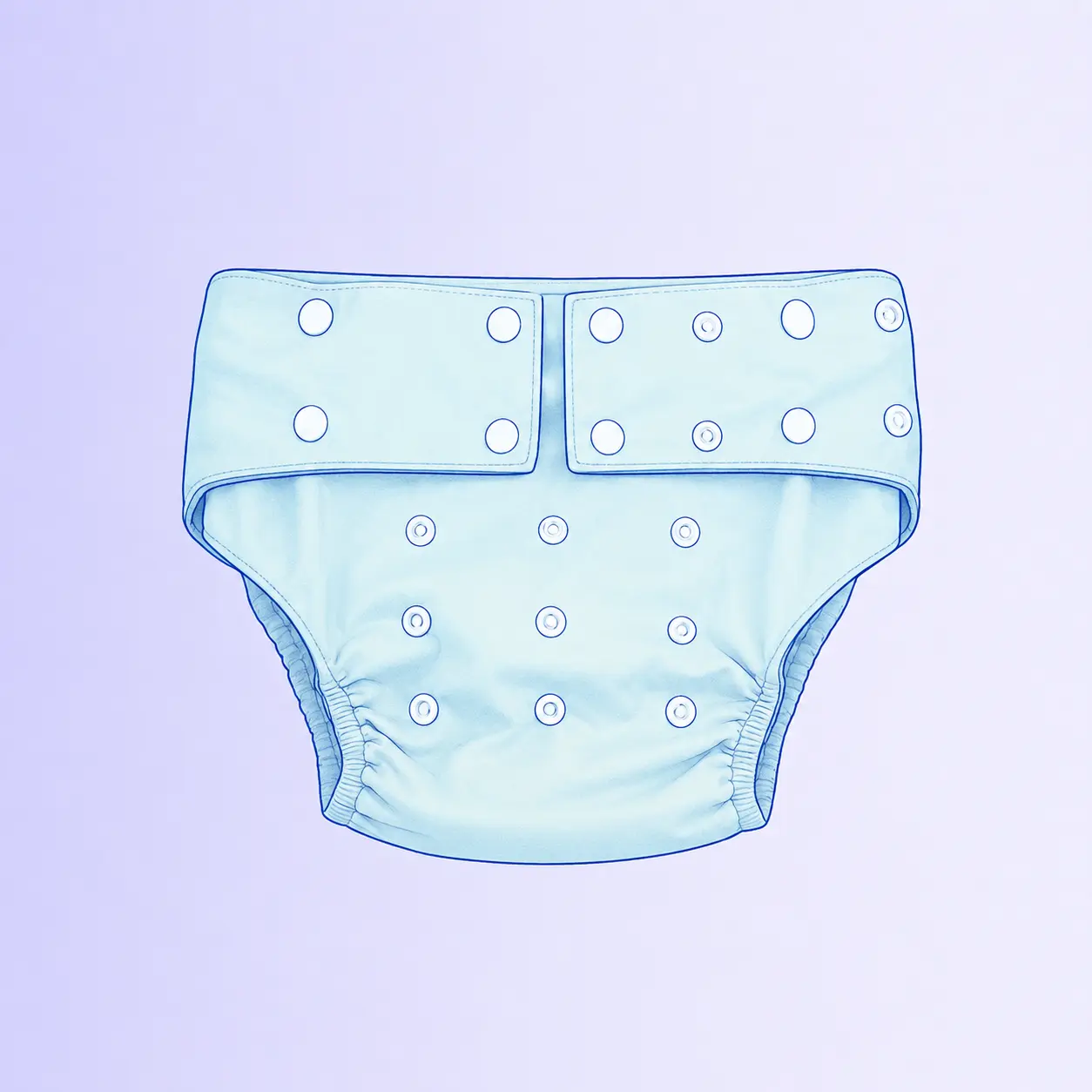
adjustable adult diapers (Tab-style briefs): These represent the safest choice for asymmetrical body shapes, bedbound users, or those needing caregiver assistance. They feature independent top and bottom tape tabs. This design allows for a totally custom seal. You can fasten the bottom tabs tightly around narrow legs while leaving the top tabs looser around a wider belly. They offer maximum control over the garment's geometry.
Sometimes you need extra capacity for long trips or overnight sleep. Many users add adult diaper liners (often called booster pads) inside the primary garment. If you plan to use these, ensure your primary diaper is not already sitting at its maximum stretch limit. The added bulk of a liner alters the internal fit geometry. If the diaper is already too tight, inserting a pad will pull the leg gathers away from the skin, causing an immediate leak.
Numbers guide you to the starting line, but your eyes confirm the finish line. Once you secure the garment on the body, you must perform a visual fit test. Evaluating the product while it is dry helps you identify risk zones before an accident occurs.
A garment that is too tight restricts blood flow and irritates the skin. Watch for these clear indicators:
You notice deep, persistent red marks around the thighs or groin after removing the product.
The side panels or tape tabs must be stretched forcefully just to connect.
The waistband immediately rolls down and hides under the belly.
The user complains of pinching or restricted movement when bending over.
Loose products act like funnels rather than sponges. Identify an oversized garment using these red flags:
You can easily slide more than two fingers between the leg gathers and the skin.
The product sags noticeably in the crotch area, even when completely dry.
The side panels bunch up loosely against the hips.
On tab-style briefs, the tape tabs overlap each other completely across the stomach.
Table: Fit Evaluation Quick Reference
Evaluation Area | Ideal Fit | Too Small | Too Large |
|---|---|---|---|
Leg Gathers | Rests flat and snug in the crease of the groin. | Digs deeply into the skin; leaves bright red marks. | Gaps openly; fits more than two fingers loosely. |
Waistband | Sits comfortably at or just below the navel. | Rolls down constantly under the belly. | Sags heavily or reaches too high up the torso. |
Tape Tabs (Briefs) | Rest securely on the front hip panels. | Barely reach the front panel without intense pulling. | Overlap each other in the center of the stomach. |
Best Practice: Always evaluate the fit while the user is standing, sitting, and lying down. The body shifts dynamically across these three positions. A diaper that fits perfectly standing up might gap heavily when the user sits in a chair.
After acquiring accurate waist and hip numbers, you must navigate the chaotic landscape of manufacturer sizing. Do not let brand labeling confuse you.
The incontinence industry lacks standardized sizing. A "Large" in Brand A might cover a 40-inch waist. Meanwhile, a "Large" in Brand B might accommodate a 45-inch waist. You must always evaluate products by their inch or centimeter range. Never rely on the letter size printed on the front of the package. When you open a sizing chart, locate your largest measurement (waist or hip) and find the exact numerical bracket it fits into.
Many users find their measurements falling exactly on the border of two different sizes. For example, your waist might measure exactly 40 inches, which sits on the line between Medium and Large on a specific chart. When this happens, follow these specific rules based on the product type:
Size DOWN for Pull-ups: If you choose pant-style underwear, sizing down is safer. You must guarantee the leg elastics engage properly. A slightly tighter pull-up prevents leg gapping, which is the most common failure point.
Size UP for Tab-Style Briefs: If you use adjustable briefs, size up. You can easily use the independent tape tabs to secure and fold over any excess material. The larger size gives you more absorbent coverage across the rear.
Never buy a bulk case of a new brand based purely on chart math. Sizing charts provide a theoretical fit. You need a practical fit. Always order a sample pack or a single bag first. Use this small batch to conduct your physical fit test and a real-world leak test. Once you confirm the product performs well under normal daily conditions, you can safely invest in bulk quantities.
Accurate measurement serves as the only reliable pathway to total leak prevention. Guessing based on clothing tags or body weight will continually cost you money and compromise skin health. By utilizing a flexible measuring tape to find your exact waist and hip numbers, you build a solid foundation for comfort.
To succeed, keep these final action steps in mind:
Take precise measurements in inches, relying only on the larger number of your waist or hip to dictate your size.
Identify the correct product style based on mobility. Use pull-ups for active users and adjustable tab-style briefs for maximum customization or bedbound care.
Perform a rigorous visual fit test, ensuring leg gathers sit snugly in the groin crease without leaving painful red marks.
Always test a sample pack before committing to bulk purchases, regardless of what the brand's sizing chart suggests.
Grab a flexible measuring tape today. Record your two core numbers, cross-reference them against specific brand charts, and reclaim your confidence.
A: No. Regular underwear stretches purely for comfort. Incontinence products require a precise geometric seal to trap fluids and odors effectively. Standard underwear sizing is highly inconsistent. You must always use exact tape measurements in inches to find your correct incontinence product size.
A: Never. Sizing up creates wide gaps around the legs, which guarantees nighttime leaks. To get more fluid capacity, you should buy a higher-absorbency product in your exact measured size. Alternatively, you can add a booster pad inside your current fitted garment.
A: Choose adjustable tab-style briefs rather than pull-up pants. With tab-style products, you can angle the bottom tabs upward to firmly secure the narrower hips. You can then angle the top tabs straight across to comfortably accommodate the larger waist without causing uncomfortable compression.