- All
- Product Name
- Product Keyword
- Product Model
- Product Summary
- Product Description
- Multi Field Search
English

Author: Site Editor Publish Time: 2026-09-10 Origin: Site
Chronic leaks, skin irritation, and frequent nighttime changes are rarely user errors. They are usually material failures. Navigating the market of adult incontinence products requires moving past marketing claims. You must understand the specific textiles and polymers used in manufacturing. Brands often use confusing jargon to sell basic items. This makes finding a reliable solution incredibly frustrating.
This guide deconstructs the science behind adult diaper materials. It equips caregivers and users with essential technical knowledge. We want you to evaluate, shortlist, and select products effectively. You can find options delivering the performance advertised. We will explore stay-dry liners, advanced absorbent layers, and protective outer shells. This knowledge empowers you to improve daily comfort. It also helps you protect sensitive skin and restore personal dignity.
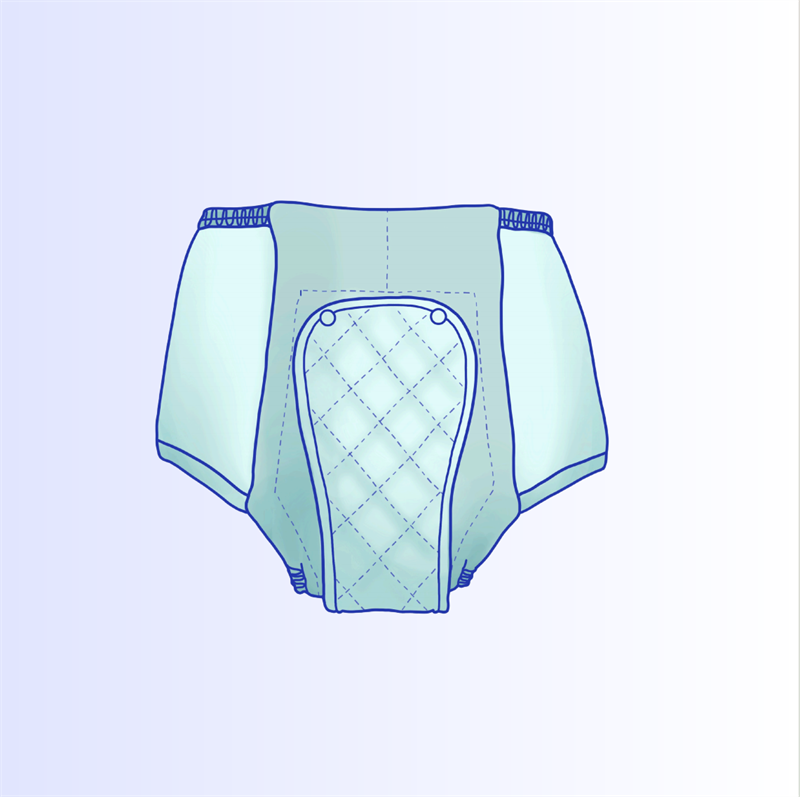
Performance is layered: True leak prevention relies on a three-part system: a porous topsheet, a polymer-dense core, and a secure backsheet.
Polymer ratio matters most: High-performance absorbent diaper cores prioritize Super Absorbent Polymer (SAP) over traditional fluff pulp to lock in moisture under pressure.
Breathability vs. Security trade-off: Selecting between plastic-backed and cloth-like waterproof adult diapers depends entirely on the user's mobility and skin breakdown risk.
Cost-per-use over cost-per-unit: Premium materials often reduce the total volume of daily changes, lowering overall caregiving costs and physical strain.
Inferior materials carry high clinical and practical risks. Generic options often trap moisture directly against the skin. This environment causes Incontinence-Associated Dermatitis (IAD). IAD leads to painful skin breakdown. It drastically increases infection risks for vulnerable individuals. Poor materials also compromise sleep quality severely. Users wake up feeling wet, cold, and uncomfortable. Caregivers face heavy physical burdens as well. They handle frequent product changes throughout the night. They constantly wash soiled bed linens.
We must evaluate adult incontinence products based on strict success criteria. A successful product evaluation requires measuring three specific metrics. You cannot rely on brand names alone.
Acquisition Speed: This measures how fast liquid enters the pad. Fast acquisition prevents urine from pooling on the surface.
Retention Capacity: This shows how well liquid stays trapped under body weight. Good retention stops leaks when a user sits down.
Skin Microclimate: High-quality materials control both temperature and humidity. They keep the skin cool and dry.
No single material combination works perfectly for every scenario. Optimal selection requires matching material properties to specific clinical needs. Heavy voiding requires different materials than bowel incontinence. Active users need different features than bedbound patients. You must adapt your choices to fit the individual.
Metric Focus | Primary Mechanism | Clinical Benefit |
|---|---|---|
Acquisition | Porous topsheet drawing fluid down | Prevents surface pooling and immediate leaks |
Retention | SAP locking fluid into a solid gel | Maintains dryness under compression (sitting) |
Microclimate | Breathable backsheets releasing vapor | Reduces friction and prevents IAD formation |
The topsheet plays a crucial role in overall comfort. Many people misunderstand how these layers actually work. Adult diaper liners do not absorb liquid themselves. Their sole engineering purpose involves pulling moisture away from the skin. They act as a one-way gate for fluids. They let urine pass through quickly. They actively block it from returning to the surface.
Industry standards rely heavily on specific synthetic fibers. Polypropylene and thermoplastic polymers dominate the market. These materials provide rapid moisture wicking. Synthetic fibers do not hold water inside their cellular structure. This creates a highly reliable "stay-dry" feel. Cotton liners feel soft initially. However, cotton holds moisture tightly. It stays wet against the skin for hours.
Some liners feature Aloe or Vitamin E treatments. Manufacturers market these additives for enhanced skin health. Actual clinical benefits vary widely among users. You should view lotions as a secondary feature. They should never act as your primary purchasing driver. Focus on the core synthetic wicking ability instead.
How do you evaluate liner quality at home? You can conduct a simple "rewet" test. Pour half a cup of water onto the pad. Wait exactly one minute. Press a dry paper towel firmly against the surface. A high-quality liner should feel completely dry to the touch. The paper towel should show zero moisture transfer. If moisture pushes back through, the liner failed its basic job.
You must also watch out for barrier creams. Thick zinc-based ointments can clog the microscopic pores in synthetic liners. This clogging prevents liquid from passing through. The urine will simply roll off the sides and leak. Apply creams sparingly to avoid ruining the liner's performance.
The visible bulk of an incontinence product does not stop leaks. True protection comes from the hidden synergy inside absorbent diaper cores. Manufacturers combine two primary components to build these engines. They use Fluff Pulp for rapid dispersion. They rely on Super Absorbent Polymer (SAP) for ultimate retention.
SAP serves as the most critical element in modern designs. These tiny granules look like regular salt crystals initially. However, SAP can absorb up to 300 times its weight in liquid. The chemical process turns urine into a dense, solid gel. This transformation prevents liquid from squeezing out. The wearer can sit, roll, or shift safely. The moisture stays permanently locked away from the skin.
You must look for the correct target ratio. Seek out high-density, low-profile cores. Bulky does not mean more absorbent. A bulky pad usually indicates excessive amounts of cheap fluff pulp. Fluff pulp acts like a basic paper towel. It absorbs liquid initially but releases it immediately under pressure. High-performance cores feel incredibly thin before use. They rely on dense SAP layers rather than cheap tree pulp.
We also evaluate odor control mechanisms within the core. Urine naturally produces ammonia over time. Ammonia causes strong odors and severe skin burns. SAP naturally lowers the pH of urine. This acidic shift neutralizes ammonia production at the source. Many cheap products rely on heavy artificial fragrances. These perfumes merely mask odors instead of neutralizing them. Heavy fragrances often indicate a low SAP content. Always trust advanced polymers over cheap perfumes.
Characteristic | Fluff Pulp | Super Absorbent Polymer (SAP) |
|---|---|---|
Primary Function | Spreads liquid across the pad surface | Locks liquid down into a gel state |
Performance Under Pressure | Fails quickly; releases liquid when squeezed | Excellent; retains liquid even when compressed |
Odor Control | None; allows ammonia to form rapidly | High; lowers pH to neutralize ammonia |
Profile / Bulk | Very bulky and restrictive | Ultra-thin and discreet |
The outer shell dictates both leak security and heat retention. This creates a significant backsheet dilemma for consumers. You must choose between plastic-backed and cloth-like materials. Each option provides distinct advantages and specific drawbacks.
Plastic-Backed (Polyethylene) materials offer unmatched security. They provide 100% waterproof protection against heavy voids. They also deliver excellent odor containment. The primary trade-off involves zero breathability. Plastic traps body heat inside the garment. This increases sweating and elevates the risk of fungal infections. These shells remain ideal for heavy overnight use. They also work best for managing bowel incontinence.
Cloth-Like (Microporous) materials use a specialized laminated film. This film features microscopic holes. These holes block large liquid molecules effectively. However, they allow smaller vapor molecules to escape. The trade-off involves occasional "sweating" on the outer surface. The outside can feel slightly damp under heavy pressure. It rarely leaks actual fluid, though. These breathable shells remain ideal for active, daytime users. They protect skin health by releasing trapped humidity.
Implementation details matter immensely. You might seek highly secure waterproof adult diapers for a loved one. You must check the leg gathers first. We call these inner cuffs. These cuffs must use specialized hydrophobic materials. About 80% of leaks actually occur at the leg openings. A massive absorbent core cannot fix weak leg elastics. Look for tall, dual-elastic gathers. They form a physical wall against sudden surges. They guide fluid back down into the core.
You need a clear decision framework for selecting products. We highly recommend matching the material directly to the user's mobility level. A wrong match guarantees frustration.
For bedbound or overnight users, prioritize maximum security. Choose high-SAP cores to handle multiple voids. Select plastic-backed shells to prevent expensive mattress damage. These users prioritize leak prevention over daytime discretion.
For active or ambulatory users, prioritize skin health. Select rapid-wicking liners to handle sudden movement. Use breathable, cloth-like shells to maintain discretion under normal clothing. Active individuals need materials adapting to body heat and friction.
User Mobility Level | Recommended Core Type | Recommended Outer Shell | Key Priority |
|---|---|---|---|
Bedbound / Overnight | Maximum SAP (High Capacity) | Plastic-Backed (Polyethylene) | Absolute Leak Prevention |
Ambulatory / Active | Moderate SAP (Low Profile) | Cloth-like (Microporous) | Discretion and Breathability |
Mixed (Daytime Resting) | High SAP (Rapid Wicking) | Cloth-like (Microporous) | Skin Health and Comfort |
We must discuss the sizing caveat. Even the most advanced materials fail if sizing is incorrect. A loose fit causes gaping at the legs. A tight fit damages the skin and reduces core capacity. You must assess sizing properly.
Measure the hips at their widest point using a flexible tape.
Measure the waist exactly at the belly button.
Take the larger of these two numbers to determine your size.
Never rely strictly on user weight. Weight does not dictate body shape.
We suggest a specific next-step action. Never buy a full bulk case for your first trial. You risk wasting money on poorly fitting garments. Procure small sample packs from two or three medical-grade brands. Test them specifically during the highest-volume voiding periods. Monitor the skin closely for any redness or dampness after removal. This practical testing reveals true material performance.
Selecting the right product requires understanding basic material science. It involves much more than simple brand loyalty. You must recognize the specific roles of each layer.
Stay-dry liners pull moisture away rapidly.
Advanced SAP cores lock fluid into a secure gel.
Specific backsheets manage the balance between breathability and absolute security.
Proper sizing ensures all these materials work together flawlessly.
Understanding these elements completely eliminates guesswork from your buying process. We offer one final recommendation. Shift your evaluation mindset today. Stop trying to find the cheapest diaper on the shelf. Focus entirely on investing in the right material architecture. This strategic approach ultimately preserves skin integrity. It restores profound dignity to the wearer. It also dramatically reduces the practical daily burdens placed on caregivers.
A: Fluff pulp absorbs liquid quickly but releases it under pressure. It acts like a paper towel. SAP (Super Absorbent Polymer) absorbs liquid slowly but locks it into a dense gel. This gel cannot be squeezed out. SAP keeps the skin dry even when the user sits or shifts their weight.
A: Yes, they use a specialized microporous film. This film blocks large liquid molecules while letting vapor escape. Under maximum capacity, vapor transmission can make the outside feel slightly damp. We call this "sweating." This dampness is normal behavior, not a true structural leak.
A: This relates directly to topsheet quality and core acquisition speed. High-quality synthetic liners act as a one-way valve. If a liner feels wet, the core below it has likely reached maximum retention. It might also lack sufficient SAP to pull the moisture down effectively.
A: While improving, purely plant-based cores struggle heavily under pressure. They cannot match the ultimate retention capacity of chemical SAP. They remain viable for light to moderate needs. However, heavy or overnight incontinence typically requires traditional synthetic SAP for guaranteed safety.