- All
- Product Name
- Product Keyword
- Product Model
- Product Summary
- Product Description
- Multi Field Search
English

Author: Site Editor Publish Time: 2026-09-06 Origin: Site
Experiencing incontinence is challenging enough without the added distress of soiled sheets and ruined clothing. We understand how sleep disruption, skin breakdown, and caregiver fatigue heavily impact your daily quality of life. Constant washing and changing can quickly exhaust both patients and caregivers. You might feel overwhelmed when standard products fail repeatedly. However, you do not have to accept these frustrating accidents. Instead, view adult diaper leakage as a mechanical failure of fit, capacity, or application rather than an inevitable reality.
When products mismatch your unique body shape or fluid volume, fluids escape before absorption occurs. This guide will help you implement objective, evidence-based interventions to evaluate your current setups. You will learn to correct common usage errors and properly measure for a secure fit. We will explore the mechanics behind absorption and highlight exactly where standard products fail. Finally, we will help you shortlist effective solutions to restore your confidence, independence, and overall comfort.
Sizing up is rarely the solution to leaks; a snug fit around the legs and waist is mechanically necessary for containment.
"Double-diapering" is a flawed practice that causes leaks; flow-through booster pads are the correct mechanism for adding capacity.
Preventing overnight leaks requires a combination of high-capacity polymers, positional adjustments, and proper changing schedules.
Evaluating and upgrading to medical-grade, highly absorbent adult diapers significantly reduces long-term costs associated with laundry and skin treatments.
Most leaks occur due to a direct mismatch between product design and user anatomy. People often choose products based purely on marketing labels rather than functional requirements. When mobility levels change, the demands on the absorbent product shift dramatically. We must examine exactly where the mechanical breakdown happens to solve the problem.
Containment failure usually stems from three distinct mechanical issues. Understanding these specific vulnerabilities helps you choose the right corrective strategy.
Capacity Exceeded: The volume or speed of voiding outpaces the absorption rate. Super Absorbent Polymers (SAP) need time to trap moisture. Rapid voids often flood the top layer before the polymers can react.
Compression Leaks: Pressure from sitting or side-sleeping acts like a heavy weight. This pressure forces liquid out of the absorbent core before it locks in securely. Body weight essentially squeezes the product like a wet sponge.
Anatomical Gaps: Loose leg gathers create a physical exit path. Incorrect waist sizing leaves hollow spaces around the lower back. Fluids always follow the path of least resistance through these vulnerable openings.
Many individuals naturally assume a larger size offers more absorbency. This counter-intuitive truth actually increases your risk of severe accidents. Choosing a larger size adds excess material around the body. Extra material creates loose gaps around the sensitive leg and waist areas. Fluids quickly pool and escape through these unsecured openings.
To secure a reliable fit, you must evaluate specific sizing criteria accurately. Proper measurement dictates the entire success of the incontinence product.
Evaluation Criteria for Proper Fit
Measuring by the largest dimension: You must measure both the hips and the waist accurately. Always use the larger of the two measurements to select your size. Relying on weight alone frequently results in poor-fitting garments.
Checking the Leg Gather Seal: Inner leak guards act as vital containment dams. Ensure these guards stand upright and sit flush against the groin. They must never fold inward toward the absorbent pad.
Evaluating Product Styles: Pull-ups resemble traditional underwear and suit active individuals. Tab-style briefs offer superior, customizable fit configurations. Briefs accommodate individuals with limited mobility or irregular body shapes much better.
Table: Comparing Product Styles for Fit Accuracy
Product Style | Best For | Fit Customization | Leak Prevention Strength |
|---|---|---|---|
Pull-Up Underwear | Active, mobile users | Low (fixed waistband) | Moderate (prone to gaps during heavy movement) |
Tab-Style Briefs | Limited mobility, bedbound | High (adjustable tapes) | High (creates a custom seal around legs) |
Caregivers sometimes layer two diapers together to handle heavy voids. They hope the outer diaper will catch what the inner diaper misses. This "double-diapering" method is physically flawed and causes immediate frustration. The inner diaper features a solid waterproof backing. This barrier actively blocks liquid from ever reaching the outer layer. Fluid pools inside the first diaper and spills out the leg holes quickly.
You must transition away from this highly ineffective setup immediately. Upgrading the core is the only medically sound solution. We recommend investing in premium, highly absorbent adult diapers. These advanced products feature engineered cores with premium SAP. The polymers trap moisture away from the skin instantly. They perform infinitely better than layered standard products.
Evaluating absorbency correctly requires understanding industry terminology. Manufacturers often list a "total theoretical capacity" based on laboratory submersion tests. This number reflects how much water the product holds when completely dunked. However, you must focus on the "working capacity" instead. Working capacity reflects real-world usage under bodily pressure. Setting realistic success criteria prevents disappointment when purchasing new supplies.
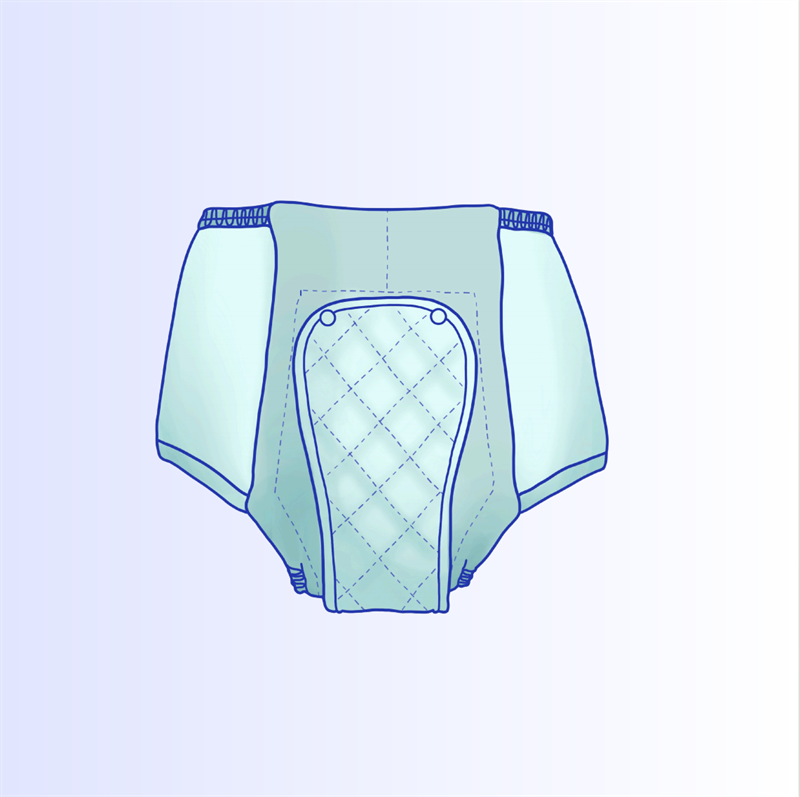
To boost capacity safely, you need targeted system upgrades. We introduce adult diaper liners as the correct, evidence-based alternative to double-diapering. Also known as booster pads, they feature a unique "flow-through" design. They lack a waterproof backing entirely. Once they fill up, liquid passes safely into the primary brief beneath them. This adds massive capacity without creating mechanical blockages.
Overnight leaks present the most difficult challenge for caregivers. Lying down changes gravity's effect on fluid dynamics drastically. Preventing these nighttime accidents requires a structured, multi-layered framework.
Positional tactics: Side-sleeping causes heavy compression on narrow parts of the core. Use specialized positioning wedges to distribute body pressure evenly. Proper alignment prevents the core from squeezing out trapped liquids.
Product configuration: Standard daytime products will fail during eight hours of sleep. Combine an overnight-specific brief with a high-capacity booster pad. Ensure the primary brief features tall, rigid leak guards.
Backup planning: Utilize washable or disposable waterproof bed pads constantly. Place them over the fitted sheet directly under the patient. They protect expensive mattresses effectively and minimize daytime caregiver anxiety.
Routine hygiene directly impacts the structural integrity of your incontinence products. Consistent habits prevent leaks and protect vulnerable skin from severe irritation. Understanding proper adult diaper changing protocols is essential for daily incontinence management. Execution matters just as much as the product quality.
Timing schedules govern successful leak prevention. Do not wait for the product to become completely saturated. Change garments before the core reaches maximum capacity. A fully swollen core cannot absorb sudden, rapid voids effectively.
Use proper unfolding techniques prior to application. Most products arrive tightly compressed in their packaging. Pull the brief open gently and fold it lengthwise like a taco. This action activates the inner leak guards. They must stand up fully before touching the skin.
Apply skin barrier creams carefully to avoid mechanical failures. Zinc oxide and petroleum-based creams protect the skin beautifully. However, heavy creams can accidentally clog the diaper’s porous top sheet. This blockage creates a waterproof barrier over the absorption zone. Urine will simply run off the surface and leak out the sides. Always use a thin layer and rub it in completely.
Odor management naturally follows proper changing techniques. Neutralizing odor is a direct byproduct of rapid moisture wicking. Premium cores lock urine away quickly, preventing bacterial exposure to oxygen. When bacteria cannot break down urea into ammonia, odors disappear. This chemical reality further validates the need for premium leak prevention.
Navigating the complex market requires logical evaluation beyond basic marketing claims. Finding reliable products demands a systematic approach to material analysis. You must scrutinize specific features to guarantee performance.
First, test the wicking speed of the core. The top sheet must pull moisture down instantly upon contact. A fast-wicking surface leaves the skin feeling dry almost immediately. Slow-wicking top sheets cause pooling, which leads directly to overflow leaks.
Second, evaluate the backsheet material based on the specific usage scenario. Breathable cloth-like options promote excellent skin health and reduce heat buildup. However, traditional plastic (poly) backings often perform better for extremely heavy voids. Poly backings do not allow micro-moisture to sweat through to clothing.
Third, check the elasticity and tape integrity of the closures. Re-fastenable micro-hook tabs offer superior hold compared to basic sticky tape. They do not lose their mechanical grip after a single adjustment. They allow caregivers to check the brief and reseal it tightly.
We strongly recommend ordering sample packs before committing to bulk purchases. Test different sizes and backsheet styles in real-world conditions. Finding the ideal leak-proof adult diapers takes patience, but it dramatically improves daily life.
Stopping persistent leakage is a highly solvable equation. It requires accurate sizing, appropriate absorbency levels, and correct accessories. By addressing mechanical failures directly, you can restore dignity and comfort easily. Focus on upgrading your core materials and refining your daily changing protocols.
Accurately measure hip and waist dimensions before buying any new incontinence products.
Choose tab-style briefs combined with flow-through booster pads for managing heavy overnight voids.
Maintain strict changing schedules to ensure super absorbent polymers function without overflowing.
Apply skin creams sparingly to prevent clogging the diaper's protective wicking top sheet.
Request sample packs to verify the leg gather seal perfectly matches the user's anatomy.
A: Lying down shifts fluid dynamics horizontally, bypassing the main absorbent target zone. Gravity pulls urine toward the hips and lower back. Furthermore, side-sleeping compresses the absorbent pad, squeezing out trapped liquid. Preventing this requires overnight-specific briefs with targeted core distribution and specialized booster pads.
A: No. Menstrual pads lack the specific Super Absorbent Polymers (SAP) required to manage thin, rapid urine flow. More importantly, they feature a solid waterproof backing. This backing blocks urine from reaching the diaper underneath, causing immediate overflow leaks. Always use dedicated, flow-through adult diaper liners instead.
A: Fasten tabs snugly using the "two-finger" rule. You should comfortably slide two fingers between the waistband and the skin. This tension balances physical security with necessary skin comfort. It prevents harsh friction and ensures proper blood circulation while keeping the leak guards firmly engaged.
A: A standard incontinence pad has a waterproof backsheet designed to protect regular underwear. A booster pad (liner) features a porous, flow-through backsheet. Once a booster pad fills with urine, the excess liquid passes directly through it into the primary diaper, safely increasing total capacity.